HOW TO CREATE A PAPERBACK COVER FROM AN EBOOK COVER
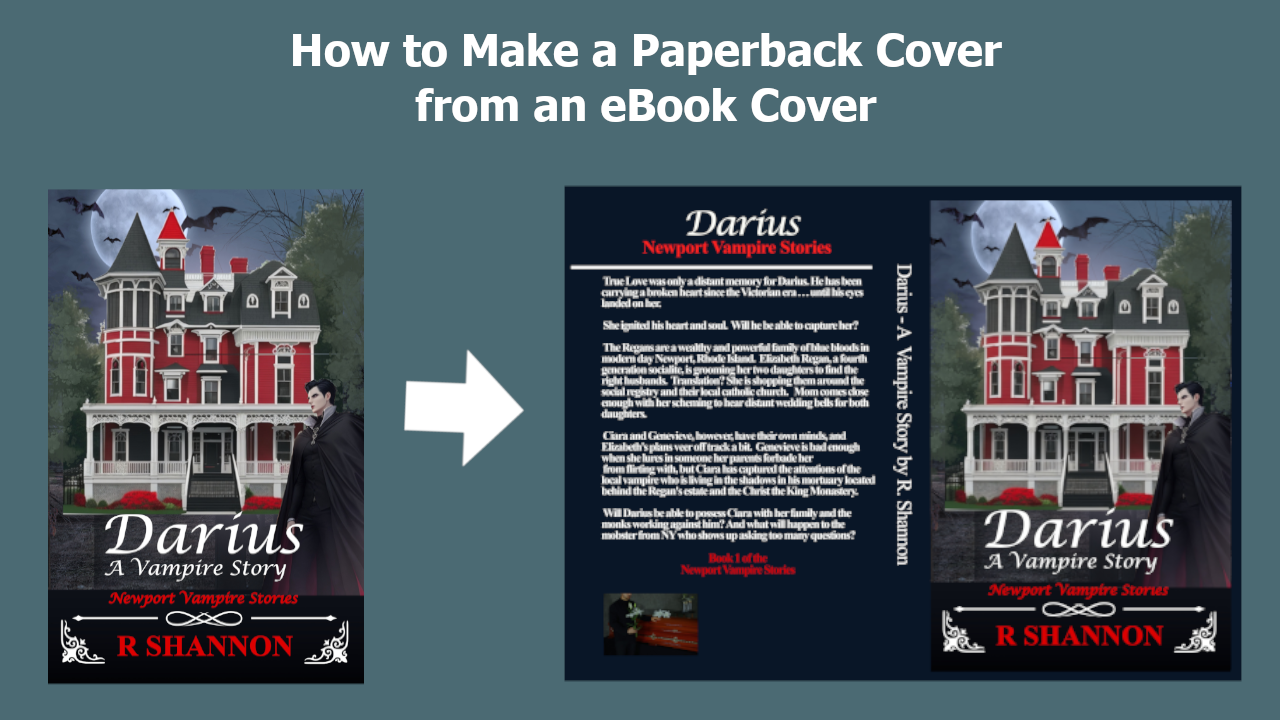
I just finished a how-to create a paperback book manuscript from an eBook manuscript so I thought I would make a sister video showing how to make a full high resolution paperback book cover from a low-resolution eBook cover.
The focus of the video is on the creation of the book cover, so I won't be going into too much detail on how Gimp works. However, I pepper the tutorial with some of the keyboard shortcuts or the names of the tools I am using. This should make it easy for Gimp beginners or others who like to work in Canva.
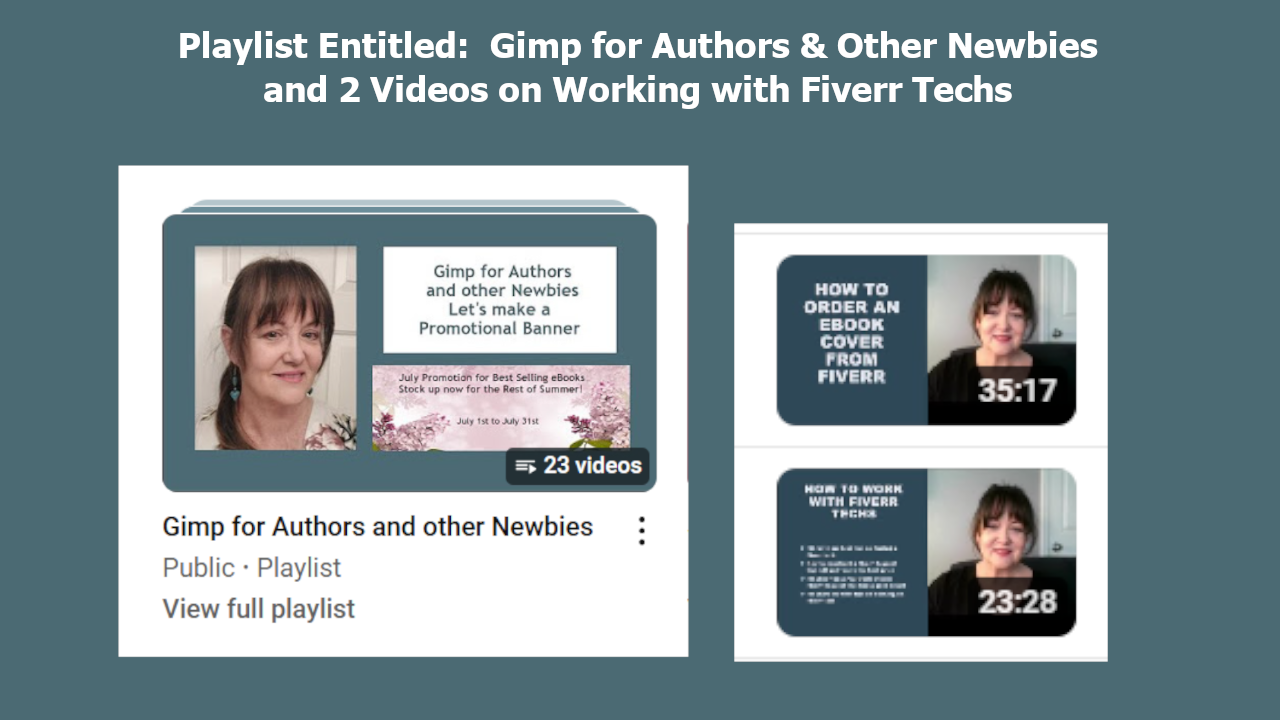
However, I do have a playlist on my YouTube channel teaching new writers ow to use Gimp, which is a free photo manipulation tool and you can use it to create book covers and other book marketing graphics.
BOOK COVERS AT FIVERR.COM
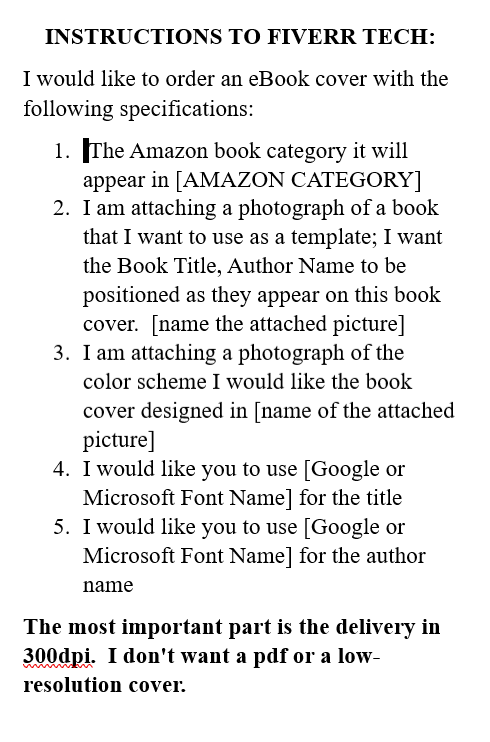 You can order a book cover at Fiverr anywhere from $5.00 o $200 and even higher. If you do get the cover through Fiverr, here is a suggested format to use to order your cover:
WHAT IF I ONLY HAVE A LOW-RESOLUTION?
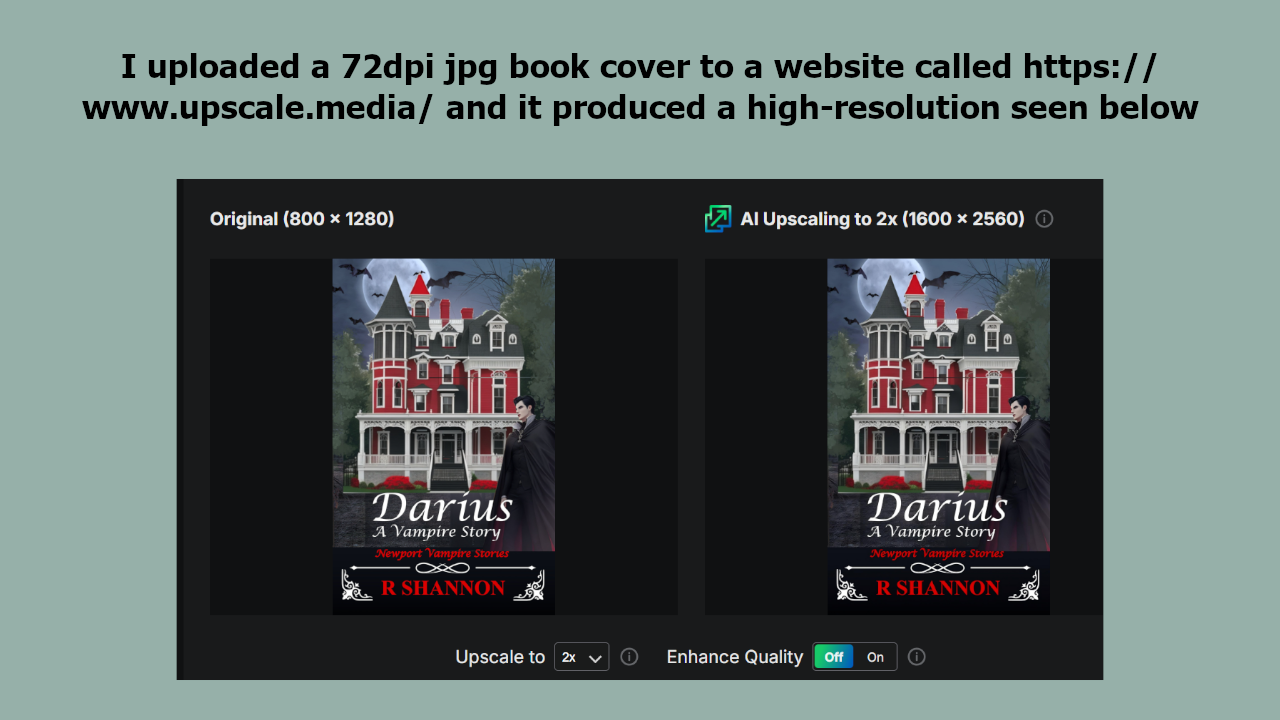
If you only have a low resolution, you can upscale it for free at the this website: Upscale.media
This will make sure you have a high resolution image before you begin.
YOU WILL ALSO NEED A PROPERLY-SIZED TEMPLATE:
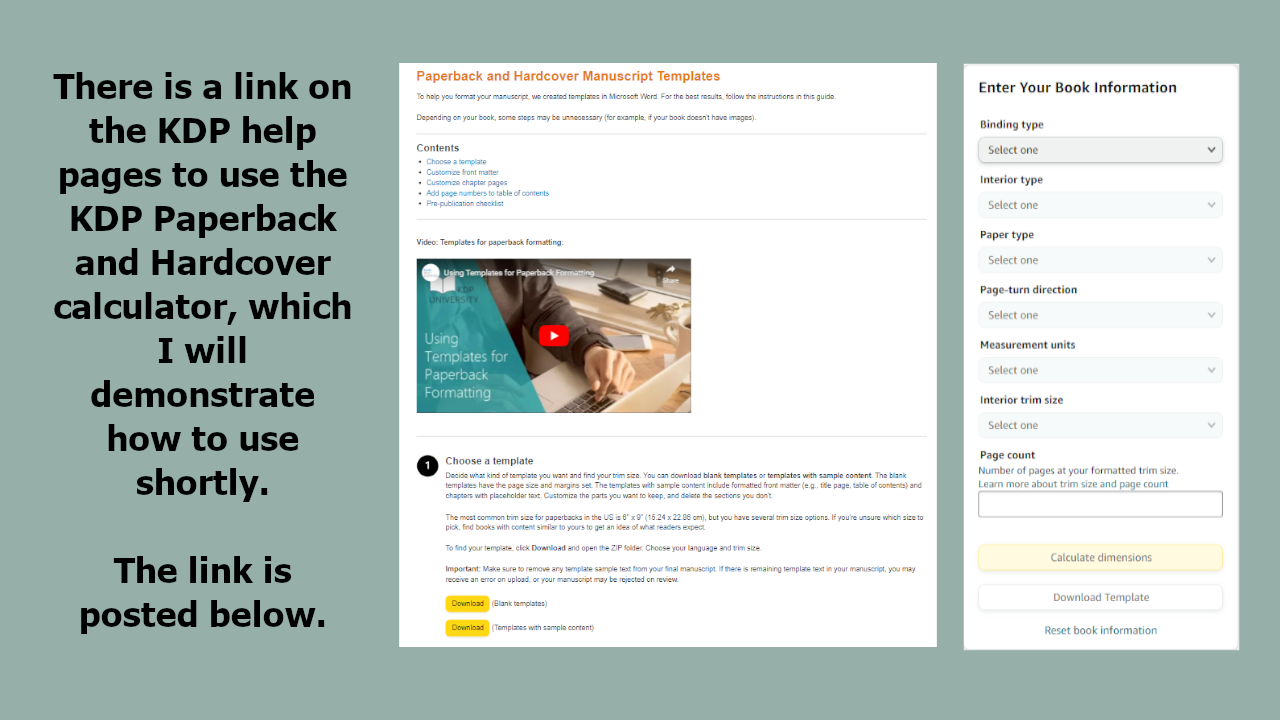
Each paperback cover will need it's own customized book cover template. The reason for this is because the number of pages of the book determines the spine width and that controls how wide the paperback cover needs to be.
KDP has a paperback calculator on it's website, and if you've never used it before, I do demonstrate it in the video on this subject below.
NEXT – YOU WILL NEED A PROPER PAGE COUNT:

Here is a picture of the last page of my Betrayal Paperback from my last video. It shows two different page counts. The top one is what will be printed on the last page of the book. However, this leaves out the front-pages that use roman numerals and it also includes all of the skipped pages in the document. This is not the correct page number for a book cover.
Below on the left hand side, you can see another page count that is shown at the bottom of the actual Microsoft Word manuscript. This is how many actual pages are in this document. This is the page count you will need to run the Paperback calculator and get a proper sized paperback template.
Write down the proper page number before you go to the KDP calculator and run the template. You will need to click through the questions and choose your answers, including the size of paperback you will use. I use a 5.06 x 7.81 and demonstrate this choice in the video below if you want to see it done. Otherwise, you can go straight to the KDP calculator here.
NEWBIE TIP ON BRANDING BOOKS IN GENERAL:
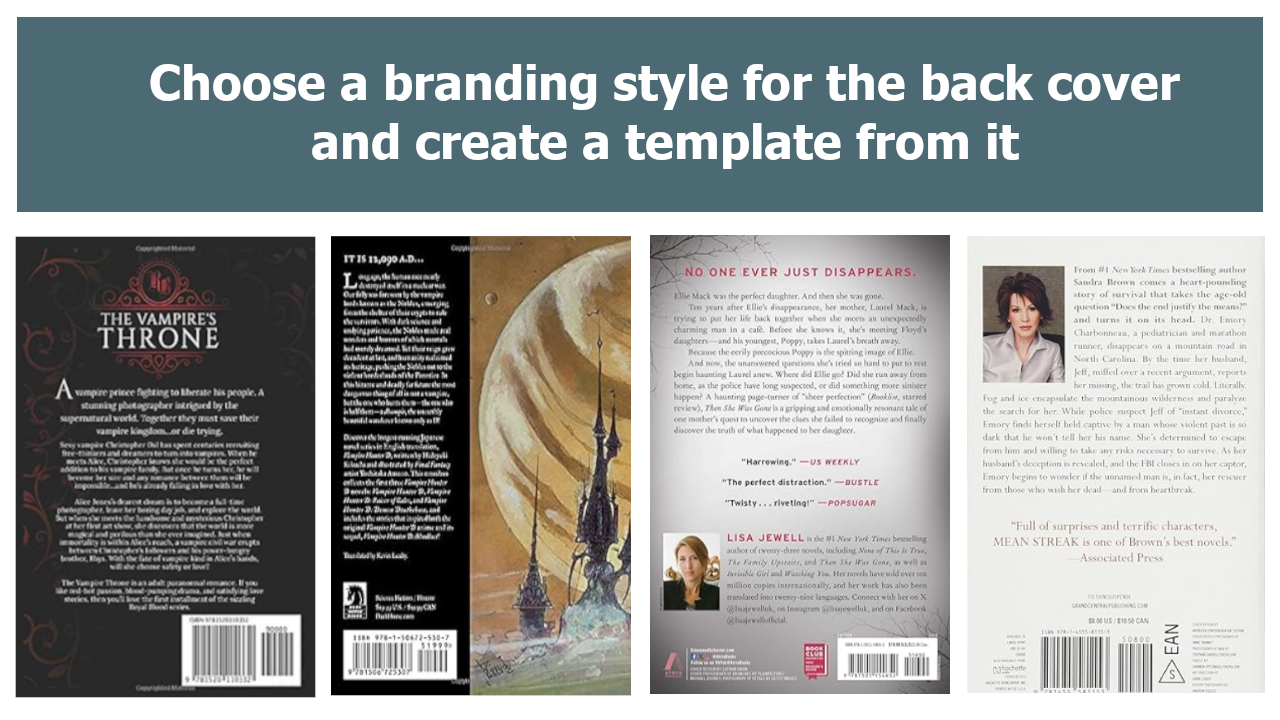
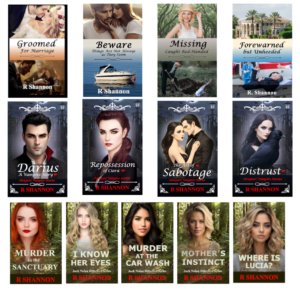
Above is a graphic panel showing you four back-cover examples that I pulled form Amazon this morning by searching for paperbacks in the vampire genre. I also pulled two other back covers just for comparison. You may want to think about what type and style of back cover you want to create before starting. You will follow the same procedure I've demonstrated in the video below, but you may choose another style for your book.
The book featured in my video is Betrayal and this is my 14th published book and it's the 6th book in my Newport Vampire Stories Series. So the branding for this series is already established. While I create my Paperback cover from the eBook cover, I will show you how to follow a style template as I work.
Once you choose a style for the back cover of your own, you can bring in that photograph and use it in the same way I use my series book template.
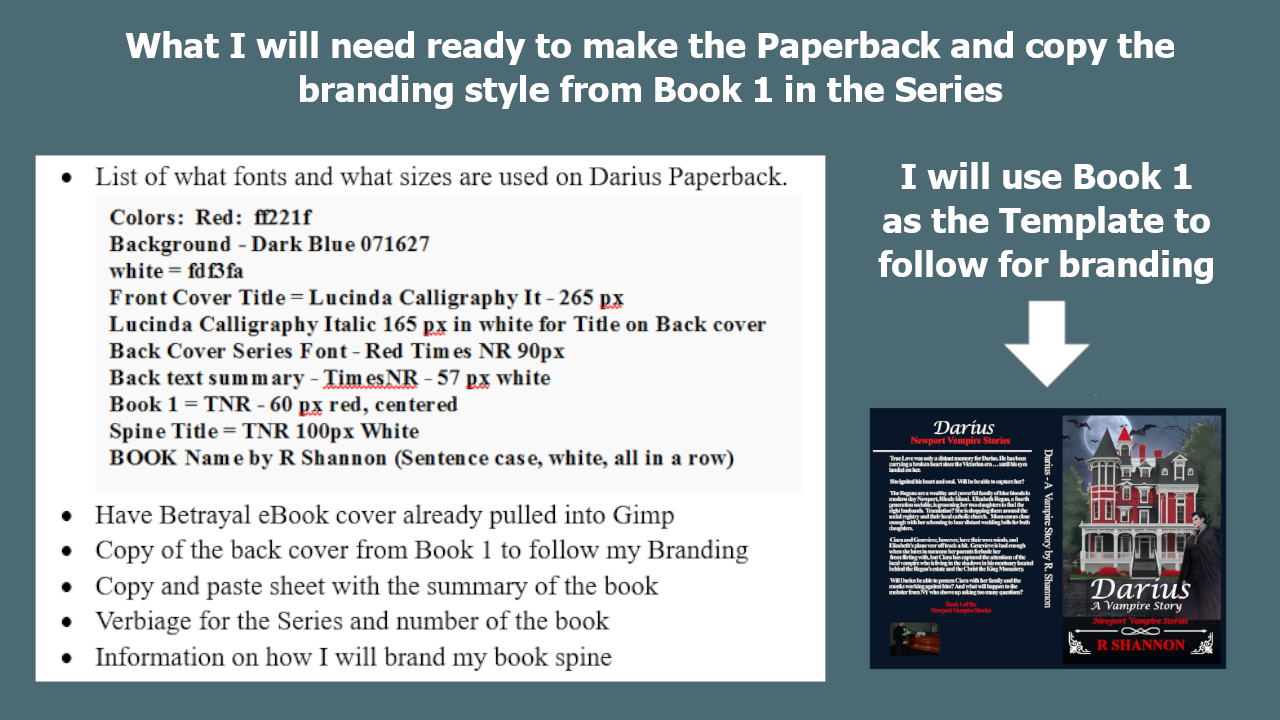
Because my style is already established, I have a list of everything that I will need from the cover, including the layout, all the color numbers, the font names and sizes, and even the size of the font I will use in the spine of the book.
QUICK SUJMMARY OF THE VIDEO:
If you are not a newbie and have no need to see it done, I will just summarize what I do in the video:
I bring in the series paperback template as a 'style template' and add guidelines to the downloaded KDP calculator paperback template.
I pull in and align the ebook cover between the guidelines.
I then pull in the back cover picture and align it accordingly.
Then one by one, I start at the top and create each text layer after another, using the series style template along with the customized margins from the paperback template.
Then using the text tool along with the rotate tool, I create the spine text and align in the center of the guidelines.
I save the finished paperback as an .xcf file so that it saves it as a gimp file with all of the layers in tact.
Then I export the same image as a .jpg file.
I then pull in that .jpg from the recent list and save the .jpg as a pdf. Gimp had a glitch at one time going from an .xcf file straight to a .pdf. So I just save the jpg first, which I will need anyway, and then I save the .pdf file.
That's everything in a nutshell. I'll post the video below for anyone who wants to watch the cover being created in real time.
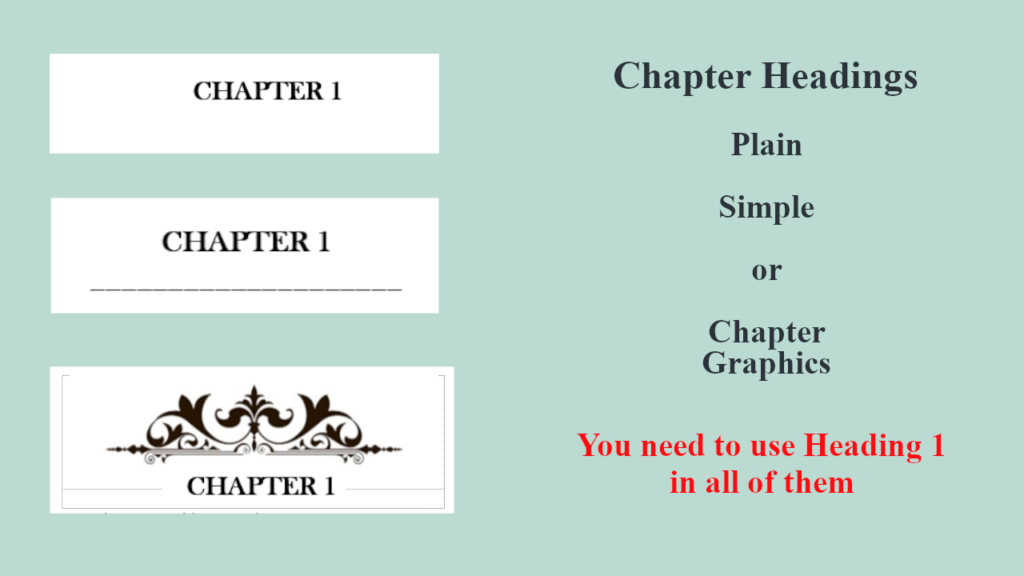 Chapter title graphics can be very tricky with the 'easy flow' settings and all the different eReaders that use the Kindle App. I've started using a simple Chapter underline and seem to have no problems with it.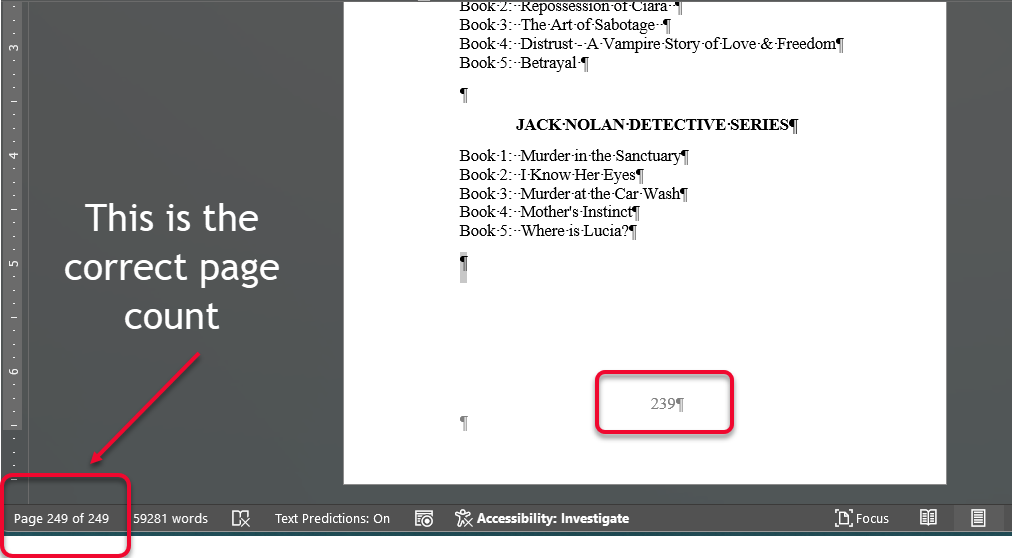
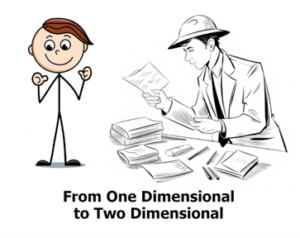 Once you have all of these story parts connected, this is the easiest time to take the characters from stick figures into two-dimensional characters. The characters will be transformed into their final three-dimensional states during the actual book-writing process, so the goal in this brainstorming process is to sculpt two-dimensional characters.
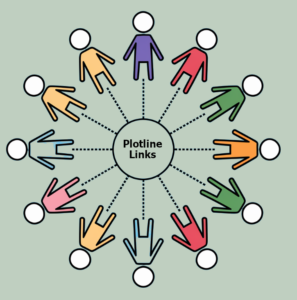 So the next set of questions is designed to take your story idea from this crime/mystery spine to a second dimensional level. This is the point where you can add realistic character traits and motivations that will fit inside the plotline. I assure you, there won't be any more trying to fit a fully-fleshed out round character into a square plotline. This process will avoid that.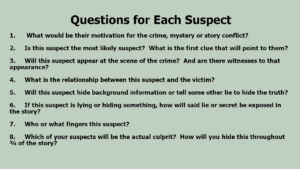
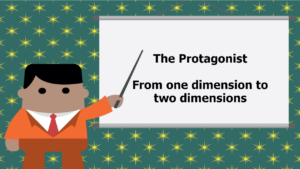 Unless you are writing in a series where the main character is already fully developed, it's best to wait until after choosing the antagonist, suspects, and motivations for each of them to infuse the main protagonist with human traits. Why? Because the protagonist will need to have a character arc and this will need to be developed over the action of the story and in relation to all of the different suspects.
 Once you know who, what, when, where and how the story will proceed, now you can choose the type of protagonist needed to solve the mysteries. Now it is time to sketch in more character traits and details. This process will take your stick figure and raise it to a level of a two-dimensional character.
 What fears or human frailty will the sleuth need to overcome in solving the crime? This is what drives a character arc. What will the main character ultimately learn? Does he have a fear of heights? Is she normally timid and now has to be courageous? What inner fears will be challenged when going about solving the crime and/or mystery?
 Again, it's easier to create a character after you already know what he/she will be required to do physically, what skills they will need, and what human flaw can make this challenging. It's easier than forming a main character that you like and then trying to fit him or her into a storyline that already has a life of its own.
 Is there a moral dimension to the conflict that raise the stakes? Does the protagonist's decision have far-reaching ethical implications? Is he/she fighting for justice, truth, or a greater good? Moral dilemmas add weight and complexity to the stakes.
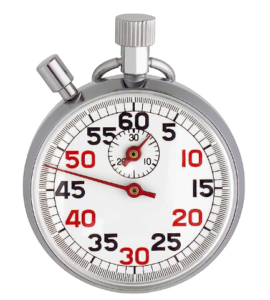 Is there a ticking clock in your storyline? Is there a deadline to solve the crime? Is there a rapidly-approaching event that can significantly heighten the stakes? The faster the clock ticks, the more intense the pressure, the higher the stakes. This added time pressure can turn a mystery into a thriller.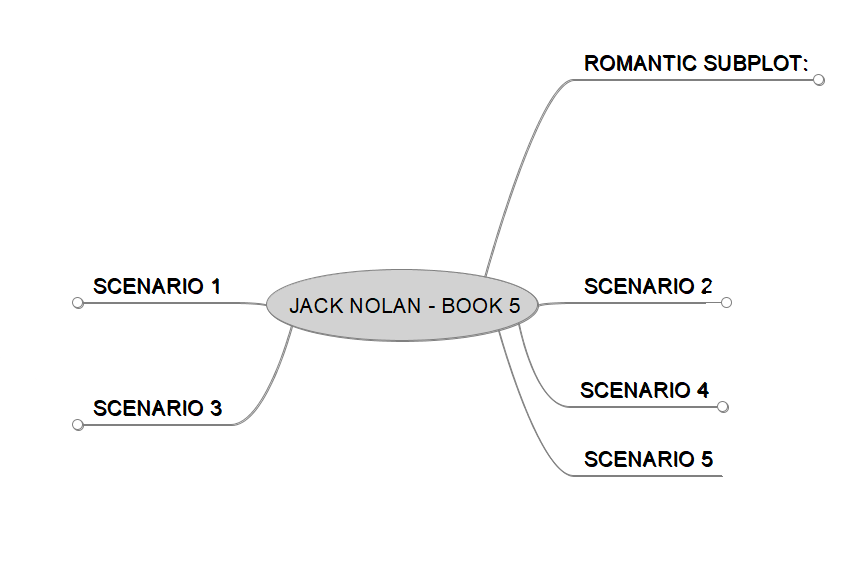
 When Brainstorming a Novel Storyline, what questions do you need to ask and answer? After having written 14 novels, I believe this technique that I'm about to tell you about will help anyone brainstorm a working plotline.
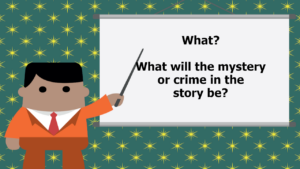 What will the mystery or crime in the novel be? Will it be a psychological thriller and mind control is the crime? Will it be a murder mystery? If so, what is the cause of death? If it's a science fiction plotline, what mystery will hook the reader and thread through the entire story only to be revealed at the end?
 The type of crime or mystery will dictate the investigation methods and details. It will also dictate what clues will be needed in order to slowly reveal the mystery throughout the four-part plot structure.
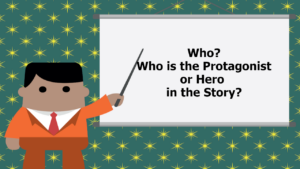 Is he/she a private detective, an amateur sleuth, a police officer, or maybe just a weekend visitor who is inadvertently led into solving a mystery?
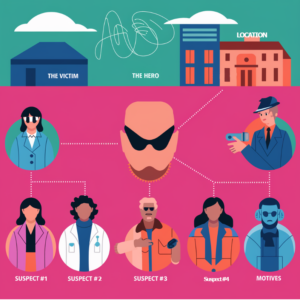
 Determine the identity, background, and significance of the victim. This decision can affect the motive, the suspects, and the overall narrative story arc. The victim's characteristics can also influence how the crime impacts other characters or the community at large. Before figuring out who the suspects are, you need to know who the victim is and why they were murdered or wronged in some way. If it's not a crime story but just a mystery or thriller, you will still need a victim. They may not die in the story, but there will be at least an injustice done to them. What is that injustice and who is the victim of it?
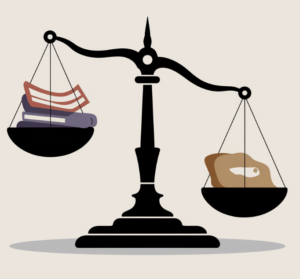 The victim's background, their relationships, and their secrets are all vital. Were they likeable? Did they have known enemies? A compelling victim, even if flawed, gives the reader someone to care about and root for. Even if the victim hasn't been killed or murdered, who is being bullied or targeted as the victim and why?
 Where will the story play out? Most stories will have multiple stages, but where will most of the action take place? Will it be a haunted estate house? A corrupt business office? Will it be on the streets in a cityscape? How does the setting influence the mood and the unfolding of the mystery? For example: If it's a gothic novel, you will want a large estate house or a monastery, a place that has secret rooms, tunnels, or has a long history with lots of secrets. If it's a urban thriller, you will need several stages in a city scape. If it's a psychological thriller, it may need at least a mental institution. Think of yourself as a location scout for a movie: What interesting places can most of the drama take place?
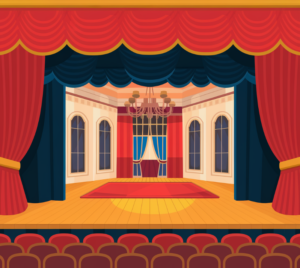 Choose a location that not only serves as a backdrop or a stage for the events to take place but which can become its own character. What secrets does the location harbor? Who lived in the historic mansion in another era? Will you need a remote island somewhere to have a closed-door mystery? In a city scape, the backdrop may be about about the certain era, or just a gritty story, or a surreal story. In a mystery drama, what happened in the main family that started all the secrecy? What sin has been passed down through the generations? What corporate setting do you need to show back-door deals or money laundering? What setting can you choose that will enhance the story?
 Will the story be set in a specific time period? Will it be a general contemporary book that won't reference any specific time period at all? Or will it be specifically cast in an era or time period that will require research?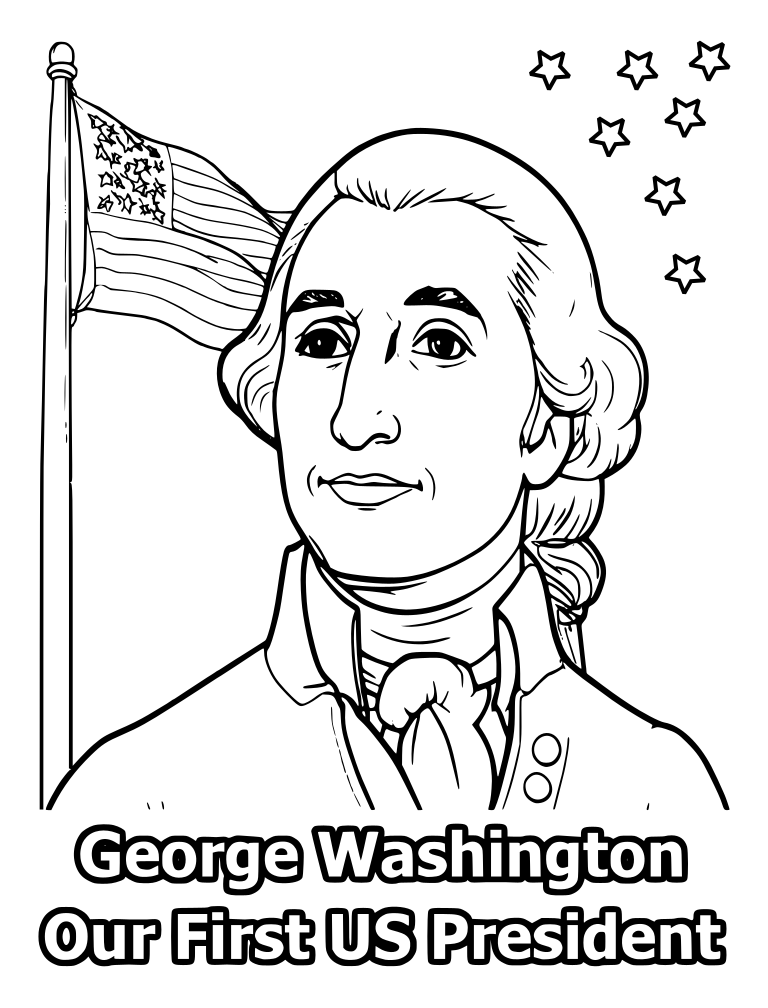
 I decided not to change the actual plotline of the story because I still liked it. I chose to polish up my prose and add some additional foreshadowing.
 I had the book edited originally, but I just changed every other sentence, so it had to be re-edited. I knew that going into this, so it was okay. Now, I like to edit the book myself and I have an elaborate multi-layer stage of proofreading that I go through so that when I pass the book to an editor, his or her time is not eaten up with correcting silly typos and adding forgotten commas.
 Before I get to how to do a 2nd edition of your book, the preliminary questions you need to answer are:
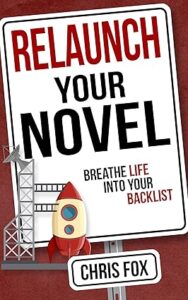 I read Chris Fox's book Relaunch Your Novel and he had great advice. He got my wheels turning and he asked the right questions about why you would want to relaunch your novel.
 The biggest temptation along the way was to take the attitude that everyone's early books aren't that great, so let go and just move on. This would have certainly given me a quick fix. But in my case, I just couldn't leave the book alone knowing that I could probably polish it up a bit before moving on. So for me, even though it was tempting to just let go and move on, I decided I want to fix the book -- and maybe even the entire series -- but I wasn't sure whether I just wanted to do a re-edit or to change the storyline, etc.
 I decided that I wanted to just fix the first book in the series because it had the lowest ratings. The second reason I wanted to make the effort with fixing the book is that I have now finished the series with the 5th book, and now that I know how the story ends, I wanted to put a little foreshadowing into the book while I was buffing it up.
 This was the one question that led me down the road of choosing to write a 2nd edition: What will I get out of it? The answer was and is: I knew if I fixed Book 1 that then I would be able to let go of the entire series and move on. I still like the stories and the series itself. It's not my most popular book series, but I still like it. So fixing the first book was important to me in terms of 'my body of work'. I knew I had more experience and I could improve the book, even if it was just adding some foreshadowing or improving on the prose.
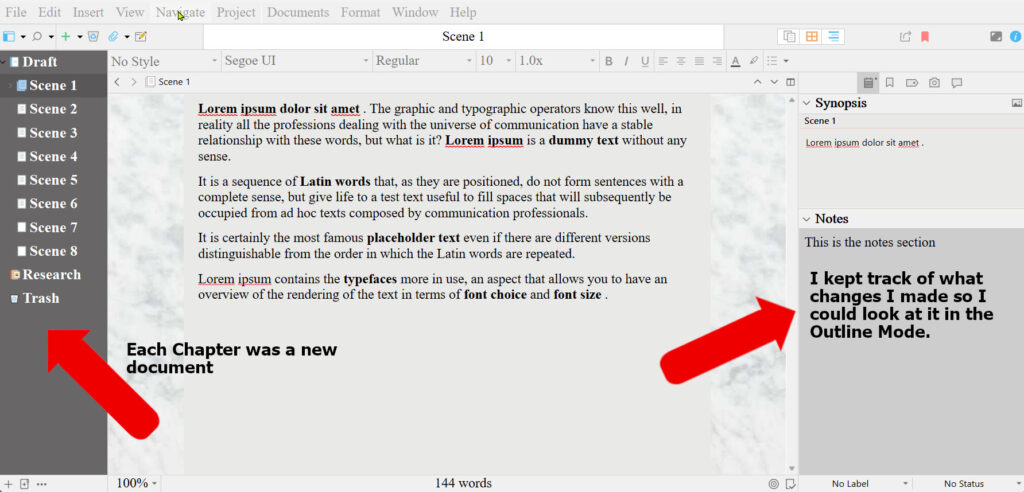
 The first decision I made was to pull the novel into Scrivener, divide it up into chapters and read through it. The next question I had to answer was: Do you want to change the plotline? Or do you want to add some foreshadowing and just improve the prose?

 If you, however, are self-publishing and are planning to do your own marketing, giving away your book, especially when you are just breaking in as an author is crucial. Once you decide to give away your books, you will need a PDF document and an ePub document.
 As I'm sure you already know, you can create a PDF inside Word, so that's not a problem. However, you will need a conversion program to create the ePub. I use the program called Convertio.co. This is a paid plan, and it comes to $9.00 a month at the time of this blog. If you only have one book, you can sign up for one month and then stop the service -- but check to make sure that's an option before you do that.
 Sigil is a program for making or polishing up ePubs after conversion. I always had to get rid of a lot of crazy codes in the ePub so that's why I used Sigil throughout the years.