
WHY OUTLINING SAVES YOU FROM THE REWRITE PILE
 When you sit down to outline your story before you write a single scene, something shifts. You stop thinking like a writer and start thinking like a builder. That's the whole point.
Most new writers want to jump straight into scenes and dialogue. They've got a great opening line in their head, and they just want to get on with it. But here's the problem: when you write first and figure out the story second, you end up rewriting. A lot. You'll discover halfway through chapter five that your killer couldn't have been at the scene, or that your protagonist's motivation doesn't hold up, and now you're tearing apart pages you already fell in love with.
Outlining lets you put on a few different hats before you ever put on your writer hat. Each one has a job to do, and if you do those jobs first, the writer hat gets to show up later and just write — no backtracking, no throwing chapters in the trash.
Here are the professional hats you'll need to wear:
 The Brainstorming Hat — This is the first hat, and it's the loose one. You wear it when you're sketching out a few possible storylines, just to see which one has legs. This is quick work — short, messy ideas, not finished plots. The goal isn't to pick "the" story yet. The goal is to make sure whatever story you commit to actually has enough potential for twists, turns, and a full novel's worth of trouble. Don't skip this hat. Committing too early is how writers end up 40,000 words into a story that runs out of gas.
 The Story Engineer Hat — Once you've picked your storyline, this hat goes on. This is where you lay out the bones of the story — what happens, in what order, and why. You can do this with short paragraphs, a bulleted list, index cards, whatever gets the structure out of your head and onto something you can look at. It won't be pretty. It's not supposed to be. This is the layer where you make sure the story actually holds together before you build anything on top of it.
 The Location Scout Hat — This one comes after your story has taken shape in the engineering stage. Now you go looking for the places where all of this is going to happen. Where does the crime scene sit? What's down the street? What does the neighborhood look like? Putting in a little effort here pays off twice — it makes your story feel grounded and real, and if you've ever thought about your book being adapted for film or streaming, having real, scoutable locations gives you a head start.
Wear these three hats well, and by the time you put on the Writer hat, the heavy lifting is already done. We'll talk about the other hats you wear before the Author's Hat in our next article.

Writing a Novel in Layers

Have a peek behind a real novel.

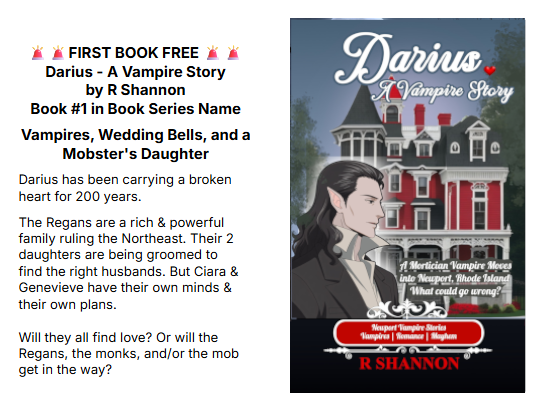
John Walsh is a successful funeral director with a loving family but he has a weakness for other women. The modern world thinks cheating is a victimless crime, but is it?
Movie Reviews
 The biggest hurdle for new writers isn't a lack of ideas; it’s the pressure to be an "Author" too soon. If you sit down at a blank page expecting to produce polished, rhythmic prose on your first try, you’ll likely stall before Chapter Two.
 Before the first sentence is written, you are an Engineer. You aren't worried about the beauty of the bridge; you’re worried about whether it can hold weight. During brainstorming, your job is to stress-test your concept. Does the plot have enough tension? Is the protagonist’s motivation strong enough to power 300 pages? You are building the foundation.
 If you are writing a mystery or a thriller, it’s time to put on your Investigator’s hat. You are working backward, looking at the "crime" and deconstructing it. You need to know exactly how the deed was done before you can hide the truth from your readers.
 This is the most critical phase. Now, you put on your Town Crier hat. Your only job is to blurt out the story as fast as you can.
 It is only when the draft is finished—when the "The End" is typed and you finally sit back to review the context of the entire journey—that you finally put on your Author hat.

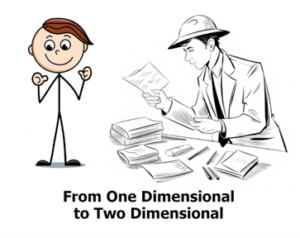 Once you have all of these story parts connected, this is the easiest time to take the characters from stick figures into two-dimensional characters. The characters will be transformed into their final three-dimensional states during the actual book-writing process, so the goal in this brainstorming process is to sculpt two-dimensional characters.
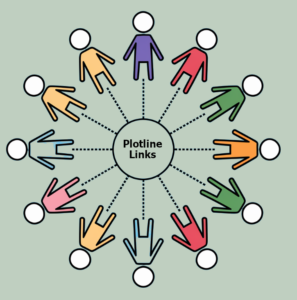 So the next set of questions is designed to take your story idea from this crime/mystery spine to a second dimensional level. This is the point where you can add realistic character traits and motivations that will fit inside the plotline. I assure you, there won't be any more trying to fit a fully-fleshed out round character into a square plotline. This process will avoid that.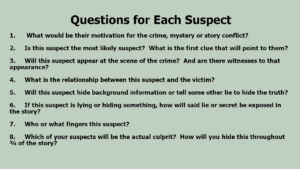
 Unless you are writing in a series where the main character is already fully developed, it's best to wait until after choosing the antagonist, suspects, and motivations for each of them to infuse the main protagonist with human traits. Why? Because the protagonist will need to have a character arc and this will need to be developed over the action of the story and in relation to all of the different suspects.
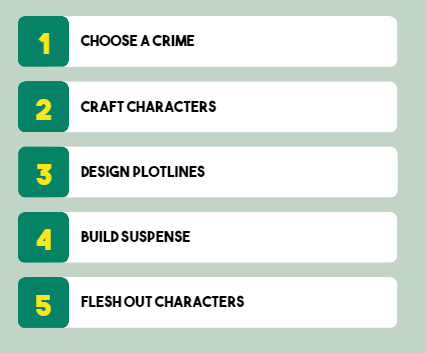
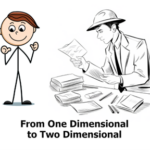 Once you know who, what, when, where and how the story will proceed, now you can choose the type of protagonist needed to solve the mysteries. Now it is time to sketch in more character traits and details. This process will take your stick figure and raise it to a level of a two-dimensional character.
 What fears or human frailty will the sleuth need to overcome in solving the crime? This is what drives a character arc. What will the main character ultimately learn? Does he have a fear of heights? Is she normally timid and now has to be courageous? What inner fears will be challenged when going about solving the crime and/or mystery?
 Again, it's easier to create a character after you already know what he/she will be required to do physically, what skills they will need, and what human flaw can make this challenging. It's easier than forming a main character that you like and then trying to fit him or her into a storyline that already has a life of its own.
 Is there a moral dimension to the conflict that raise the stakes? Does the protagonist's decision have far-reaching ethical implications? Is he/she fighting for justice, truth, or a greater good? Moral dilemmas add weight and complexity to the stakes.
 Is there a ticking clock in your storyline? Is there a deadline to solve the crime? Is there a rapidly-approaching event that can significantly heighten the stakes? The faster the clock ticks, the more intense the pressure, the higher the stakes. This added time pressure can turn a mystery into a thriller.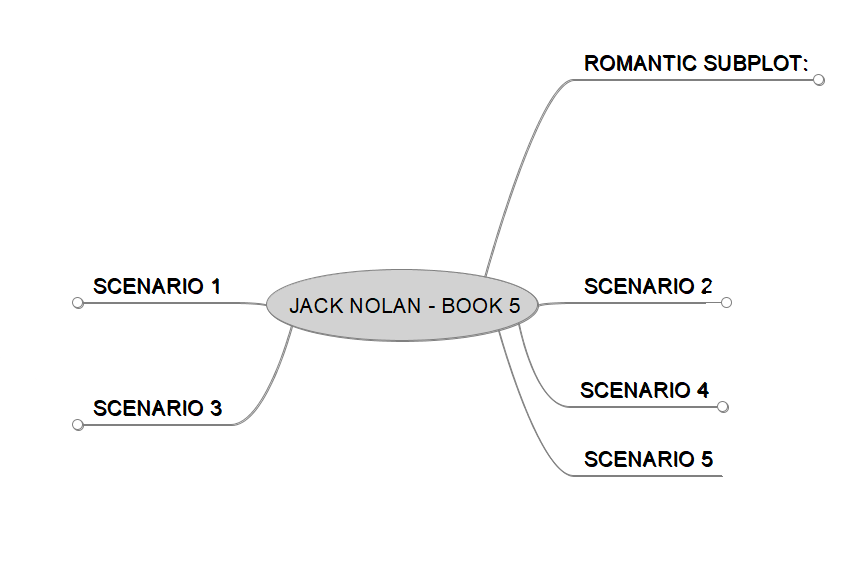
 When Brainstorming a Novel Storyline, what questions do you need to ask and answer? After having written 14 novels, I believe this technique that I'm about to tell you about will help anyone brainstorm a working plotline.
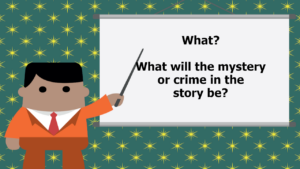 What will the mystery or crime in the novel be? Will it be a psychological thriller and mind control is the crime? Will it be a murder mystery? If so, what is the cause of death? If it's a science fiction plotline, what mystery will hook the reader and thread through the entire story only to be revealed at the end?
 The type of crime or mystery will dictate the investigation methods and details. It will also dictate what clues will be needed in order to slowly reveal the mystery throughout the four-part plot structure.
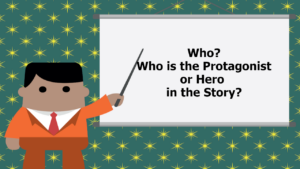 Is he/she a private detective, an amateur sleuth, a police officer, or maybe just a weekend visitor who is inadvertently led into solving a mystery?
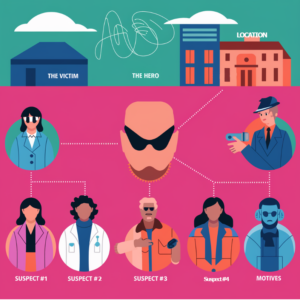
 Determine the identity, background, and significance of the victim. This decision can affect the motive, the suspects, and the overall narrative story arc. The victim's characteristics can also influence how the crime impacts other characters or the community at large. Before figuring out who the suspects are, you need to know who the victim is and why they were murdered or wronged in some way. If it's not a crime story but just a mystery or thriller, you will still need a victim. They may not die in the story, but there will be at least an injustice done to them. What is that injustice and who is the victim of it?
 The victim's background, their relationships, and their secrets are all vital. Were they likeable? Did they have known enemies? A compelling victim, even if flawed, gives the reader someone to care about and root for. Even if the victim hasn't been killed or murdered, who is being bullied or targeted as the victim and why?
 Where will the story play out? Most stories will have multiple stages, but where will most of the action take place? Will it be a haunted estate house? A corrupt business office? Will it be on the streets in a cityscape? How does the setting influence the mood and the unfolding of the mystery? For example: If it's a gothic novel, you will want a large estate house or a monastery, a place that has secret rooms, tunnels, or has a long history with lots of secrets. If it's a urban thriller, you will need several stages in a city scape. If it's a psychological thriller, it may need at least a mental institution. Think of yourself as a location scout for a movie: What interesting places can most of the drama take place?
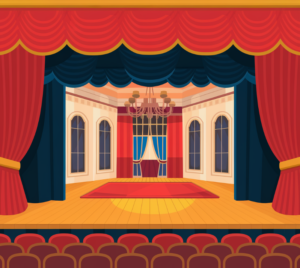 Choose a location that not only serves as a backdrop or a stage for the events to take place but which can become its own character. What secrets does the location harbor? Who lived in the historic mansion in another era? Will you need a remote island somewhere to have a closed-door mystery? In a city scape, the backdrop may be about about the certain era, or just a gritty story, or a surreal story. In a mystery drama, what happened in the main family that started all the secrecy? What sin has been passed down through the generations? What corporate setting do you need to show back-door deals or money laundering? What setting can you choose that will enhance the story?
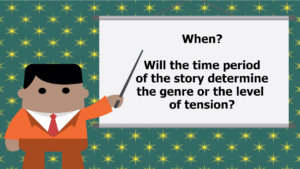 Will the story be set in a specific time period? Will it be a general contemporary book that won't reference any specific time period at all? Or will it be specifically cast in an era or time period that will require research?
 If you are stumped for a main story, or if you are stumped for what happens now, or even if you have written yourself into a bit of a corner, this instructional will help, along with your own creativity and thinking, to bring about new possibilities.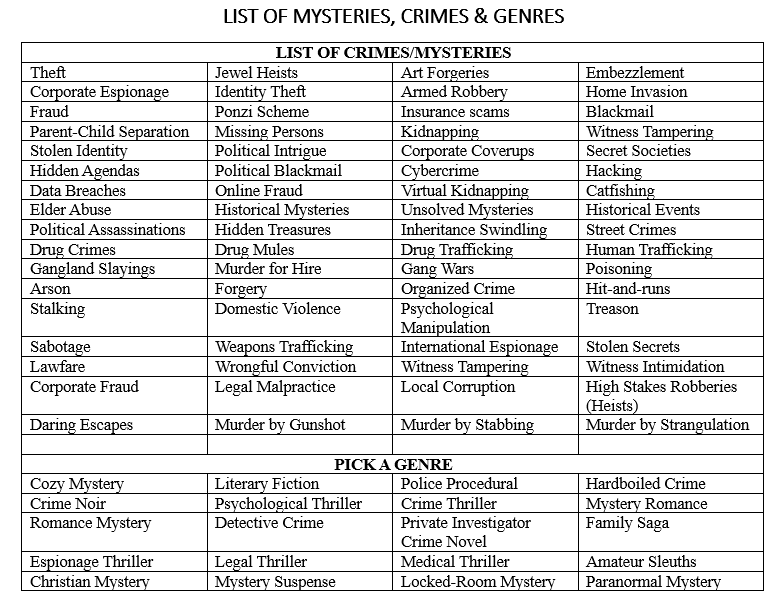

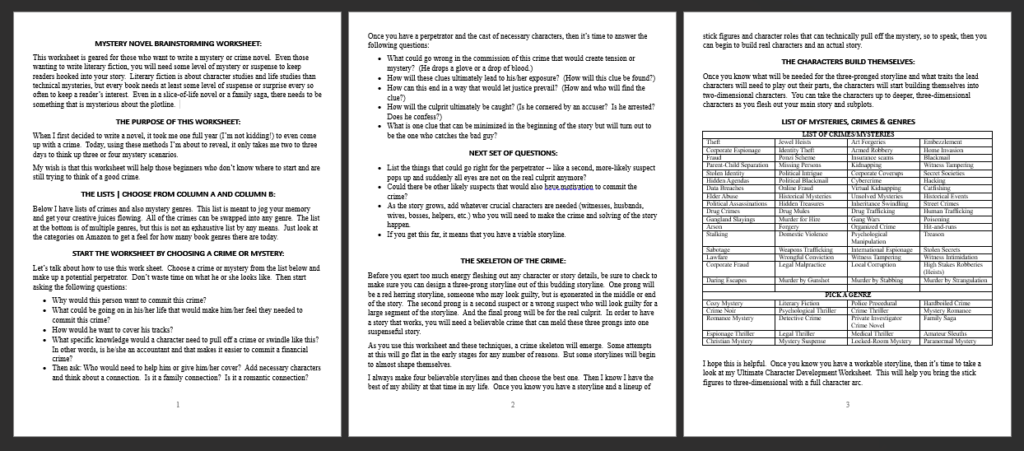
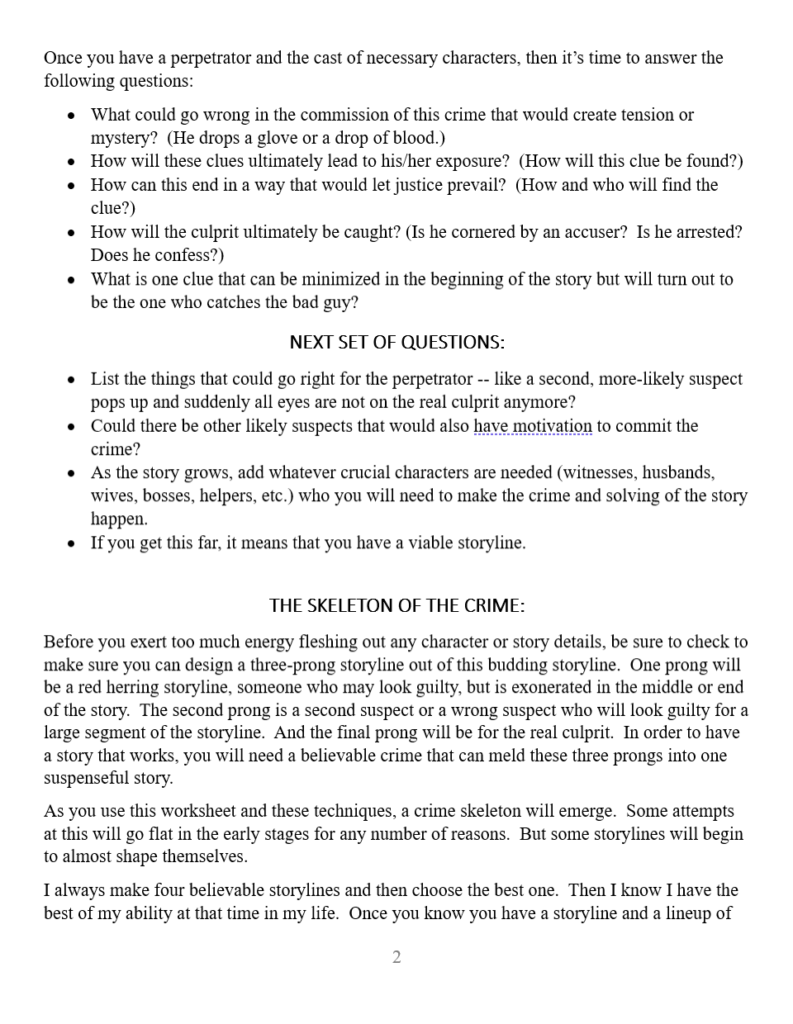
 Once you have a perpetrator and the cast of necessary characters, then it’s time to answer the following questions:
 Before you exert too much energy fleshing out any character or story details, be sure to check to make sure you can design a three-prong storyline out of this budding storyline. One prong will be a red herring storyline, someone who may look guilty, but is exonerated in the middle or end of the story. The second prong is a second suspect or a wrong suspect who will look guilty for a large segment of the storyline. And the final prong will be for the real culprit. In order to have a story that works, you will need a believable crime that can meld these three prongs into one suspenseful story.
 As you use this worksheet and these techniques, a crime skeleton will emerge. Some attempts at this will go flat in the early stages for any number of reasons. But some storylines will begin to almost shape themselves.
 Writing a novel is a huge undertaking. There are many things that go into the writing of a fiction story. The best tip I can pass on is this: Break everything down into little bite-sized pieces. By doing this, you can reduce a huge project down to do-able portions that can be done whether you have 2 hours a week to write or two full days! It only requires a little planning and organization.
 It’s important to keep reading as your own journey as a writer continues. Each author has a different style and uses different storytelling techniques. The stories don’t even have to be great. You can learn from the good, the bad and the bland. Just analyzing what made a book bland is a great lesson in itself. Did the story need more action? Did the story get stuck somewhere?
  or other books you read. Reading other authors is crucial no matter where you are on the writing spectrum. However, when you’re new, you can learn a lot from watching mystery or crime noir movies. I like movies from the 1940s, 1950s, and 1960s. The movies in these decades didn’t have CGI and the directors had to use the stage to tell the story. They used wider shots and props to assist the storytelling. By watching these older movies, you can learn a lot regarding writing.
  It’s a good idea to read the synopsis before you view the movie. Knowing at least a basic outline of the story will allow you to absorb more as an author. If you go into the movie blindly, you will be “experiencing the movie” as a viewer only. By knowing ahead of time what story will be unfolding, it will allow you to watch specifically for certain scenes to unfold. You can watch what tools are used to move the story along.
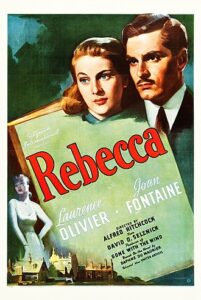 If you are looking for a suggestion, I would suggest Rebecca for the first movie. This movie was directed by Alfred Hitchcock and it has a lot of gothic atmosphere. There is also a psychological plotline in this story so it is a goldmine for learning storytelling tools.
  When I first decided to write a novel, it took me one full year (I’m not kidding!) to even come up with a crime. Today, using these methods I’m about to reveal, it only takes me two to three days to think up three or four mystery scenarios.
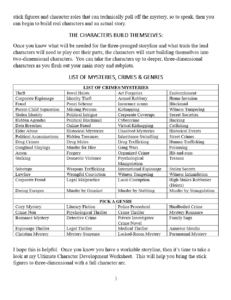
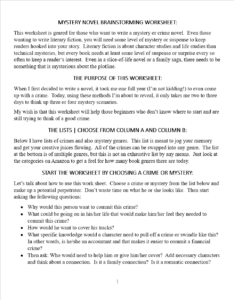 Let’s talk about how to use this work sheet. Choose a crime or mystery from the list below and make up a potential perpetrator. Don’t waste time on what he or she looks like. Then start asking the following questions:
 Once you have a perpetrator and the cast of necessary characters, then it’s time to answer the following questions:
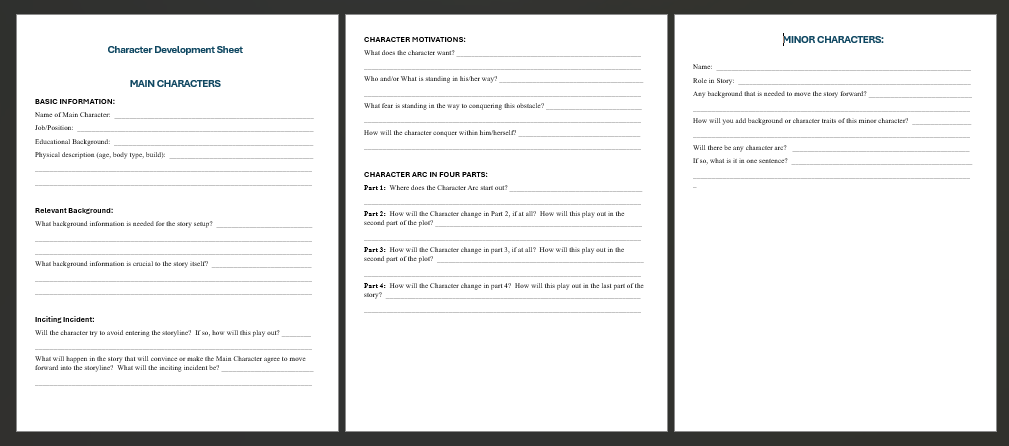
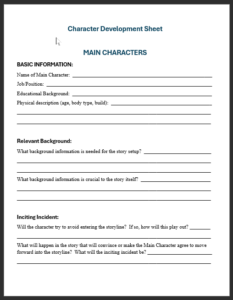 When I started writing several years ago, I came across the standard character worksheet and it focused mostly on physical attributes, occupation but there was a disconnect regarding their role in the storyline, which is the most important part.
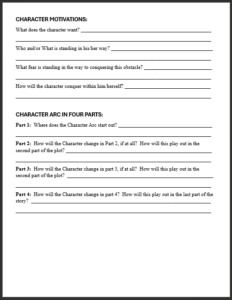 As a newbie, it took me awhile to remember that a character needs to have an arc over the storyline. So it's important -- and time saving -- to know what that arc will be before you even begin the draft. This character sheet can help you find this so you know where you are starting from and where you want to end up. The following questions should help you focus on what this character arc will be:
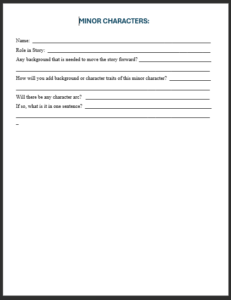 For minor characters, you only need to answer a few questions. It helps to know what role these minor characters will play and what, if any, background information is needed to support them in the storyline:
 For anyone who is new here, I use a Four Act Structure as opposed to the more-popular three-act structure. I find that middle section in the three-act structure too confusing. Over the writing of 12 novels, I gravitated to a four-part structure as it is more symmetrical and makes more sense to me. I also believe, for whatever it's worth to anyone, that this three-act structure is responsible for the 'lagging' that often occurs in the middle of a story.

 The end of Part Two usually marks the midpoint of the book. I like to end this section with a .big reveal of some kind. Or maybe a clue that turns the investigation into another direction. There could even be a new murder, or the surfacing of an unusual suspect, or someone gets caught in a big lie that changes the direction of the investigation.
 Now the investigation gets a little stressful. The detectives may not agree on who the guilty party is, or maybe they know who it is but can't find the legal evidence to prove it. Maybe they are operating only on gut feeling and speculation at this point. They are rushing against the clock or against other forces working against them to solve it, catch the guilty party or find compelling and irrefutable evidence.
 Part four is broken down into two parts. In the first half of Section 4, the crime or mystery is solved. There will be whatever drama you want to add about the solving of this crime. Whether your detectives are battling physically with someone, bullets are being fired back and forth, or entrapping the guilty party, or just uncovering that last piece of evidence that will legally prove guilt, this is where this is revealed.
 The second half of Part 4 is the 'wrap up'. This is where you will show the new normal, everyone's life 'in resolution'. This is where you will also explain the full growth of your characters. Many author's don't do this, but I don't like to read books where things end where the reader is left to decide what it all means. I may have my own opinions, but I like to know what the author meant by the story. So I make sure I explain, again very quickly, how things are ending in a narrator voice.

 Most new writers want to get to the writing already. But in this layer of writing, all plot holes or inconsistencies will show up. Any clues that won't work when adding more suspects and motivations will show up in this layer.
 My template is short but it keeps me on track. I'll break it down below. This small template I use keeps my writing on point and tight. It prevents me from meandering, dawdling, going off on an irrelevant tangent or writing myself into a corner.
 n order to prevent head-hopping, which is very common among new writers, you need to be constantly reminded that each scene is in one perspective. Some writers write in first person and that's easy.
 Location is important for two reasons. One reason is casts the scene in cement. You have chosen a stage for the scene to take place. I don't write any scene or location descriptions in this layer of writing. But I can write the action of the scene in context of a location.