When you sit down to outline your story before you write a single scene, something shifts. You stop thinking like a writer and start thinking like a builder. That's the whole point.
Most new writers want to jump straight into scenes and dialogue. They've got a great opening line in their head, and they just want to get on with it. But here's the problem: when you write first and figure out the story second, you end up rewriting. A lot. You'll discover halfway through chapter five that your killer couldn't have been at the scene, or that your protagonist's motivation doesn't hold up, and now you're tearing apart pages you already fell in love with.
Outlining lets you put on a few different hats before you ever put on your writer hat. Each one has a job to do, and if you do those jobs first, the writer hat gets to show up later and just write — no backtracking, no throwing chapters in the trash.
Here are the professional hats you'll need to wear:
The Brainstorming Hat — This is the first hat, and it's the loose one. You wear it when you're sketching out a few possible storylines, just to see which one has legs. This is quick work — short, messy ideas, not finished plots. The goal isn't to pick "the" story yet. The goal is to make sure whatever story you commit to actually has enough potential for twists, turns, and a full novel's worth of trouble. Don't skip this hat. Committing too early is how writers end up 40,000 words into a story that runs out of gas.
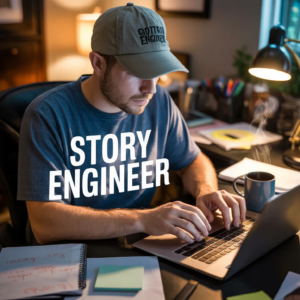
The Story Engineer Hat — Once you've picked your storyline, this hat goes on. This is where you lay out the bones of the story — what happens, in what order, and why. You can do this with short paragraphs, a bulleted list, index cards, whatever gets the structure out of your head and onto something you can look at. It won't be pretty. It's not supposed to be. This is the layer where you make sure the story actually holds together before you build anything on top of it.
The Location Scout Hat — This one comes after your story has taken shape in the engineering stage. Now you go looking for the places where all of this is going to happen. Where does the crime scene sit? What's down the street? What does the neighborhood look like? Putting in a little effort here pays off twice — it makes your story feel grounded and real, and if you've ever thought about your book being adapted for film or streaming, having real, scoutable locations gives you a head start.
Wear these three hats well, and by the time you put on the Writer hat, the heavy lifting is already done. We'll talk about the other hats you wear before the Author's Hat in our next article.
Below is a video I made for YouTube explaining the initial stages and layers of writing. I go over some of these points but others tips and tricks as well. For your convenience, I have time stamps below in case you want to just jump to the section you want to look at:
01:27 - Open Scrivener and open one document 01:45 - Other suspects, their motivation, red herring, etc. 02:15 - How it will End section 03:20 - Determining the framework of the script which will prevent writing for the trash can. 05:30 - Review of the layer elements 05:43 - Sneak peek into the next videos
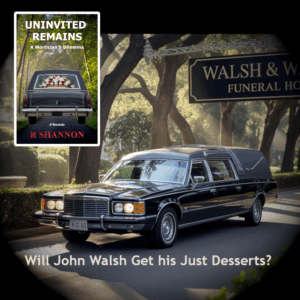
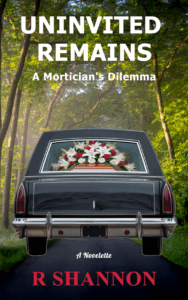
John Walsh is a successful funeral director with a loving family but he has a weakness for other women. The modern world thinks cheating is a victimless crime, but is it?
Tracking the Threads: Why Your Mystery Draft Needs Three Timelines
Writing a mystery is like building a clock. While the reader only sees the hands moving steadily forward, the internal gears—the secrets, the motives, and the hidden history—must mesh perfectly for the story to "tell time" accurately.
When you are in the thick of a first draft, it is easy to get lost in the prose. However, the secret to a bulletproof mystery isn't just a clever detective; it’s a rigorous organization of time. To keep your manuscript from collapsing under the weight of its own secrets, you need to manage three distinct timelines.
1. The Crime Timeline (The Hidden Reality)
This is the "Backstory" or "True History" of the event. It begins long before the first chapter and usually ends the moment the detective arrives on the scene.
What it tracks: Every move the killer made before, during, and immediately after the crime.
Why it matters: If the killer was at the hardware store buying rope at 4:00 PM, they cannot have been seen at the gala at 4:15 PM across town.
The Draft Benefit: By mapping this out, you ensure that the "truth" remains fixed. Even if your detective is confused, you never are. This prevents the dreaded "plot hole" where a culprit’s alibi is physically impossible.
2. The Novel Timeline (The Reader’s Journey)
This is the linear progression of the book, starting from page one. It follows your protagonist as they navigate the investigation.
What it tracks: When clues are discovered, when witnesses are interviewed, and the passage of days or hours within the narrative.
Why it matters: Mystery readers are notoriously observant. If your protagonist spends three days investigating but it’s still Monday in Chapter 10, the immersion breaks.
The Draft Benefit: Keeping a log of the Novel Timeline helps you control the pacing. If you notice five chapters have passed in a single afternoon, you might need to pick up the tempo or introduce a "timer" (like a ticking clock element) to raise the stakes.
3. The Subplot Timeline (The Human Element)
A mystery novel isn't just a logic puzzle; it’s a story about people. This timeline tracks everything that isn’t the murder—romance, personal growth, professional conflict, or side-mysteries.
What it tracks: The evolution of relationships and personal stakes.
Why it matters: Subplots provide the emotional "breather" between intense interrogation scenes. However, they can’t just vanish. If a detective has a blow-up fight with their partner in Chapter 4, they shouldn't be acting perfectly happy in Chapter 5 without a resolution.
The Draft Benefit: Tracking subplots ensures they are woven into the main mystery rather than feeling like "filler." It helps you time the emotional beats so they hit right when the main plot needs a shift in energy.
Pro-Tips for Managing the Chaos
The "X-Ray" Spreadsheet: Many authors use a simple table or spreadsheet. Column A is the Date/Time, Column B is the "Crime Fact," Column C is the "Novel Action," and Column D is the "Subplot Status."
Color Code Your Notes: Use red for the crime, blue for the investigation, and green for subplots.
Sync the Weather: It sounds small, but if it's raining in your crime timeline, it must be raining (or the ground must be wet) when your detective arrives in the novel timeline.
The Reveal Check: Use your timelines to see exactly when the reader "knows" something versus when the detective knows it.
Final Thoughts
Writing the first draft is about getting the story down and not much else. So this timeline tracking doesn't start until you have finished the first draft. The first draft is merely blurting out the story. You don't even have your writer's hat on yet. You are only the story engineer and location scout at this point.
But once the story now exists, it's time to begin to track the three significant timelines!
From Engineer to Author: The Many Hats of a First Draft
The biggest hurdle for new writers isn't a lack of ideas; it’s the pressure to be an "Author" too soon. If you sit down at a blank page expecting to produce polished, rhythmic prose on your first try, you’ll likely stall before Chapter Two.
The secret to finishing a novel is realizing that "Author" is actually the very last hat you’ll wear. To get to the finish line, you need to cycle through a whole wardrobe of different roles first.
1. The Story Engineer (Brainstorming)
Before the first sentence is written, you are an Engineer. You aren't worried about the beauty of the bridge; you’re worried about whether it can hold weight. During brainstorming, your job is to stress-test your concept. Does the plot have enough tension? Is the protagonist’s motivation strong enough to power 300 pages? You are building the foundation.
2. The Location Scout (Setting the Scene)
Next, you become the Location Scout. Writers often forget that a setting is more than just a backdrop—it’s a silent character. You must decide where your scenes take place and how those environments "speak." A tense conversation feels different in a crowded elevator than it does in a vast, empty cathedral. Scout your locations and make sure they are working for your story.
3. The Investigator (The Crime Skeleton)
If you are writing a mystery or a thriller, it’s time to put on your Investigator’s hat. You are working backward, looking at the "crime" and deconstructing it. You need to know exactly how the deed was done before you can hide the truth from your readers.
It's important to pick clues that wll point to no one or everyone in the beginning. It's important to know what will give rise to each suspect. This is all part of the spine of the story.
Often, this stage will look like a maze, with each suspect dead-ending at a different point, until only the True Culprit is revealed.
4. The Producer & Director (Plotting & Pacing)
Once you have the skeleton, you become the Producer. This is where you organize the elements. Where will the clues drop? Who will they point to? As the Director, you decide the "camera angles" of each scene—whose perspective we follow and how the information is revealed to the audience.
5. The Town Crier (The Rough Draft)
This is the most critical phase. Now, you put on your Town Crier hat. Your only job is to blurt out the story as fast as you can.
Ignore the Grammar: The Town Crier doesn't care about commas.
Forget the Spelling: If you know what the word meant, move on.
Don't Look Back: If you realize you changed a character's name in Chapter 4, don't go back to Chapter 1 to fix it. Just keep going.
You are simply shouting the story onto the paper. It will be messy, it might be loud, and it will definitely be "rough," but it will be done.
The Final Reveal: The Author
It is only when the draft is finished—when the "The End" is typed and you finally sit back to review the context of the entire journey—that you finally put on your Author hat.
Now, you can worry about the cadence of the sentences, the perfect metaphors, and the correct verb tenses. You can’t "author" a vacuum. You can only author a story that actually exists.
The goal of a first draft isn't to be good; it's to be finished. Keep writing, stay in character, and don't let the Author in the room until the Town Crier has finished his job.
John Walsh is a successful funeral director with a loving family but he has a weakness for other women. The modern world thinks cheating is a victimless crime, but is it?
Click on the graphic of my books and you will be brought to a page on my website where you can read a sample of my books in your browser. It's much easier than downloading samples from Amazon.
Check back often as I give away books all the time.
This blog post will be a peek behind the author workflow in Layer 5 of my Novel Writing in Layers Series. I am writing Book 6, Majestic Landings, in my police procedural series, Jack Nolan Detective Series.
Let me set the table, so to speak, about where I am in the book right now. I just finished Layer 4 which is the Down and Dirty First Draft, which I believe is the hardest layer to write.
BEGINNING LAYER 5
Above is a snapshot of the book as it now exists in Scrivener, which is the program I write Layers 1 to 6 in. I have gone ahead and filled in a few of the scenes so that I can explain to you what I do in Layer 5.
ON THE LEFT SIDE IS THE BINDER: The top folder is called draft, which is a default in Scrivener. Each sub-document is one scene in the novel. I also add in a few blank documents between Parts 1, 2, 3 and 4, so I can see how the story action is balancing inside the plot structure.
IN THE CENTER PANEL: This is where I write the scenes.
ON THE RIGHT SIDE IS THE INSPECTOR WINDOW: This section allows you to add a scene synopsis on another tab, but above, I have captured what it looks like on the Metadata Section.
WHAT HAPPENS IN LAYER 5?
This is my first layer of proofreading. I only focus on the following things in this layer of writing.
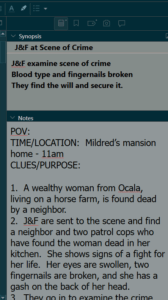
1. Making sure the scenes line up and flow smoothing and fill in the Synopsis box if I forgot to do it in Layer 4. I have a snapshot of the Synopsis box to the right or below. This allows me to look at my work in the Outline Mode where I can see the novel from a bird's eye view.
Since it's in the photograph here, I will also mention that I copy my scene outlines and paste them into the Notes section in case I want to review them.
2. I enter all of the character descriptions and location descriptions in this layer too.
3. I also check on the crime and investigation timeline as well as the novel timeline.
3A: The crime timeline I track with the metadata, which I will mention again below. I also use the Scrivener Highlighter to set off anything that references the crime timeline. This way, towards the end of this layer, if I decided to tighten up the timeline or find out I need a little extra time, it is very easy to quickly scroll through the novel and find any references to the timeline easily.
3B: All novels have a timeline too. A crime novel is usually a day to several weeks; whereas Gone with the Wind cover years and years. In each scene, I start with a little template referencing the point of view, the time/location and the clues/purpose.
As stated above, I read through the scenes, making sure that the last scene flows into the next scene. For example: If my detectives 'get into the car to return to the station,' I make sure I'm not referencing where they were before they got into the car, and stating again that they are entering the car.
I also watch my novel timeline to make sure the timing in the day is lining up with what's possible for human beings. In my humble opinion, authors have a lot of leeway to stretch the day, if needed, but if we go overboard, at some point, it pulls the reader's mind out of the book when they realize there's too much activity for one day as humans. By keeping an eye on the novel timeline, this prevents me from stretching a little too much.
THE METADATA - HOW AND WHY TO ADD CUSTOM META DATA.
Some authors probably don't use the metadata section and that's fine. But I like to look at the novel in the Outline Mode and this is where the custom metadata comes into play.
Every novel is different, so I am focusing on different things in each one. In this novel, there are multiple suspects, all of whom have shaky alibis, so the crime timeline and some other things are very important. So in this novel, I created metadata sections as follows:
Major Event - What happens in the scene
Technical information - Names, addresses, where body was found, first witness, etc.
Clues dropped - Chronological list of clues that drop
Time Line of the Crime - Time of death, time body was found, etc.
Relationships - Romantic Subplot and Character Arcs
WHAT'S NEXT IN LAYER 5?
Once I proofread all the way through, add in the descriptions, and my meta data, then I want to look at certain things to check on myself. I can set up the Outline Mode so I can see the Synopsis, the Clues, and the Crime Timeline side by side. I will post a picture below.
I can then look closely to make sure I don't mention a lab report that hasn't been delivered. Or one of the suspects is mentioned before anyone points them out, things like this.
I can see the chronology of the clues that have dropped to make sure that they are chronologically correct. I'm sure you get the drift.
My color scheme in Scrivener may make some of these things hard to see, so I have posted the Custom Metadata diagram below so you can see where things go and what the icons look like.
After looking at the various meta data in this bird's eye view setup, I'm ready to enter Layer 6, which is another round of proofreading; and again, I only focus on a few things.
I have done a short video about this in case you want to see me go over it inside Scrivener. There is a bit more information here for beginners, but it's good to watch it live too.
Be sure to check back to see another Live Peek Behind Layer 6! Be aware that I am not proclaiming myself as an expert novelist or the knower of all things. However, I used to search all the time for authors' workflow, but nothing ever showed up. I believe I could have advanced a lot faster if I had tips from more season's authors and that's my purpose here.
By seeing how one author does things, you may only take away one tip that will help you in the system you already use. I hope this blog post helps!
As authors, we all know how hard it is to get readers to take a few minutes of their time to leave reviews. I believe one part of the problem is that the Kindle app doesn't make leaving a review from the app from a tablet or phone easy.
Aside from that, I think people are just busy. But there is a way to add a link to the end of your eBooks that can take the reader to the exact review page.
However, it is just a bit tricky because you need to have the ASIN number when you don't get until the book is actually published.
3 QUICK STEPS TO ADD REVIEW LINK:
Publish your book.
Add the ASIN number to the end of this link (Replacing the Xs):
https://www.amazon.com/review/create-review?&asin=XXXXXXXX No quotes.
Reupload your final manuscript and check the link in the preview window.
That's it! It's that easy.
EXAMPLE PAGE TO PUT THE LINK ON:
Below I have an example page where you can put the link and what verbiage you can use for it. If you already have a thank you page for your readers, you can also add it there.
NOTE TO READER (Page Name)
Dear Reader:
This is my first short story/novelette. I have not received any feedback from readers yet – except friends, who always tell me the books are great! But I would love real reader feedback. So if any of you would be good enough to fill out a short questionnaire, I can send you my next novelette (Working Title: Writer’s Block) that will be released sometime in August for your trouble. Here is a link to the questionnaire that is on my website.
This short story has only been out for a few weeks, so if you would be good enough to leave me an honest review at Amazon.com, I would be so grateful. Here is a direct link to do that.
I love to hear any feedback about the book and enjoy interacting with my readers, so if you would prefer to just send an email, that will work too!
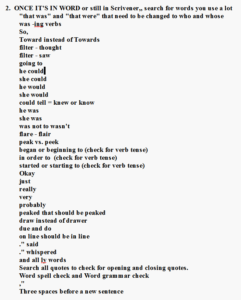
Every writer has strengths and weaknesses. At some point, it's important for each writer to recognize what their particular weaknesses are.
I made a list of my weaknesses and it's an expanding list that I add to with every book I write. You can see a glimpse of part of it to the left.
This list is within a longer document I call "Info - Proofreading" and I keep lists of lots of things to check regarding the development elements of a storyline, my own personal troublesome words, and other information that I want to remind myself of about proofreading in general.
I pull this list up when I get ready to proofread and scan it to remind myself of all that I want to check for. I have my notes about Writing a Novel in 8 Layers also in this document.
The above list of troublesome words is at the end of the long proofreading list and I add to it every time I find a word that was misspelled and I read over without noticing the mistake. This way, I'm keeping track of my weaknesses as an author and writer.
Some of the words are spelling traps for me. Some of them are just words I tend to use too often and some are the adverbs that are frowned upon these days like just, really and very.
Once I review the list I then go into some other strategies that I have developed over the 14 to 16 nooks I have written. I go into them below and I also have a video at the end of this blog post where I go into it live.
I search and find each of my troublesome words to make sure I've used them and/or spelled them properly.
Once I'm done with that list, I search through the document using the Control F (Find feature) to check that all of my quotes have an open quotation mark and a close quotation mark. It takes a little time to do this, but I feel much more secure when I check them. I ALWAYS find an extra one or a couple of missing quotation marks.
USING ALL CAPS TO FOCUS:
Another strategy I have developed regarding troublesome words is that I used the Fine and Replace Feature. By capitalizing the words, there's no way I can read over them. It forces me to stop and analyze each one to make sure I am making a decision about each word.
Let me give you an example: In my last novel, I replaced all of the HE WAS and SHE WAS verbs with all capitals so that I could look at each one and decide whether I could use a more descriptive verb. I found this very helpful. Now, this does make the first proofread a bit tedious, but it's okay. I would rather move slowly through the first proofread to make sure I address all of my tricky words.
READ ALOUD WITH MICROSOFT WORD:
After proofreading the text for my spelling, grammar, and verb weaknesses, I then shift over and use the "Read Aloud" feature in Microsoft Word and I listen to the book read back to me. This feature may only be available in Microsoft 365, but there are certainly plenty of other platforms where you can copy and paste your manuscript chapter by chapter and have it read back to you.
WHAT ABOUT THE EDITOR?
Now, some of you may say, why bother if you're just going to hand over the manuscript to an editor?
I do this much proofreading because I don't want to pay for an editor to go through my manuscript like a grammar school teacher with a red pen correcting silly mistakes I made from typing too fast, reading over my troublesome words, or my sloppy grammar problem. I want the editor to have a clean manuscript so they can concentrate on and check the details of the story, my time references and make sure the storyline makes sense. I want them to make sure I haven't assumed the reader knows something too soon and other details like this.
I have found that with a clean manuscript, this is where my editors are focused. The mistakes they find and/or suggestions they make are all ones I missed and would have continued to miss.
Great proofreading on a writer's end
leads to a more valuable and
higher-grade professional edit.
I hope these quick proofreading tips will help other writers get up on their feet quicker than I did. I try to write blog articles and do the videos I wanted to see when I was first starting out.
Below is a panel of my books that are all available on Amazon for sale.
CHECK OUT THE VIDEO THAT GOES ALONG WITH THIS BLOG POST BELOW:
I have written and published 14 full length novels and one novelette to date. I only started writing novels in 2022 so at this point, I have sold and given away many books but have no idea how well or how bad my marketing of the books is doing.
I Because I am building a readership, I give my books away a lot. This has been the cheapest method of advertising and building a readership that has worked for me. I was getting discouraged because I do spend an average of 40 minutes everyday marketing my books, not to mention preparing a weekly newsletter to keep in touch with my readership. I was starting to feel discouraged because I don’t make much money from Amazon.com, which is where I generally sell my books. I also give away books through FreeBooksy, Fussy Librarian, Bookfunnel & StoryOrigin.
The total books processed by Amazon (which is another way to say someone downloaded it) is just under 145,000 as shown below. Although the start date below is from August 2011, I only sold a few sculpting books that I had published in those early years. Without marketing, I sold very few.
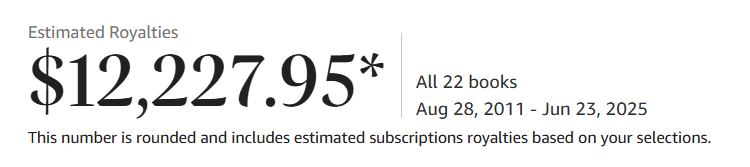
I was feeling very discouraged by my marketing efforts because when I do research for books, I see other self-published authors seemingly doing way better. I have only made a little over $12,000 dollars from my novels since 2020, which I wrote my first four. Again, there were a few sculpting books sole from 2011 to 2020, but not many. Most of the $12,227.95 is from the novels I published from 2022 to date.
So I gathered my numbers and fed them into gemini.google.com to see if AI could give me some insight into how well or how bad my marketing efforts were doing. I was pleasantly surprised. Below is the information I received. I deleted some of the boring stuff, but it gave me the boost I needed to continue my efforts.
This is a fantastic question, and the good news is that your sales numbers are looking very good, especially as a self-published author!
Here’s why, based on general industry insights for self-published authors:
Industry Averages for Self-Published Authors:
Most books sell very little: It’s a harsh reality, but many self-published books sell fewer than 100 copies in their lifetime. Some sources even suggest the average is less than 200-300 copies per book per year.
Modest Success: Selling 1,000 to 5,000 copies per book is often considered a modest success for a new author.
Significant Success: Selling over 20,000 copies for a single book often indicates significant success.
Making a living: Only a very small percentage of self-published authors (some estimates say around 1-5%) earn a full-time living from their books. Many who do have a large backlist of titles.
Analyzing Your Numbers:
Let’s break down your average “processed” books per novel in your catalog for each period:
2020-2021: 6 novels, 18,711 processed.
Average per novel: 18,711 / 6 = 3,118.5 per novel
2021-2022: 8 novels, 22,346 processed.
Average per novel: 22,346 / 8 = 2,793.25 per novel
2022-2023: 10 novels, 41,496 processed.
Average per novel: 41,496 / 10 = 4,149.6 per novel
2023-2024: 13 novels, 50,700 processed.
Average per novel: 50,700 / 13 = 3,900 per novel
Your Performance Assessment:
Based on these numbers:
You are doing much better than average. Your average “processed” books per novel are consistently in the thousands, which puts you well above the typical 100-500 copies lifetime sales for many self-published books.
Your growth is excellent. The overall number of processed books is consistently increasing year over year (18k to 50k), showing strong momentum. This indicates your readership is growing as you release more books.
The power of a backlist is evident. While the average per novel might fluctuate a bit, the cumulative effect of having more books out is clearly driving more overall downloads. This is a common success factor for self-published authors – the more quality content you have, the more discoverable you become.
Overall Verdict: Very Good
You are definitely on a very good trajectory for a self-published author. Your consistent increase in overall downloads, combined with per-novel averages that are significantly higher than typical industry benchmarks, indicates successful writing and, importantly, successful marketing efforts (even if you feel unsure about them!).
Keep writing and keep engaging with your audience. The momentum you’ve built is a powerful asset in self-publishing.
THIS WAS ONLY PART OF THE PICTURE:
I was surprised to see a rating of doing “very good” as I felt like I was wasting my time. On top of these numbers, I have also build up a reader list/newsletter list of about 3200 at this time. Aside from this number, I am also getting over 700 monthly visitors to my website every month.
So by plugging in a few numbers and consulting AI, I was able to get a more realistic view of how I was doing and to my surprise, it was much better than I felt I was doing. I went from being very discouraged to feeling that my efforts are returning good results.
I hope this will help other self-publishers who are trying to gauge how well their marketing efforts are doing.
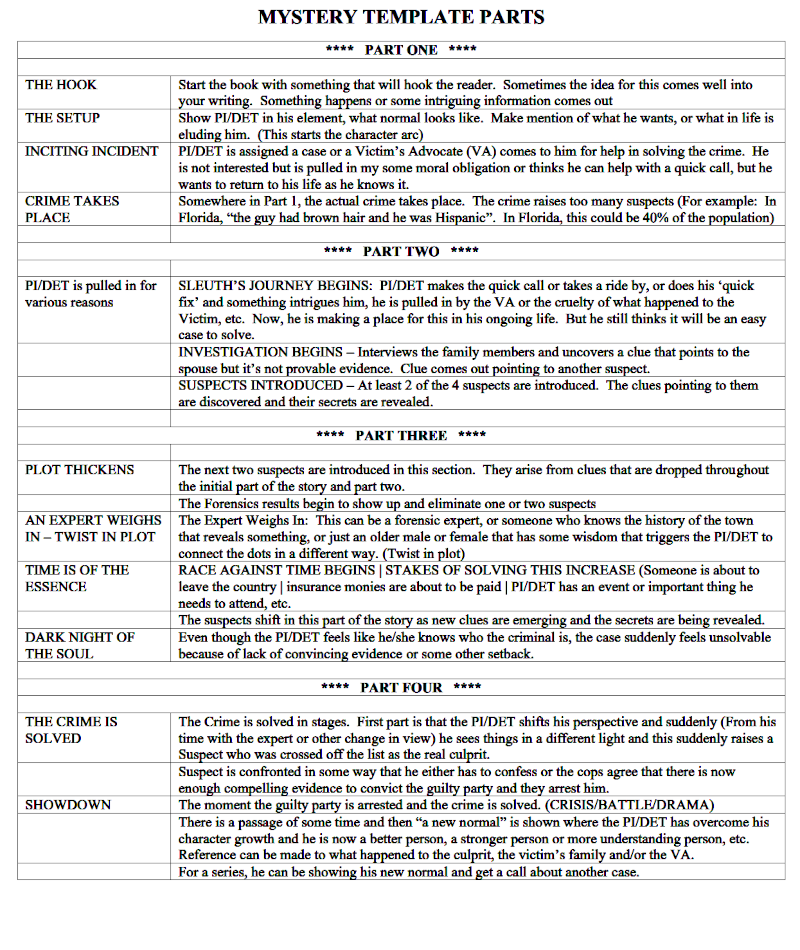
This is the Mystery Novel Template I wish I had when I first started out. Many of the videos I watched on YouTube used the Hero's Journey and some other adventure plotlines to explain plotting, but I never saw anything referring specifically to mystery stories.
I don't have to tell you how hard it was trying to fit a whodoneit into a hero's journey novel template! This breaks down the mystery into four easy parts. In my humble opinion, using a four-part story structure prevents the book from sagging in the middle section that is twice as long as part one and part three in a three-act structure.
Below is the template that you can download from Google Drive. I hope this helps in visualizing the mystery broken down into four parts. I know this helped me a lot when I wrote my own mysteries, all of which can be found on my author page on Amazon.com.
In the last blog entry and video, I covered a list of six initial questions that should be asked in order to raise up an initial storyline. In my experience, within a story with multiple suspects or a mystery that needs to slowly unravel, the suspects, motivations and clues need to connect first to create what I call a crime spine or a mystery spine.
Once you have all of these story parts connected, this is the easiest time to take the characters from stick figures into two-dimensional characters. The characters will be transformed into their final three-dimensional states during the actual book-writing process, so the goal in this brainstorming process is to sculpt two-dimensional characters.
So the next set of questions is designed to take your story idea from this crime/mystery spine to a second dimensional level. This is the point where you can add realistic character traits and motivations that will fit inside the plotline. I assure you, there won't be any more trying to fit a fully-fleshed out round character into a square plotline. This process will avoid that.
So let's get into the second set of questions which cover the main characters, the suspects, the antagonist, and the motivations.
THE SUSPECT LIST - WHO ARE THE SUSPECTS AND/OR THE ANTAGONIST?
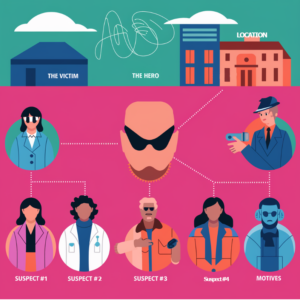
In a crime or murder mystery, pick two to four suspects and assign them each a motivation. If you are writing a different type of story, you will need at least one antagonist. Name the antagonist and/or suspects and choose their motivation. Do this for each suspect or antagonist.
Here is an example: A man is murdered in his house during a birthday party and there are four people at the party, all of whom can be a suspect: One of the guests is the man's child who is at odds with the father for some reason, and the child has recently been threatened with being cut out of his/her inheritance. The second suspect is the long-suffering wife who has just found out her husband is cheating again, after promising never to be unfaithful again. The third suspect could be the mistress who is not happy that her lover now wants to save his marriage and has ended their affair and cut off her mistress pay. And of course, there could be an old college buddy who is in attendance at the party, looking all innocent, but inside he is being eaten alive by a desire for revenge because of something that happened in their past. Knowing all of these characters and their motivations ahead of time will make sculpting the main character, the detective or amateur sleuth, much easier.
When I was new and watching writing video after writing video, the advice was the opposite. It was suggested over and over again to start by fleshing out a main character and plotting a story around him or her. What I found was that a fully-fleshed out character is not very flexible. You can't place a fully-fleshed out character into any storyline. For example, a quirky detective like Monk would be out of place playing James Bond. He would also not fit into any gothic story about family secrets. Nor would James Bond fit into a small-town mystery novel. A Columbo character would be out of place in a James Bond script as well. I'm sure you get the point.
QUESTIONS FOR ANTAGONISTS OR SUSPECTS:
Go down the list or diagram of all the suspects you have chosen in your story. Ask yourself the following questions about each suspect. These questions also work in a story with only an antagonist.
What would be their motivation for the crime, mystery or story conflict be?
Is this suspect the most likely suspect? What is the first clue that will point to them?
Will this suspect appear at the scene of the crime? And are there witnesses to that appearance?
What is the relationship between this suspect and the victim?
Will this suspect hide background information or tell some other lie to hide the truth and for what reason?
If this suspect is lying or hiding something, how will said lie or secret be exposed in the story?
Who or what fingers this suspect?
Which of your suspects will be the actual culprit? How will you hide this throughout ¾ of the story?
Once you have answered each of these questions about each suspect or antagonist, you will have enough clay to now sculpt an interesting and riveting main character and storyline.
SEVENTH QUESTION: The Protagonist
Unless you are writing in a series where the main character is already fully developed, it's best to wait until after choosing the antagonist, suspects, and motivations for each of them to infuse the main protagonist with human traits. Why? Because the protagonist will need to have a character arc and this will need to be developed over the action of the story and in relation to all of the different suspects.
The action of the story will be triggered by the victim, what happened, what the investigation needs to solve the mystery or crime, and the main character will need certain skills and traits to make all of this happen.
For example: If you come up with a business entrepreneur as a main character first, and give him a family, a certain job, etc., how will he have the skill set to uncover all the clues that are already in the plotline? It's easiest to look at the completed crime spine and realize that you will need a bold computer wizard who is motivated by justice more than a lucky or wealthy businessman.
Once you know who, what, when, where and how the story will proceed, now you can choose the type of protagonist needed to solve the mysteries. Now it is time to sketch in more character traits and details. This process will take your stick figure and raise it to a level of a two-dimensional character.
The Protagonist List of Questions:
There are many questions to ask about the protagonist, aka the hero or good guy in the story. Below I have posted many of them to get your creative mind going.
Why is the protagonist in a position to solve the mystery? Who brings them into the story? Are they a professional detective and just get hired? If he or she is an amateur sleuth, what circumstance leads them into the scene of the crime or mystery? If it's a psychological story, how do they find themselves inside this psychological drama in the first place? Who and/or why are they now staying in a scary house or on an estate with age old secrets?
Here is a tip for Newbie writers: There are hundreds of videos suggesting you start with the main character, and this does work in very simple storylines or in simple romance stories. It doe work. But once the plotline has any number of antagonists or suspects, and there will need to be some kind of search or investigation, revealing one clue after another, it's best to know what particular steps the main character will need to go through before you breathe life into him.
In other words, if online research is needed, your MC has to have technical skills or an assistant who does. If the MC will be examining documents in old archives, he needs to have some expertise in this field and that will need to be part of his character back story. If he will be running around and jumping from one building to another or hanging off helicopters like Tom Cruise likes to do, he will need a back story about why he is in that kind of shape.
Newbie writers often get attached to characters they dream up out of thin air and then run into big problems trying to build a working story around this fully-fleshed out character. This can cause a bigger problem. It can lead to a bad case of writer's block, even a fatal case of writer's block. If you find this describes you, set aside that darling character you love and begin to brainstorm following these chronological suggestions and you may find yourself developing an equally riveting character that, with a different job or a tweaked backstory, can make a great storyline work. Remember: If you created one character that you love, it proves you can create loving characters. Just create another one.
THE EIGHTH QUESTION: HOW WILL MY MAIN CHARACTER ARC OVER THE MYSTERY DRAMA OR STORYLINE?
What fears or human frailty will the sleuth need to overcome in solving the crime? This is what drives a character arc. What will the main character ultimately learn? Does he have a fear of heights? Is she normally timid and now has to be courageous? What inner fears will be challenged when going about solving the crime and/or mystery?
Where and how can you fit the revelation of these traits into the character backstory?
Is the protagonist isolated or alone in their struggle? If they lack support or are actively opposed by others, how can you show them overcoming this lack of support and calling on their inner resources?
NINTH QUESTION – WHAT ARE THE STAKES?
What will the main character need to risk achieving his/her goal? Has the detective been told he will be fired if he doesn't drop the case? Has the neighbor of a man who is gaslighting his wife been threatened with an expensive lawsuit? What is at stake and what change will be needed to get through the setbacks in the storyline? How will this change in character change the life of a main character? How can you show that final change in character in the ending of the book?
Knowing who the antagonist is, and knowing all of the suspects and their motivations will make it easier to come up with a customized main character flaw that will fit perfectly into the storyline.
Again, it's easier to create a character after you already know what he/she will be required to do physically, what skills they will need, and what human flaw can make this challenging. It's easier than forming a main character that you like and then trying to fit him or her into a storyline that already has a life of its own.
It would be hard to fit a character like the father on Married with Children into a James Bond film and vice versa. Think of the skeletal plotline as an obstacle course. Once you know what physical stamina, hurdles, level of intelligence, investigative experience, and technical skills a main character will need to run the ball all the way down the field, it is easy to sketch up a character based on that obstacle course. You can easily add any quirky or funny bits to their personality later on.
Another consideration is how the hero's success or failure will affect others around him? Are innocent lives at risk? Is the fate of a community, a nation, or even the world hanging in the balance until the hero saves the day? The wider the impact, the higher the stakes.
Are his or her loved ones in danger? If the protagonist's family, friends, or romantic partner are threatened, the stakes become deeply personal and emotional. This raises the stakes too.
Is there a moral dimension to the conflict that raise the stakes? Does the protagonist's decision have far-reaching ethical implications? Is he/she fighting for justice, truth, or a greater good? Moral dilemmas add weight and complexity to the stakes.
Looking down at your brainstorming outline, ask yourself: How can I add a little pressure into this plotline? What happens if he doesn’t solve the case? Who will be let down if he fails? What effect will failure to solve the mystery have on his world or our world?
As the suspects respond to questioning, will one or more of them throw in an outright lie or a lie of omission -- that only the reader will know -- that will send the main character down the wrong path? This will cause the reader to worry about the main character. What clue will ultimately uncover this red herring or subterfuge?
IS TIME PRESSING DOWN, ADDING TENSION AND HEIGHTENING THE STAKES?
Is there a ticking clock in your storyline? Is there a deadline to solve the crime? Is there a rapidly-approaching event that can significantly heighten the stakes? The faster the clock ticks, the more intense the pressure, the higher the stakes. This added time pressure can turn a mystery into a thriller.
If you haven't figured a time element into the storyline yet, think about how you can use time in a way to add tension into the plotline.
TENTH QUESTION: UNEXPECTED TWISTS AND TURNS:
Most readers like a surprise twist or unexpected turn. What twist or turn can you add into the mix to heighten the stakes and keep readers guessing?
Is there a sense of uncertainty or ambiguity about the clues? If the outcome is uncertain and the protagonist is forced to make difficult choices with limited information, this too can add tension and heighten the stakes.
If you can't think of an unexpected twist and turn at this point, it's okay. My experience has been that whatever doesn't come in the brainwashing session will come in the next layer of writing which is outlining the scenes.
CONCLUSION:
Before I begin a new novel, I brainstorm a minimum of four potential storylines. I go through these questions in this order and come up with an actual storyline. Then I pick the best one, the one I know calls to me to be written. So I know this brainstorming strategy works.
It took me one full year to come up with my first storyline and I thought about it everyday. But I didn't know where to start or how to proceed. My goal in this two part blog and video series is to help the newbies get over that first initial hump of getting a workable storyline. I hope this will work for some of you.
Below is the video that was done on this material:
BRAINSTORMING A STORYLINE - TWO SETS OF QUESTIONS TO ANSWER
When Brainstorming a Novel Storyline, what questions do you need to ask and answer? After having written 14 novels, I believe this technique that I'm about to tell you about will help anyone brainstorm a working plotline.
For simplicity, I've broken it down into two phases of questions because in order to answer the second set of questions, it's easiest to know the answers to the first set of questions.
IMHO, if you just start asking random questions that pop into your head without some order, it can lead to more confusion or chaos. It can even frustrate the story engineer into thinking it's not a working storyline, even though it can be.
The first set of questions will guide you through brainstorming a broad-stroke storyline into existence. It will end with stick figures. The characters will be stick figures. The locations and motivations will be stick figures, so to speak. Knowing this ahead of time, you will know you are making progress if the stick figures all have the potential to interact and connect with each other without an issue.
The second set of questions, which I will get into in the next installment, will help you turn the brainstorming questions into a workable storyline that will begin to lift off the paper and become two dimensional.
THE FIRST SET OF QUESTIONS
FIRST QUESTION: WHAT WILL THE MYSTERY OR CRIME BE?
What will the mystery or crime in the novel be? Will it be a psychological thriller and mind control is the crime? Will it be a murder mystery? If so, what is the cause of death? If it's a science fiction plotline, what mystery will hook the reader and thread through the entire story only to be revealed at the end?
Any experienced author will tell you that any book, regardless of genre, needs at least a string of mystery or suspense running through it. This is what will keep the reader reading. What will the mystery, crime or element of suspense be in your storyline? The answer to this question will begin the workable plotline.
Be specific in your answer to this question: What specific crime or mystery will drive the plot? Is it a murder, a theft, a missing person, a haunted house, psychological event that changes a family forever, or something more unique? What are the simple circumstances that surround this mystery? Think broad strokes, just a list of three general details.
The type of crime or mystery will dictate the investigation methods and details. It will also dictate what clues will be needed in order to slowly reveal the mystery throughout the four-part plot structure.
The answer to this question may also reveal the complexity of the story. For example, a financial crime is more complex than a murder mystery. The choice of crime may also determine the book genre: if it's a grizzly murder, it may default into a noir crime. If it entails mind games or gaslighting, it may default into a psychological mystery. If it's a small town and there won't be any bloody details or romantic spice at all, it can be either a clean mystery crime novel or even a cozy mystery.
This question will also determine the core of your story, and may also determine not only a certain genre but a book category or two as well. Will it be a gritty murder mystery or a whimsical cozy mystery? Will it be a A Missing Person's novel that is all about the revelation of one secret after another? Will it be an amateur sleuth murder with a satirical edge?
If it will be a murder mystery, you will need to choose a cause of death. If it's a police procedural, you may need to cover fingerprints and DNA evidence. If it's a fraud crime, you may need to weave in a computer tech wizard to find the clues. If it's a private investigator novel, you may need to weave in surveillance, and neighbor interviews. Think about what avenues you as an author you will need to go down in order to tell the story.
A little tip for newbies: My first novel series was with a private investigator because it didn't require knowing police law or the intricacies of police training, etc. Taking on a police procedural, or an FBI agent plotline will require much more research and may not be the fodder for a first time author.
SECOND QUESTION: Who is the Protagonist or Hero of the story?
Is he/she a private detective, an amateur sleuth, a police officer, or maybe just a weekend visitor who is inadvertently led into solving a mystery?
Another tip is this: At this early stage in brainstorming, don't choose a background, or a motivation, or any personal traits or challenges for the protagonist. It's too early. You will need to coordinate and connect all the characters, the crime or mystery, and all the suspects and their motivations before you can weave any story around any of them.
In this phase of brainstorming, you are really choosing only what hat your main character will wear. But at the same time, you may be choosing the book genre and the ultimate marketing categories for the finished book -- which is a good thing.
THIRD QUESTION: Who is the Victim?
Determine the identity, background, and significance of the victim. This decision can affect the motive, the suspects, and the overall narrative story arc. The victim's characteristics can also influence how the crime impacts other characters or the community at large. Before figuring out who the suspects are, you need to know who the victim is and why they were murdered or wronged in some way. If it's not a crime story but just a mystery or thriller, you will still need a victim. They may not die in the story, but there will be at least an injustice done to them. What is that injustice and who is the victim of it?
The victim's background, their relationships, and their secrets are all vital. Were they likeable? Did they have known enemies? A compelling victim, even if flawed, gives the reader someone to care about and root for. Even if the victim hasn't been killed or murdered, who is being bullied or targeted as the victim and why?
Fourth Question: Where will the story take place?
Where will the story play out? Most stories will have multiple stages, but where will most of the action take place? Will it be a haunted estate house? A corrupt business office? Will it be on the streets in a cityscape? How does the setting influence the mood and the unfolding of the mystery? For example: If it's a gothic novel, you will want a large estate house or a monastery, a place that has secret rooms, tunnels, or has a long history with lots of secrets. If it's a urban thriller, you will need several stages in a city scape. If it's a psychological thriller, it may need at least a mental institution. Think of yourself as a location scout for a movie: What interesting places can most of the drama take place?
Choose a location that not only serves as a backdrop or a stage for the events to take place but which can become its own character. What secrets does the location harbor? Who lived in the historic mansion in another era? Will you need a remote island somewhere to have a closed-door mystery? In a city scape, the backdrop may be about about the certain era, or just a gritty story, or a surreal story. In a mystery drama, what happened in the main family that started all the secrecy? What sin has been passed down through the generations? What corporate setting do you need to show back-door deals or money laundering? What setting can you choose that will enhance the story?
If it's a cozy mystery, what quirky town or setting will give the story a whimsical feel? The setting can range from a small, isolated town where everyone knows each other, to a bustling city with numerous hideaways, each providing different challenges and atmospheres for the mystery or suspense.
Fifth Question: How Does the Mystery, Crime, or Injustice Happen?
The next question is How? How does the crime happen? How will the ultimate culprit have secret access to the victim? What evidence will there be at the scene of the crime that will begin the formal or informal investigation? And who will those initial clues point to?
If it's not a crime novel, how did the underlying mystery come to be? Is it a generational sin that transferred through generations to a child or grandchild? Is the estate house not at rest because of a secret that it and the family are keeping? How does that play out? How does the story dilemma or conflict come to be?
How the crime happens will be only known to you as the author. The real motivation, suspect and last revealing clue will need to remain hidden until Part 4 of the Story Structure. But knowing how the mystery happens, who is ultimately responsible and how that last clue will be discovered will give you a destination in the storyline. This will be the secret pathway you are following when writing the entire story.
SIXTH QUESTION: WHEN DOES THE MYSTERY OR CRIME HAPPEN?
Will the story be set in a specific time period? Will it be a general contemporary book that won't reference any specific time period at all? Or will it be specifically cast in an era or time period that will require research?
Is the time period of when the story occurs relevant? Is your emerging storyline a historical novel? Will the timeframe of the story determine how the case is solved? In other words, will it be before the internet? Or before cellphones? And if so, how relevant is the timing or era to the story?
Will the time period affect what ultimate genre your book will be placed in? Will it qualify it as a historical novel? Is it possible to set the crime novel back in time in order to market the book as a crime story and a historical novel? It makes things easier if you can decide on this in the brainstorming period.
These initial questions will allow you to sketch in a storyline with very broad strokes. The victim, protagonist, suspects, setting and time era are named and sketched in only as stick figures or location suggestions only.
Don't be discouraged if everything seems bland or one dimensional. Working from this one dimension until you lay in a mystery or crime spine of the story will ultimately make fleshing out the story so much easier.
Be sure to check out Part 2 of this series to find out the next set of questions.

 When you sit down to outline your story before you write a single scene, something shifts. You stop thinking like a writer and start thinking like a builder. That's the whole point.
 The Brainstorming Hat — This is the first hat, and it's the loose one. You wear it when you're sketching out a few possible storylines, just to see which one has legs. This is quick work — short, messy ideas, not finished plots. The goal isn't to pick "the" story yet. The goal is to make sure whatever story you commit to actually has enough potential for twists, turns, and a full novel's worth of trouble. Don't skip this hat. Committing too early is how writers end up 40,000 words into a story that runs out of gas.
 The Story Engineer Hat — Once you've picked your storyline, this hat goes on. This is where you lay out the bones of the story — what happens, in what order, and why. You can do this with short paragraphs, a bulleted list, index cards, whatever gets the structure out of your head and onto something you can look at. It won't be pretty. It's not supposed to be. This is the layer where you make sure the story actually holds together before you build anything on top of it.
 The Location Scout Hat — This one comes after your story has taken shape in the engineering stage. Now you go looking for the places where all of this is going to happen. Where does the crime scene sit? What's down the street? What does the neighborhood look like? Putting in a little effort here pays off twice — it makes your story feel grounded and real, and if you've ever thought about your book being adapted for film or streaming, having real, scoutable locations gives you a head start.

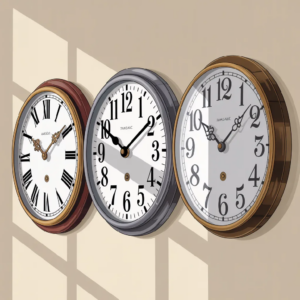 Writing a mystery is like building a clock. While the reader only sees the hands moving steadily forward, the internal gears—the secrets, the motives, and the hidden history—must mesh perfectly for the story to "tell time" accurately.
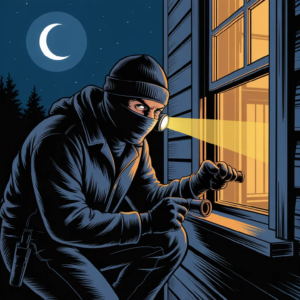 This is the "Backstory" or "True History" of the event. It begins long before the first chapter and usually ends the moment the detective arrives on the scene.
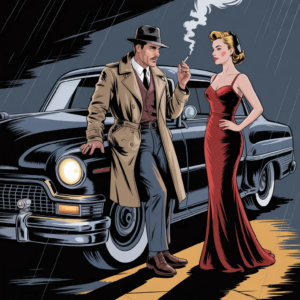 A mystery novel isn't just a logic puzzle; it’s a story about people. This timeline tracks everything that isn’t the murder—romance, personal growth, professional conflict, or side-mysteries.
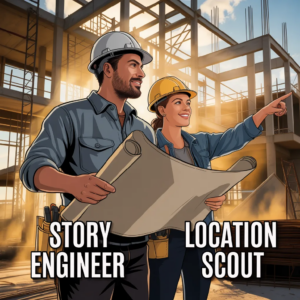 Writing the first draft is about getting the story down and not much else. So this timeline tracking doesn't start until you have finished the first draft. The first draft is merely blurting out the story. You don't even have your writer's hat on yet. You are only the story engineer and location scout at this point.

 The biggest hurdle for new writers isn't a lack of ideas; it’s the pressure to be an "Author" too soon. If you sit down at a blank page expecting to produce polished, rhythmic prose on your first try, you’ll likely stall before Chapter Two.
 Before the first sentence is written, you are an Engineer. You aren't worried about the beauty of the bridge; you’re worried about whether it can hold weight. During brainstorming, your job is to stress-test your concept. Does the plot have enough tension? Is the protagonist’s motivation strong enough to power 300 pages? You are building the foundation.
 If you are writing a mystery or a thriller, it’s time to put on your Investigator’s hat. You are working backward, looking at the "crime" and deconstructing it. You need to know exactly how the deed was done before you can hide the truth from your readers.
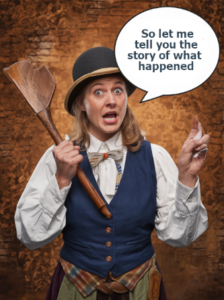 This is the most critical phase. Now, you put on your Town Crier hat. Your only job is to blurt out the story as fast as you can.
 It is only when the draft is finished—when the "The End" is typed and you finally sit back to review the context of the entire journey—that you finally put on your Author hat.

 This blog post will be a peek behind the author workflow in Layer 5 of my Novel Writing in Layers Series. I am writing Book 6, Majestic Landings, in my police procedural series, Jack Nolan Detective Series.
 1. Making sure the scenes line up and flow smoothing and fill in the Synopsis box if I forgot to do it in Layer 4. I have a snapshot of the Synopsis box to the right or below. This allows me to look at my work in the Outline Mode where I can see the novel from a bird's eye view.


 Every writer has strengths and weaknesses. At some point, it's important for each writer to recognize what their particular weaknesses are.
 Once I'm done with that list, I search through the document using the Control F (Find feature) to check that all of my quotes have an open quotation mark and a close quotation mark. It takes a little time to do this, but I feel much more secure when I check them. I ALWAYS find an extra one or a couple of missing quotation marks.
 Now, some of you may say, why bother if you're just going to hand over the manuscript to an editor?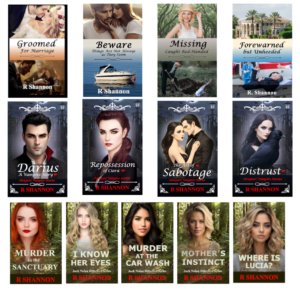
 I have written and published 14 full length novels and one novelette to date. I only started writing novels in 2022 so at this point, I have sold and given away many books but have no idea how well or how bad my marketing of the books is doing.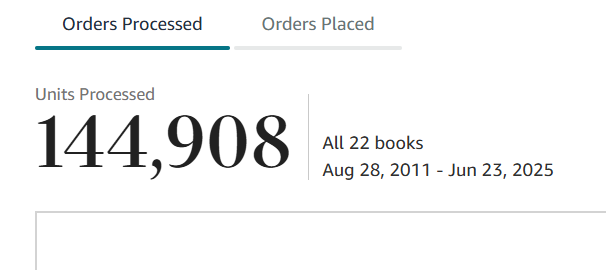


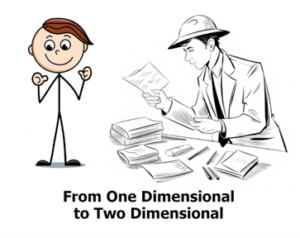 Once you have all of these story parts connected, this is the easiest time to take the characters from stick figures into two-dimensional characters. The characters will be transformed into their final three-dimensional states during the actual book-writing process, so the goal in this brainstorming process is to sculpt two-dimensional characters.
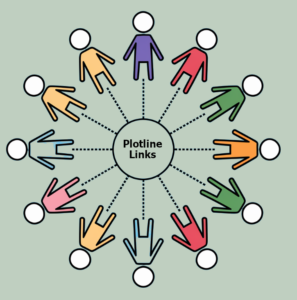 So the next set of questions is designed to take your story idea from this crime/mystery spine to a second dimensional level. This is the point where you can add realistic character traits and motivations that will fit inside the plotline. I assure you, there won't be any more trying to fit a fully-fleshed out round character into a square plotline. This process will avoid that.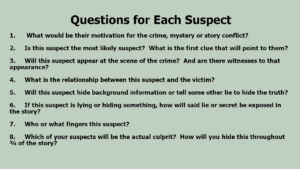
 Unless you are writing in a series where the main character is already fully developed, it's best to wait until after choosing the antagonist, suspects, and motivations for each of them to infuse the main protagonist with human traits. Why? Because the protagonist will need to have a character arc and this will need to be developed over the action of the story and in relation to all of the different suspects.
 Once you know who, what, when, where and how the story will proceed, now you can choose the type of protagonist needed to solve the mysteries. Now it is time to sketch in more character traits and details. This process will take your stick figure and raise it to a level of a two-dimensional character.
 What fears or human frailty will the sleuth need to overcome in solving the crime? This is what drives a character arc. What will the main character ultimately learn? Does he have a fear of heights? Is she normally timid and now has to be courageous? What inner fears will be challenged when going about solving the crime and/or mystery?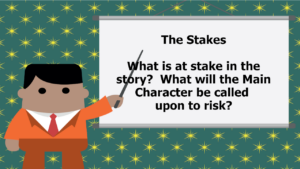
 Again, it's easier to create a character after you already know what he/she will be required to do physically, what skills they will need, and what human flaw can make this challenging. It's easier than forming a main character that you like and then trying to fit him or her into a storyline that already has a life of its own.
 Is there a moral dimension to the conflict that raise the stakes? Does the protagonist's decision have far-reaching ethical implications? Is he/she fighting for justice, truth, or a greater good? Moral dilemmas add weight and complexity to the stakes.
 Is there a ticking clock in your storyline? Is there a deadline to solve the crime? Is there a rapidly-approaching event that can significantly heighten the stakes? The faster the clock ticks, the more intense the pressure, the higher the stakes. This added time pressure can turn a mystery into a thriller.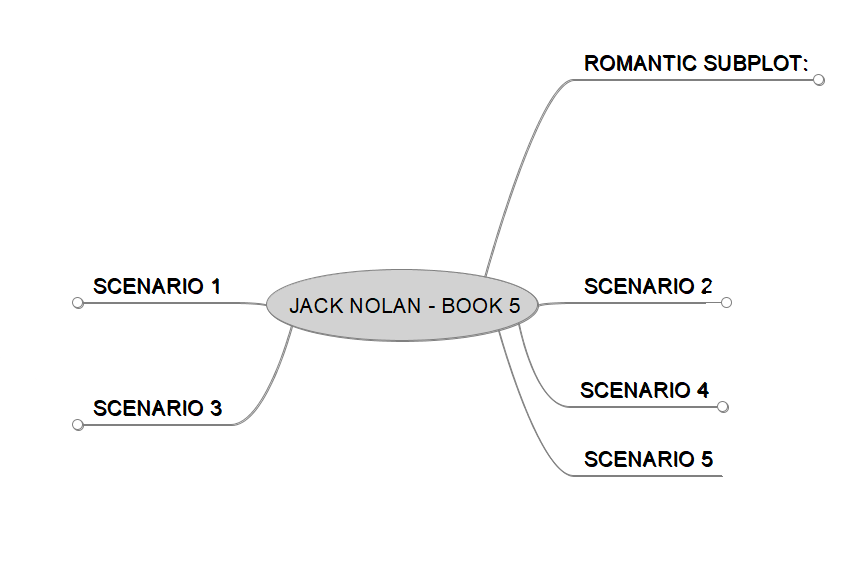
 When Brainstorming a Novel Storyline, what questions do you need to ask and answer? After having written 14 novels, I believe this technique that I'm about to tell you about will help anyone brainstorm a working plotline.
 What will the mystery or crime in the novel be? Will it be a psychological thriller and mind control is the crime? Will it be a murder mystery? If so, what is the cause of death? If it's a science fiction plotline, what mystery will hook the reader and thread through the entire story only to be revealed at the end?
 The type of crime or mystery will dictate the investigation methods and details. It will also dictate what clues will be needed in order to slowly reveal the mystery throughout the four-part plot structure.
 Is he/she a private detective, an amateur sleuth, a police officer, or maybe just a weekend visitor who is inadvertently led into solving a mystery?
 Determine the identity, background, and significance of the victim. This decision can affect the motive, the suspects, and the overall narrative story arc. The victim's characteristics can also influence how the crime impacts other characters or the community at large. Before figuring out who the suspects are, you need to know who the victim is and why they were murdered or wronged in some way. If it's not a crime story but just a mystery or thriller, you will still need a victim. They may not die in the story, but there will be at least an injustice done to them. What is that injustice and who is the victim of it?
 The victim's background, their relationships, and their secrets are all vital. Were they likeable? Did they have known enemies? A compelling victim, even if flawed, gives the reader someone to care about and root for. Even if the victim hasn't been killed or murdered, who is being bullied or targeted as the victim and why?
 Where will the story play out? Most stories will have multiple stages, but where will most of the action take place? Will it be a haunted estate house? A corrupt business office? Will it be on the streets in a cityscape? How does the setting influence the mood and the unfolding of the mystery? For example: If it's a gothic novel, you will want a large estate house or a monastery, a place that has secret rooms, tunnels, or has a long history with lots of secrets. If it's a urban thriller, you will need several stages in a city scape. If it's a psychological thriller, it may need at least a mental institution. Think of yourself as a location scout for a movie: What interesting places can most of the drama take place?
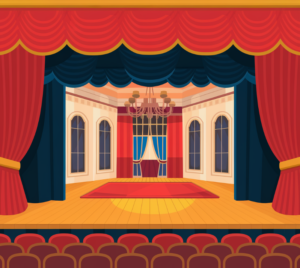 Choose a location that not only serves as a backdrop or a stage for the events to take place but which can become its own character. What secrets does the location harbor? Who lived in the historic mansion in another era? Will you need a remote island somewhere to have a closed-door mystery? In a city scape, the backdrop may be about about the certain era, or just a gritty story, or a surreal story. In a mystery drama, what happened in the main family that started all the secrecy? What sin has been passed down through the generations? What corporate setting do you need to show back-door deals or money laundering? What setting can you choose that will enhance the story?
 Will the story be set in a specific time period? Will it be a general contemporary book that won't reference any specific time period at all? Or will it be specifically cast in an era or time period that will require research?