Open Page
Tracking the Threads: Why Your Mystery Draft Needs Three Timelines
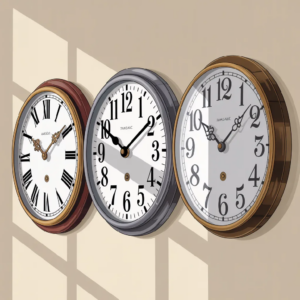 Writing a mystery is like building a clock. While the reader only sees the hands moving steadily forward, the internal gears—the secrets, the motives, and the hidden history—must mesh perfectly for the story to "tell time" accurately.
When you are in the thick of a first draft, it is easy to get lost in the prose. However, the secret to a bulletproof mystery isn't just a clever detective; it’s a rigorous organization of time. To keep your manuscript from collapsing under the weight of its own secrets, you need to manage three distinct timelines.
1. The Crime Timeline (The Hidden Reality)
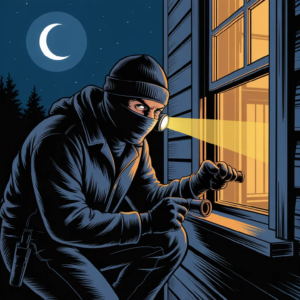 This is the "Backstory" or "True History" of the event. It begins long before the first chapter and usually ends the moment the detective arrives on the scene.
-
What it tracks: Every move the killer made before, during, and immediately after the crime.
-
Why it matters: If the killer was at the hardware store buying rope at 4:00 PM, they cannot have been seen at the gala at 4:15 PM across town.
-
The Draft Benefit: By mapping this out, you ensure that the "truth" remains fixed. Even if your detective is confused, you never are. This prevents the dreaded "plot hole" where a culprit’s alibi is physically impossible.
2. The Novel Timeline (The Reader’s Journey)
This is the linear progression of the book, starting from page one. It follows your protagonist as they navigate the investigation.
-
What it tracks: When clues are discovered, when witnesses are interviewed, and the passage of days or hours within the narrative.
-
Why it matters: Mystery readers are notoriously observant. If your protagonist spends three days investigating but it’s still Monday in Chapter 10, the immersion breaks.
-
The Draft Benefit: Keeping a log of the Novel Timeline helps you control the pacing. If you notice five chapters have passed in a single afternoon, you might need to pick up the tempo or introduce a "timer" (like a ticking clock element) to raise the stakes.
3. The Subplot Timeline (The Human Element)
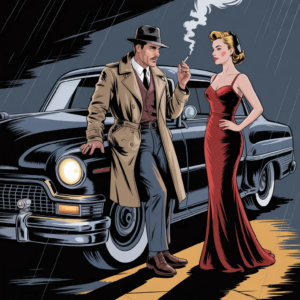 A mystery novel isn't just a logic puzzle; it’s a story about people. This timeline tracks everything that isn’t the murder—romance, personal growth, professional conflict, or side-mysteries.
-
What it tracks: The evolution of relationships and personal stakes.
-
Why it matters: Subplots provide the emotional "breather" between intense interrogation scenes. However, they can’t just vanish. If a detective has a blow-up fight with their partner in Chapter 4, they shouldn't be acting perfectly happy in Chapter 5 without a resolution.
-
The Draft Benefit: Tracking subplots ensures they are woven into the main mystery rather than feeling like "filler." It helps you time the emotional beats so they hit right when the main plot needs a shift in energy.
Pro-Tips for Managing the Chaos
The "X-Ray" Spreadsheet: Many authors use a simple table or spreadsheet. Column A is the Date/Time, Column B is the "Crime Fact," Column C is the "Novel Action," and Column D is the "Subplot Status."
-
Color Code Your Notes: Use red for the crime, blue for the investigation, and green for subplots.
-
Sync the Weather: It sounds small, but if it's raining in your crime timeline, it must be raining (or the ground must be wet) when your detective arrives in the novel timeline.
-
The Reveal Check: Use your timelines to see exactly when the reader "knows" something versus when the detective knows it.
Final Thoughts
 Writing the first draft is about getting the story down and not much else. So this timeline tracking doesn't start until you have finished the first draft. The first draft is merely blurting out the story. You don't even have your writer's hat on yet. You are only the story engineer and location scout at this point.
But once the story now exists, it's time to begin to track the three significant timelines!
Happy sleuthing!