Open Page
Tracking the Threads: Why Your Mystery Draft Needs Three Timelines
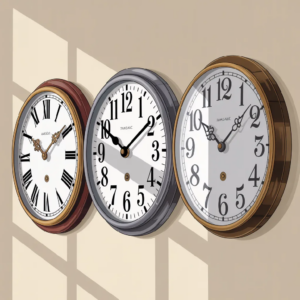 Writing a mystery is like building a clock. While the reader only sees the hands moving steadily forward, the internal gears—the secrets, the motives, and the hidden history—must mesh perfectly for the story to "tell time" accurately.
When you are in the thick of a first draft, it is easy to get lost in the prose. However, the secret to a bulletproof mystery isn't just a clever detective; it’s a rigorous organization of time. To keep your manuscript from collapsing under the weight of its own secrets, you need to manage three distinct timelines.
1. The Crime Timeline (The Hidden Reality)
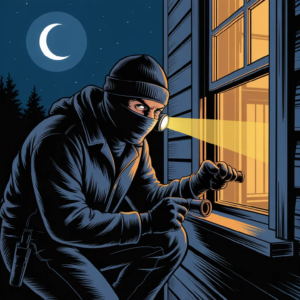 This is the "Backstory" or "True History" of the event. It begins long before the first chapter and usually ends the moment the detective arrives on the scene.
-
What it tracks: Every move the killer made before, during, and immediately after the crime.
-
Why it matters: If the killer was at the hardware store buying rope at 4:00 PM, they cannot have been seen at the gala at 4:15 PM across town.
-
The Draft Benefit: By mapping this out, you ensure that the "truth" remains fixed. Even if your detective is confused, you never are. This prevents the dreaded "plot hole" where a culprit’s alibi is physically impossible.
2. The Novel Timeline (The Reader’s Journey)
This is the linear progression of the book, starting from page one. It follows your protagonist as they navigate the investigation.
-
What it tracks: When clues are discovered, when witnesses are interviewed, and the passage of days or hours within the narrative.
-
Why it matters: Mystery readers are notoriously observant. If your protagonist spends three days investigating but it’s still Monday in Chapter 10, the immersion breaks.
-
The Draft Benefit: Keeping a log of the Novel Timeline helps you control the pacing. If you notice five chapters have passed in a single afternoon, you might need to pick up the tempo or introduce a "timer" (like a ticking clock element) to raise the stakes.
3. The Subplot Timeline (The Human Element)
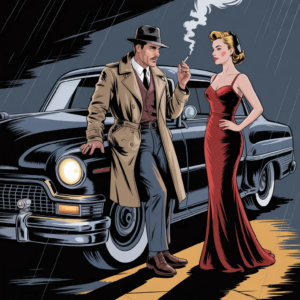 A mystery novel isn't just a logic puzzle; it’s a story about people. This timeline tracks everything that isn’t the murder—romance, personal growth, professional conflict, or side-mysteries.
-
What it tracks: The evolution of relationships and personal stakes.
-
Why it matters: Subplots provide the emotional "breather" between intense interrogation scenes. However, they can’t just vanish. If a detective has a blow-up fight with their partner in Chapter 4, they shouldn't be acting perfectly happy in Chapter 5 without a resolution.
-
The Draft Benefit: Tracking subplots ensures they are woven into the main mystery rather than feeling like "filler." It helps you time the emotional beats so they hit right when the main plot needs a shift in energy.
Pro-Tips for Managing the Chaos
The "X-Ray" Spreadsheet: Many authors use a simple table or spreadsheet. Column A is the Date/Time, Column B is the "Crime Fact," Column C is the "Novel Action," and Column D is the "Subplot Status."
-
Color Code Your Notes: Use red for the crime, blue for the investigation, and green for subplots.
-
Sync the Weather: It sounds small, but if it's raining in your crime timeline, it must be raining (or the ground must be wet) when your detective arrives in the novel timeline.
-
The Reveal Check: Use your timelines to see exactly when the reader "knows" something versus when the detective knows it.
Final Thoughts
 Writing the first draft is about getting the story down and not much else. So this timeline tracking doesn't start until you have finished the first draft. The first draft is merely blurting out the story. You don't even have your writer's hat on yet. You are only the story engineer and location scout at this point.
But once the story now exists, it's time to begin to track the three significant timelines!
Happy sleuthing!


 The biggest hurdle for new writers isn't a lack of ideas; it’s the pressure to be an "Author" too soon. If you sit down at a blank page expecting to produce polished, rhythmic prose on your first try, you’ll likely stall before Chapter Two.
 Before the first sentence is written, you are an Engineer. You aren't worried about the beauty of the bridge; you’re worried about whether it can hold weight. During brainstorming, your job is to stress-test your concept. Does the plot have enough tension? Is the protagonist’s motivation strong enough to power 300 pages? You are building the foundation.
 If you are writing a mystery or a thriller, it’s time to put on your Investigator’s hat. You are working backward, looking at the "crime" and deconstructing it. You need to know exactly how the deed was done before you can hide the truth from your readers.
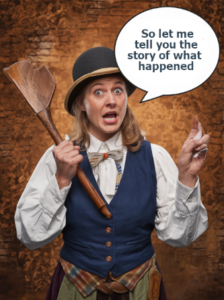 This is the most critical phase. Now, you put on your Town Crier hat. Your only job is to blurt out the story as fast as you can.
 It is only when the draft is finished—when the "The End" is typed and you finally sit back to review the context of the entire journey—that you finally put on your Author hat.

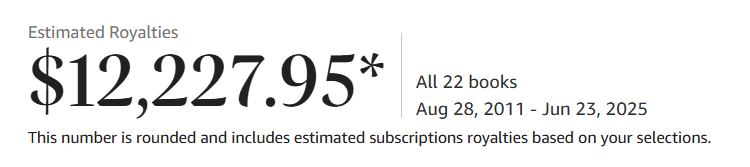
 I have written and published 14 full length novels and one novelette to date. I only started writing novels in 2022 so at this point, I have sold and given away many books but have no idea how well or how bad my marketing of the books is doing.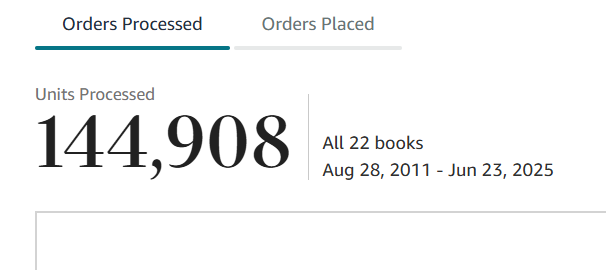


 The first thing I noticed is that the story needs to be contained or confined to a shorter version than a novel. This means that you won’t have the same space to build the characters.
 There are templates all over the internet for story crafting, but they all seem to follow the hero’s journey, which I find doesn’t work for mystery books. At least I was never able to make them work for me.
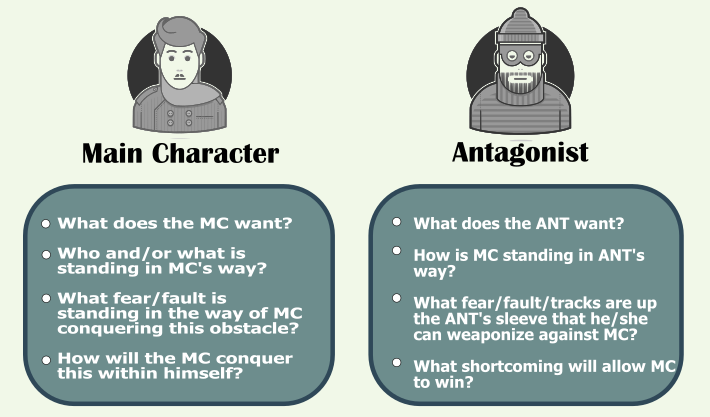
 I use a four-part plot structure, so I break my character arc into four sections. This allows me to keep up with the character development and also don’t resolve the inner conflict too early.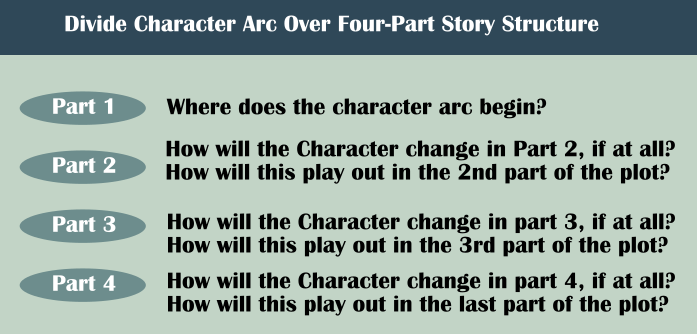

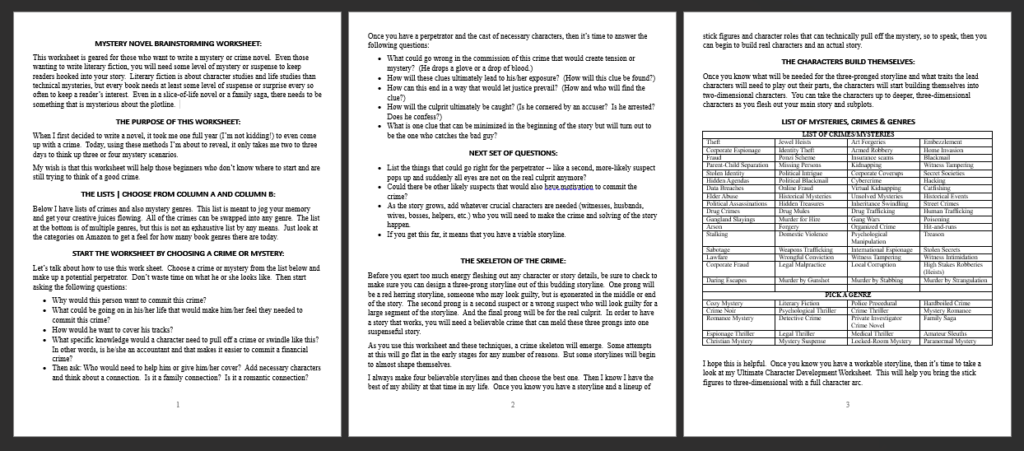
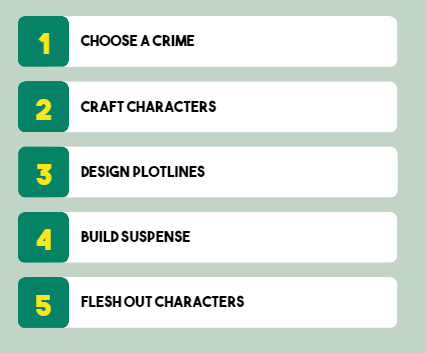
 If you are stumped for a main story, or if you are stumped for what happens now, or even if you have written yourself into a bit of a corner, this instructional will help, along with your own creativity and thinking, to bring about new possibilities.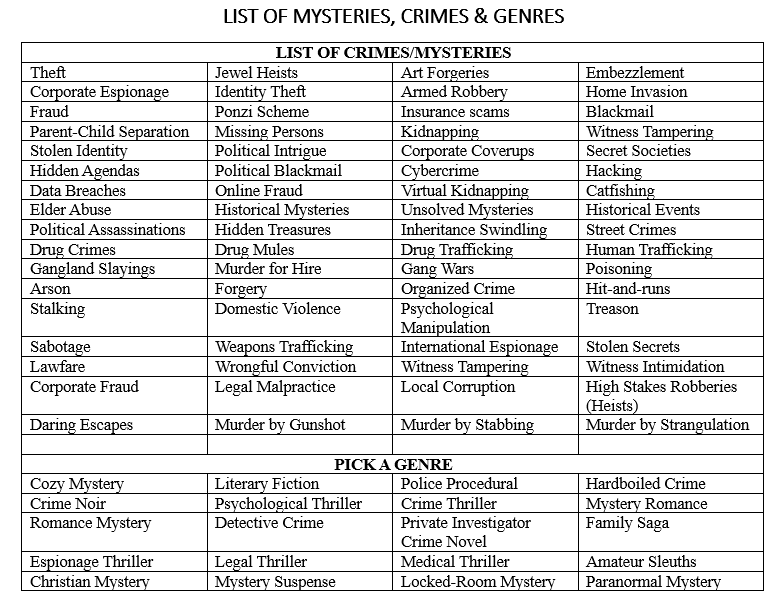

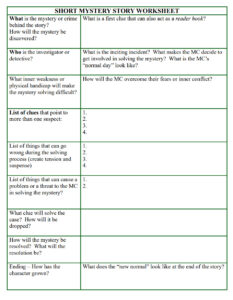
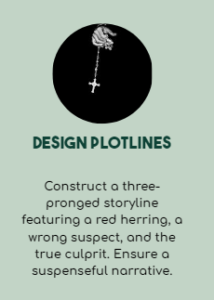 Once you have a perpetrator and the cast of necessary characters, then it’s time to answer the following questions: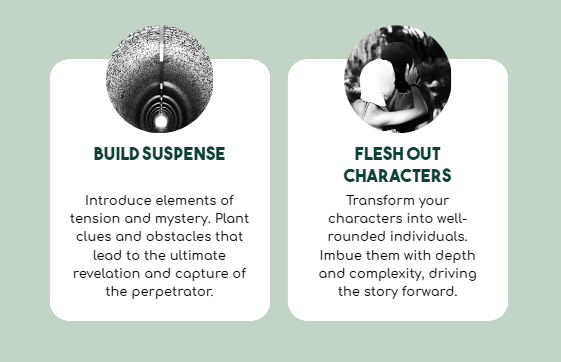
 Before you exert too much energy fleshing out any character or story details, be sure to check to make sure you can design a three-prong storyline out of this budding storyline. One prong will be a red herring storyline, someone who may look guilty, but is exonerated in the middle or end of the story. The second prong is a second suspect or a wrong suspect who will look guilty for a large segment of the storyline. And the final prong will be for the real culprit. In order to have a story that works, you will need a believable crime that can meld these three prongs into one suspenseful story.
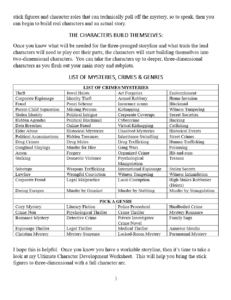 As you use this worksheet and these techniques, a crime skeleton will emerge. Some attempts at this will go flat in the early stages for any number of reasons. But some storylines will begin to almost shape themselves.
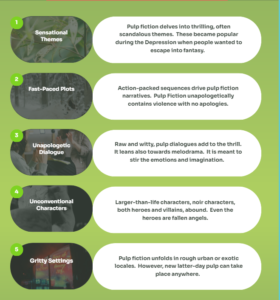
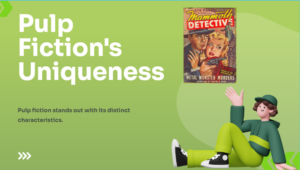 Pulp Fiction become popular during the depression of the 1920s and 1930s. Publishers at the time used a very cheap “pulp” paper in order to produce these short stories and magazines that cost about a quarter. Yes, twenty-five cents!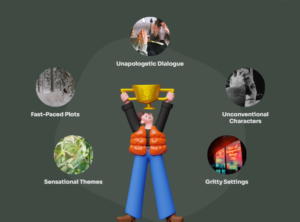
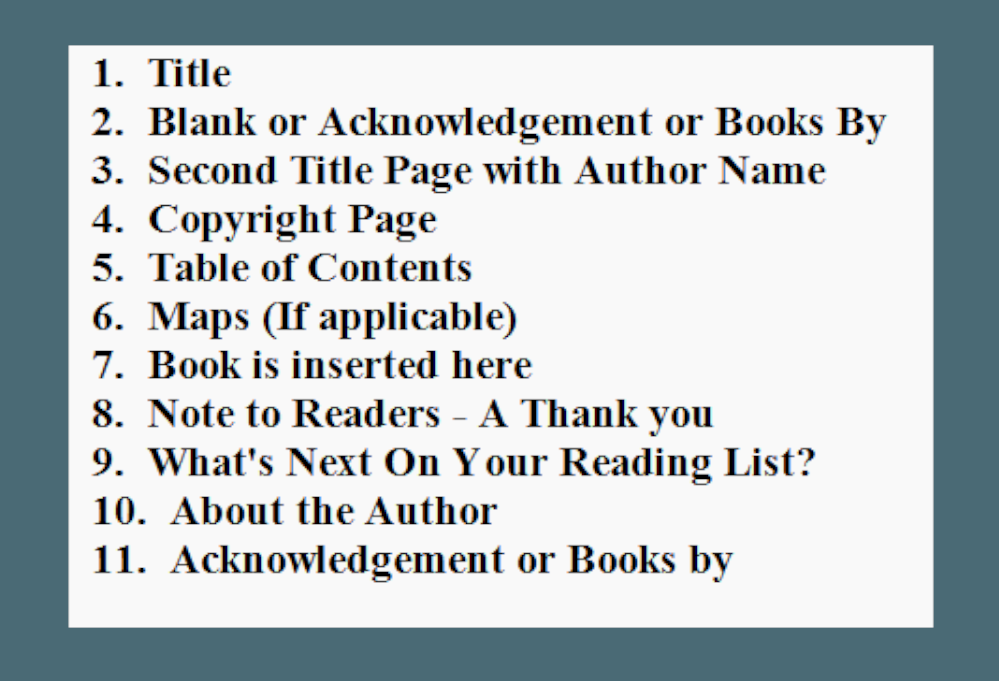 This book is for beginners who are publishing their first or second novel and they are still a little skittish about what else goes into a book. I’ll lay it out so you can easily follow the list and be confident that you’re not forgetting anything. These page suggestions are taken from the publishing industry. These are the pages that appear in a book published by a publishing house.

 Writing a novel is a huge undertaking. There are many things that go into the writing of a fiction story. The best tip I can pass on is this: Break everything down into little bite-sized pieces. By doing this, you can reduce a huge project down to do-able portions that can be done whether you have 2 hours a week to write or two full days! It only requires a little planning and organization.
 It’s important to keep reading as your own journey as a writer continues. Each author has a different style and uses different storytelling techniques. The stories don’t even have to be great. You can learn from the good, the bad and the bland. Just analyzing what made a book bland is a great lesson in itself. Did the story need more action? Did the story get stuck somewhere?
  or other books you read. Reading other authors is crucial no matter where you are on the writing spectrum. However, when you’re new, you can learn a lot from watching mystery or crime noir movies. I like movies from the 1940s, 1950s, and 1960s. The movies in these decades didn’t have CGI and the directors had to use the stage to tell the story. They used wider shots and props to assist the storytelling. By watching these older movies, you can learn a lot regarding writing.
  It’s a good idea to read the synopsis before you view the movie. Knowing at least a basic outline of the story will allow you to absorb more as an author. If you go into the movie blindly, you will be “experiencing the movie” as a viewer only. By knowing ahead of time what story will be unfolding, it will allow you to watch specifically for certain scenes to unfold. You can watch what tools are used to move the story along.
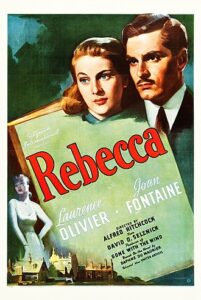 If you are looking for a suggestion, I would suggest Rebecca for the first movie. This movie was directed by Alfred Hitchcock and it has a lot of gothic atmosphere. There is also a psychological plotline in this story so it is a goldmine for learning storytelling tools.