
COPYING INTO SCRIVENER
I watched a video on YouTube teaching how to import a Word document into Scrivener. It suggested that you could use a symbol like the pound sign (#) to indicate the end of a chapter. It sounded so easy, but it didn't work. At least for me, it didn't work.
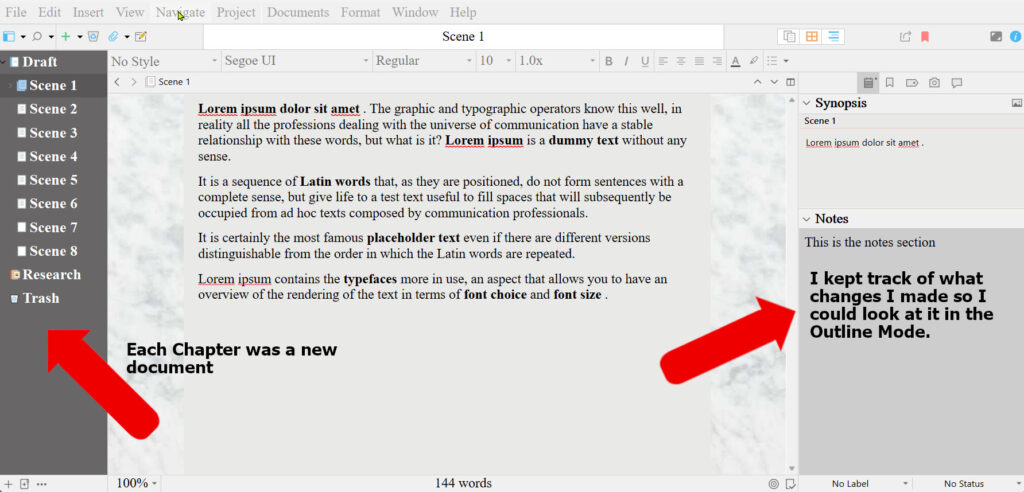
So I just copy and pasted each chapter into a new document. By breaking up the novel back into separate chapters and having the tools inside Scrivener to keep an overview of things, it made the whole process seem a lot easier.
CHANGES I MADE:
 I decided not to change the actual plotline of the story because I still liked it. I chose to polish up my prose and add some additional foreshadowing.
When I originally wrote the book, I wasn't sure there would be a second book. I wound up writing 5 books in the series. There wasn't much foreshadowing in the book, and the characters had developed over the series, so I was able to beef up the characters in the first book and add some foreshadowing now knowing how the series would end. I decided that these changes would bring Book 1 to a place I would be happy to then let go of the series.
 Now, this decision was made in real time. In other words, until I hit a stride in about the fourth chapter, I was still unsure if I would even continue on with the rewrite. But by the fifth chapter, I realized that the changes I was making, even though it wasn't changing the actual plotline, were good and well worth the effort.
The advice I would pass on to anyone who is considering a 2nd edition and you're not sure of it, try to be okay with proceeding one step at a time with some general doubt. Let that be okay. This is the advice I would have given myself on the day I started in Scrivener.
WHAT I LEARNED FROM THE PROCESS AND WHAT I WOULD DO DIFFERENTLY NEXT TIME:
Now that I have been through the entire 2nd Edition process once already, I realize that there are continual doubts along the way that I needed to just push through.
The one change I would make to how I did things is this: I would make a separate copy of my final manuscript and go into Word first. If I decided to change the actual plotline, then I would bring the book into Scrivener as I would need to use the outline mode to keep track of everything. However, since I only added foreshadowing and improved he prose, I would have done the work in Word.
The only reason for proceeding in Word only is because compiling the book from Scrivener to Word does mess up the styles and the formatting a bit. This gives rise to a need to re-read the book again before handing it off to an editor.
TIME OUT FOR A LITTLE ADVICE ON EDITING:
 I had the book edited originally, but I just changed every other sentence, so it had to be re-edited. I knew that going into this, so it was okay. Now, I like to edit the book myself and I have an elaborate multi-layer stage of proofreading that I go through so that when I pass the book to an editor, his or her time is not eaten up with correcting silly typos and adding forgotten commas.
By doing a thorough proofread, and with a suggestion that my weakness is verb tense and reading over my own typos, the editor can focus on the things I need the most help with.
THE NEXT DECISION TO MAKE:
The rewrite with prose improvement and foreshadowing added turned out to be MUCH easier than I anticipated. So after passing off the first book, Darius - A Vampire Story, to my editor, I decided to do an upgrade on the second book too. I just passed that one off to the editor yesterday.
SHOULD I MAKDE A NEW BOOK COVER?
I wish I could say this was an easier decision to make, but it wasn't. I really like the present book cover on my first book, but I changed the artwork a little bit for one reason:
I wanted to tweak my marketing strategy when I get the second book done so I wanted the book cover to look like a cross between a cozy mystery and a low-fantasy paranormal romance. My book has a ribbon of Catholic morality running through it, as well as a satirical commentary, so readers who are used to vampire hunters, or dark despair-saturated books like those of Anne Rice, or teenage books like Twilight would be disappointed in my book.

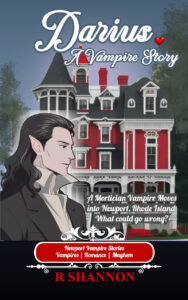
So as I move forward, I'm still experimenting. I decided to go with the new cover, but I'm planning a marketing relaunch when this 2nd book comes back from the editor and then I will watch to see if the new cover or even the 2nd edition makes any difference in sales or reviews. If it doesn't make a difference, then I may go back to my original book cover and then let go of it entirely.
So even now, I'm still proceeding one step at a time. I'm still waiting to see what happens. All I do know for sure is that once this last change is done, I will be ready to let go and let the series be what it is.
 Before I get to how to do a 2nd edition of your book, the preliminary questions you need to answer are:
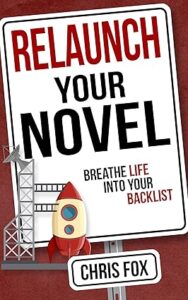 I read Chris Fox's book Relaunch Your Novel and he had great advice. He got my wheels turning and he asked the right questions about why you would want to relaunch your novel.
 The biggest temptation along the way was to take the attitude that everyone's early books aren't that great, so let go and just move on. This would have certainly given me a quick fix. But in my case, I just couldn't leave the book alone knowing that I could probably polish it up a bit before moving on. So for me, even though it was tempting to just let go and move on, I decided I want to fix the book -- and maybe even the entire series -- but I wasn't sure whether I just wanted to do a re-edit or to change the storyline, etc.
 I decided that I wanted to just fix the first book in the series because it had the lowest ratings. The second reason I wanted to make the effort with fixing the book is that I have now finished the series with the 5th book, and now that I know how the story ends, I wanted to put a little foreshadowing into the book while I was buffing it up.
 This was the one question that led me down the road of choosing to write a 2nd edition: What will I get out of it? The answer was and is: I knew if I fixed Book 1 that then I would be able to let go of the entire series and move on. I still like the stories and the series itself. It's not my most popular book series, but I still like it. So fixing the first book was important to me in terms of 'my body of work'. I knew I had more experience and I could improve the book, even if it was just adding some foreshadowing or improving on the prose.
 The first decision I made was to pull the novel into Scrivener, divide it up into chapters and read through it. The next question I had to answer was: Do you want to change the plotline? Or do you want to add some foreshadowing and just improve the prose?
 If you, however, are self-publishing and are planning to do your own marketing, giving away your book, especially when you are just breaking in as an author is crucial. Once you decide to give away your books, you will need a PDF document and an ePub document.
 As I'm sure you already know, you can create a PDF inside Word, so that's not a problem. However, you will need a conversion program to create the ePub. I use the program called Convertio.co. This is a paid plan, and it comes to $9.00 a month at the time of this blog. If you only have one book, you can sign up for one month and then stop the service -- but check to make sure that's an option before you do that.
 Sigil is a program for making or polishing up ePubs after conversion. I always had to get rid of a lot of crazy codes in the ePub so that's why I used Sigil throughout the years.
 Yes, the recipe. I just finished planning a Private Advanced Reader Campaign and although it's not hard, it does require several steps and knowing what order you need to do each step is important. If you do them in the proper order, it will be an easy process.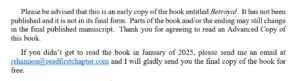
 For any Advanced Reader Campaign, I would suggest you add a disclaimer that it is an advanced copy, a watermark, and a link to fill out a questionnaire about what the reader thought about the book.
 You will need to create the questionnaire for the readers to fill out. Now, if you don't have a website where you can create a form, you can use a google forms or you can ask the readers to send an email with feedback about the book to your email. I have found the forms get more interaction.
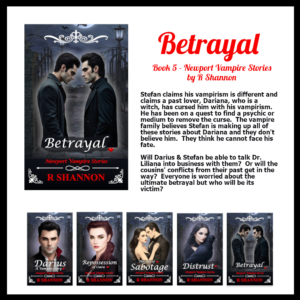 And lastly, you will need graphics to post on your website or social media.
 The one main reason I have right now is that I want to avoid offering this to the general public because I am not sure if the book, even though it is edited, is in its final form.
 In order to offer a limited ARC copy, I will use my newsletter list, which is really my reader list, and my website. I will limit the invitations to these two places.
 I usually bring these epubs into Sigil, a program to create and/or edit ePubs in order to make some global changes and/or clean up the extra codes it may bring inside. I will have a video on this one.Create a PDF from your docx file. Once you have the epub and PDF, you are ready to upload to KDP and test it. I will cover this in one of the videos.Upload the PDF and the ePub up to google drive and copy the links; you will need them later.
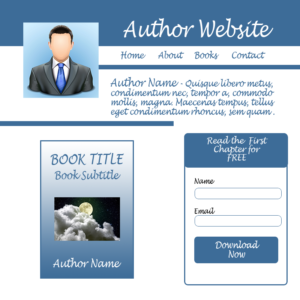 The next steps are done with my website. They have to do with pages and forms. So if you don’t have a website, then you can use google forms or whatever system you presently use to get signups. I use Mailerlite and could have set this up through them, but I want to receive the emails and names myself so I can keep a list of who the ARC readers are so I can ask them for a review when the book is ultimately published.
 The first thing I noticed is that the story needs to be contained or confined to a shorter version than a novel. This means that you won’t have the same space to build the characters.
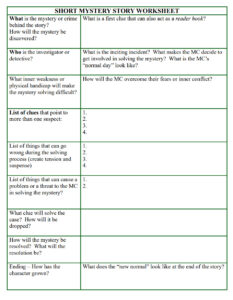 There are templates all over the internet for story crafting, but they all seem to follow the hero’s journey, which I find doesn’t work for mystery books. At least I was never able to make them work for me.
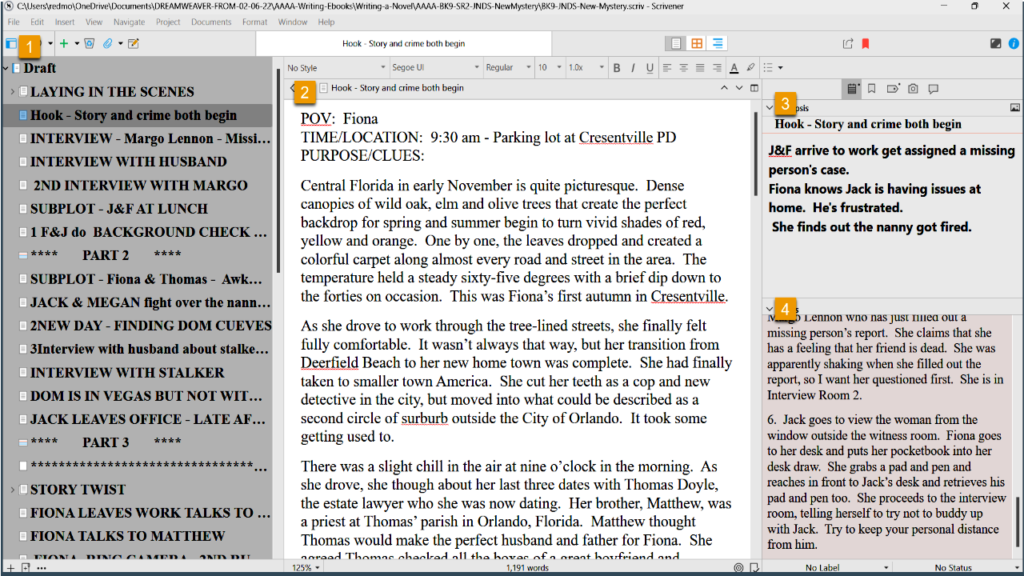
 There are many blog posts and videos on the internet about how to write a novel. Much of the advice is general in nature and only broad-stroke tips. This video seeks to go one step further and open my last book, which is still being proofread in Layer 8, and show a work-flow demonstration.
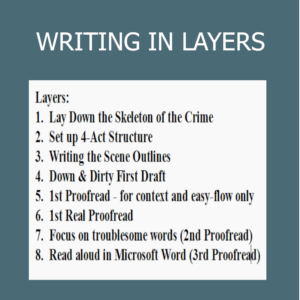 I am in the process of finishing my 14th novel. I started out like many of you as a self-taught author who took in unorganized, uncurricularized information and had to make sense of it all. I devised this 8 Layer system to try to write a novel as efficiently as was possible. I offer it to you for whatever weight you wish to give it.
 In a mystery, crime novel, or thriller, the clues and their revelations need to be planned so the story clues can remain disjointed in the beginning, but then slowly come together like a jigsaw puzzle. This keeps the reader guessing -- which is part of the mystery readers' enjoyment.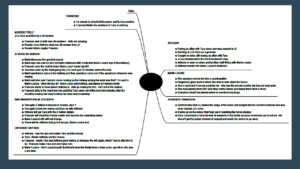
 1. Who is the Ghost? Why has the Ghost arisen? Why is the Person not Resting in Peace? What is the Ghost's purpose for appearing? This is the backstory that will be dropped like breadcrumbs throughout the storyline. (Ghost-Story.png)
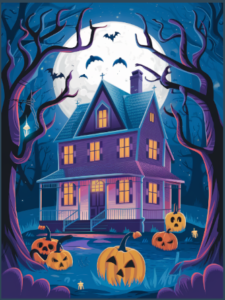 1. What is it about the house that's creepy?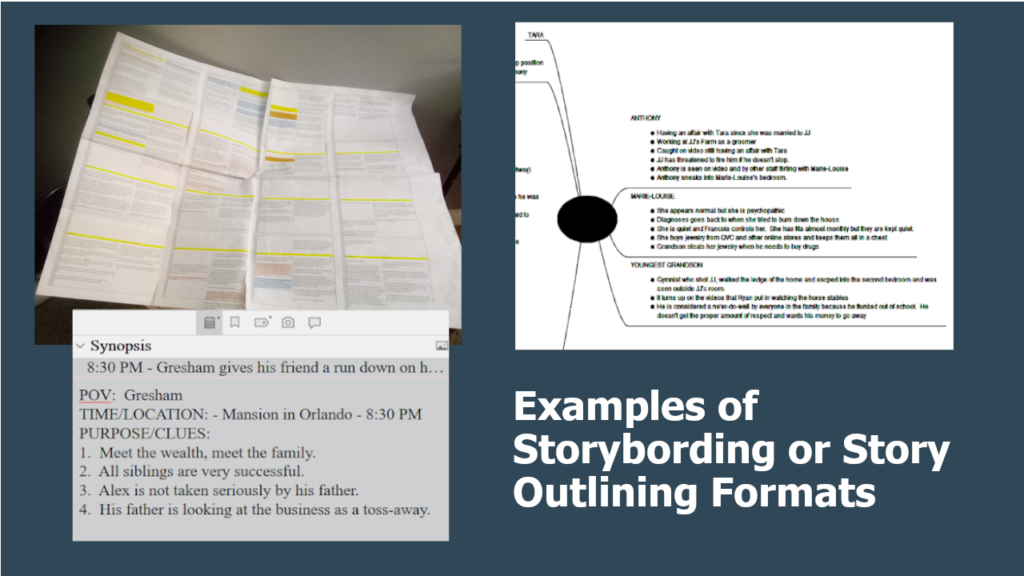
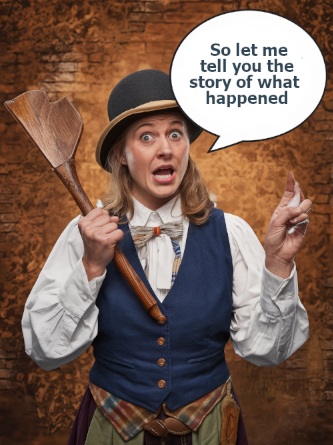 It may help to think of yourself as more of a Town Crier.
 1. Using the read aloud feature in Microsoft Word, I read the book aloud as I read along with it. This gives you an idea of how the book will sound in the reader's mind.
 Most of these mistakes were ones that were not even on my radar at the time they were made.
 When I first got the idea of writing a novel, I did research for about a year. I read several how to books on every subject under the title of writing a novel and self-publishing. (Cat on book shelf)
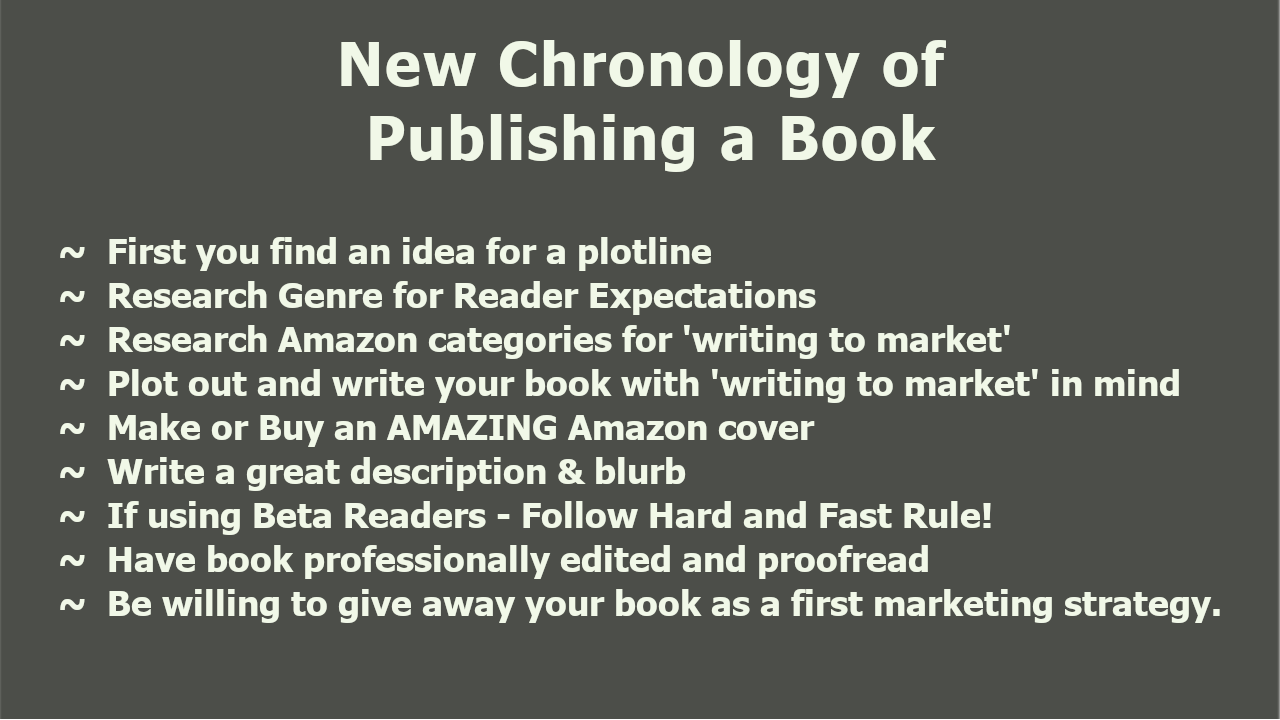
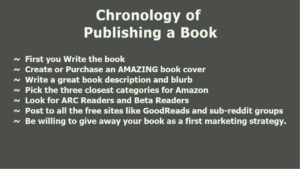 So above is a list of the chronology I pieced together as being the proper chronological list of how to write and publish a book:
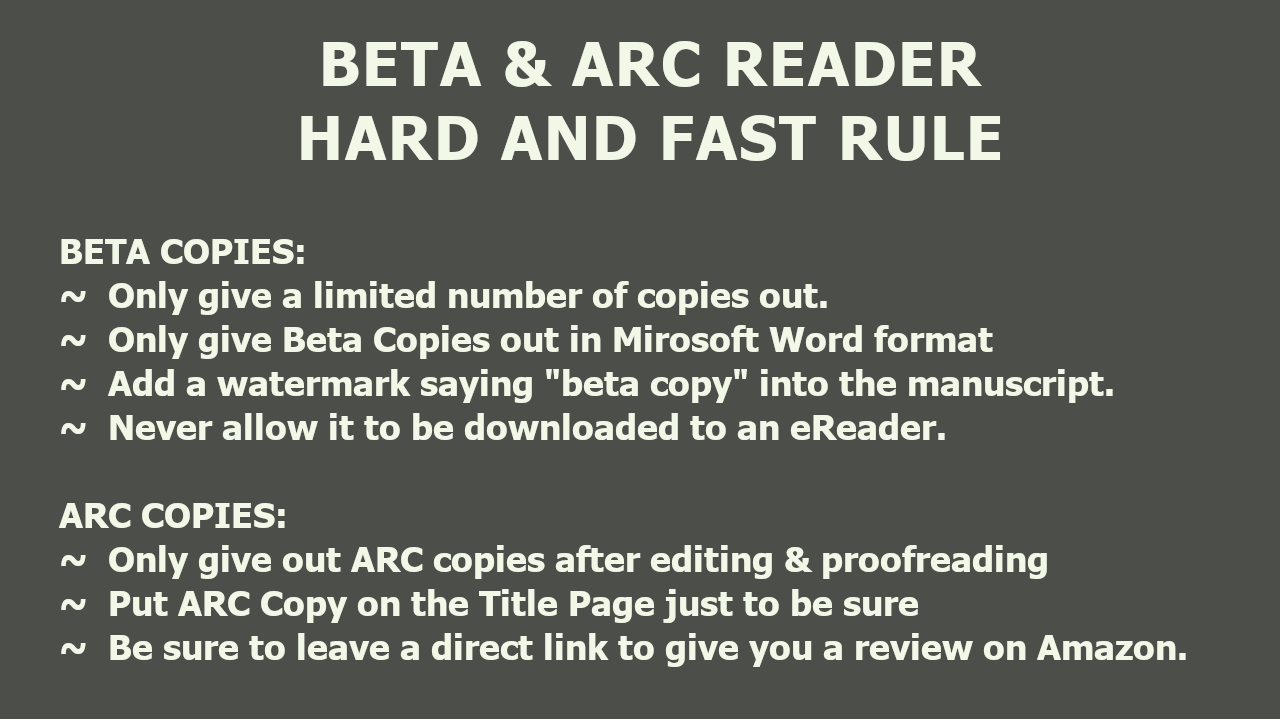
 Beta Readers often times read books very early in the process -- before the book is even finished to give early feedback. This is a great idea if you're not sure about your characters or if the plot is good enough, etc. Let's face it, in the beginning it's hard to think you're book is a masterpiece when it's your first one -- at least it was for me. There is a definite high-level purpose in having Beta Readers. They are worth their weight in gold.
 However, here is where I made the terrible mistake and found out the hard way about this particular landmine: I offered my Vampire book Darius - A Vampire Story as a beta book but it had not been finalized, professionally edited or proofread. Now, in the ad copy for the link to download, I clearly posted it as a beta copy that had not been edited, etc. However, once a book is downloaded to an eReader, no one will remember this book is only a beta copy. And the second mistake I made here was that I didn't put anything in the book itself.
 The first time this happened, I just thought the reader was a bit crazy. But after this happened several times, it was only then that I realized that I had released hundreds of beta copies that now lived on people's eReaders. And for some reason, there are a lot of readers who take typos or grammar errors personally. It seems to trigger them and their reviews are more like rants.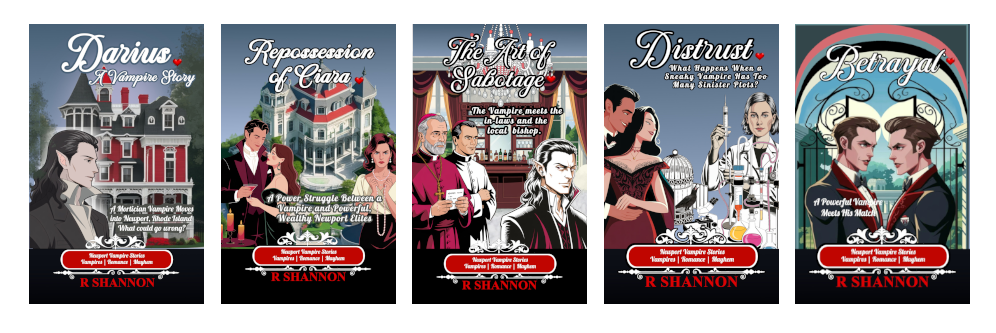
 GoodReads is probably the largest single pool of avid readers and book lovers out there. But goodreads can be a tough crowd for new writers. This is where Darius's bullying started. If I had to do things over again, I would not have focused on Goodreads as a first place to release my books -- even after they were fully edited and proofread. Unfortunately, many of the videos I watched during that first year, talked about how great goodreads was helpful to find beta readers and arc readers and launch a book.
 I didn't realize that the categories on Amazon have a hierarchy to them. It may have been because we were originally allowed to put each book into 10 categories. I had watched a video by
  So the time to think about the categories is before you even plot out or write the book. Once you have a plot idea, that's the time to look at the categories and think about where the book would fit, and what you can tweak about the storyline to fit into a sub category or a less competitive category? Can you make the story happen in the west to be a Western Romance? Can you put the story into olden times to make it a historical novel, ore even better, put it in a specific time period? The time to think about categories is right after you have know you have a workable plotline.
 Mistake Number five requires a little explanation. My inspiration for my vampire series was the old Dark Shadows Soap Opera from the late '60s and early '70s. I never watched it as a kid but everyone I knew did. I didn't watch it because I had to walk too far to get home from school in time. This vampire series, like most soap operas at that time, was melodramatic and being a gothic and supernatural story, the storylines were completely crazy. But I loved the show anyway.
 So how does all this fit into mistake number 5? Well, there's no category for tongue-in-cheek vampire stories. Also, fifty years have passed since this show ended and a lot has happened to the vampire genre in that time. First there was Anne Rice and her books and subsequent movies which are all dead serious and there's no tongue in cheek humor of any kind. I only read the first book and it was steeped in darkness and despair. Because I read for enjoyment, the level of despair was too much for me so I never read the other books.

 Turning the viewing of a movie into a writing exercise will change the way in which you watch the movie. For your spouse, it won't change anything. Most people love to go into the story not knowing anything. There are some who any hint of a spoiler will ruin the movie for them. You may be one of them now!
 Find a summary of the movie on Wikipedia. Most movies have a page about them and it gives all the technical information about who wrote the original story, the producer, director, stars, etc. But there is a section entitled PLOT. This is where the plot is laid out for you.
 To be honest, most plots are too long to even remember or put together with one reading. I can usually follow the plotline for about the first four paragraphs. After that, I can't remember who is who but it doesn't matter. As long as you have a gist of an idea of what will take place, it allows you to watch for it.
 WRITING EXERCISE: Next time you are sitting down to write, pull up the picture and create a scene in your head -- not from the movie, but from your own imagination. Using this setting as inspiration, think of something that is about to happen in the room or what just happened in the room. Be sure to include a description of the room and/or the main elements in the room. This exercise alone will improve your descriptive writing and could even lead to a short story! You never know.