LAYER 1 - Putting Together the Skeleton of the Mystery or Crime
 In a mystery, crime novel, or thriller, the clues and their revelations need to be planned so the story clues can remain disjointed in the beginning, but then slowly come together like a jigsaw puzzle. This keeps the reader guessing -- which is part of the mystery readers' enjoyment.
Layer 1 requires the skill of story engineer, not so much an author. In my humble opinion, trying to write around this initial phase of story scaffolding is is one reason why novels can take authors years to finish. Scaffolding-panel.png
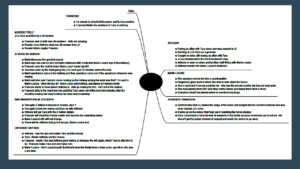
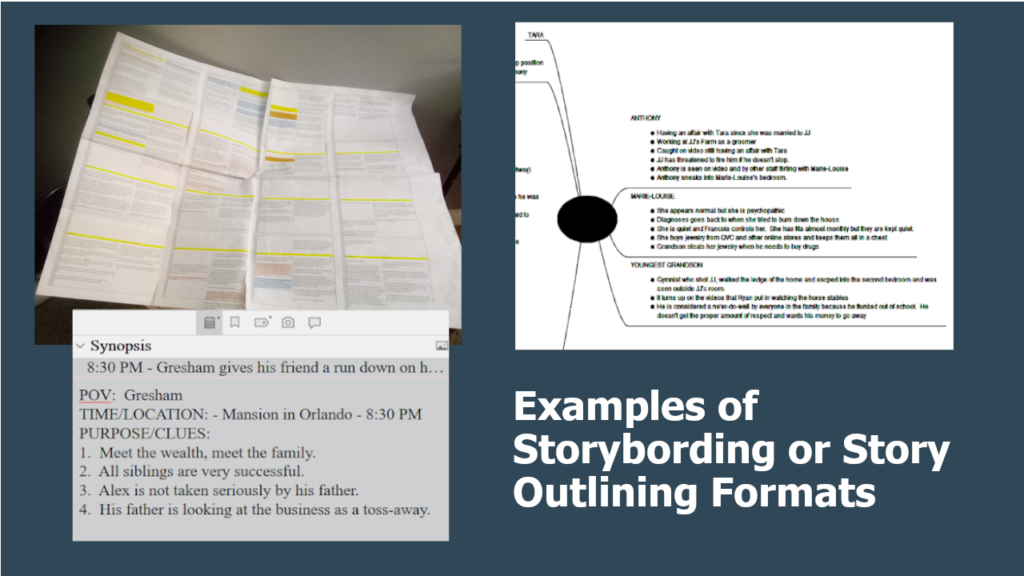
So the first layer is to storyboard only the crime or the mystery of your novel. This layer can look like a long list of crimes and clue elements,
or it can look like a mind map sketched in pencil on the back of a large piece of wrapping paper, or it can be done in a mind-mapping software.
But there will need to be initial planning of where the mystery begins, where it leads, and how it ends. That's what goes on in this layer.
WHAT TO FOCUS ON IN LAYER 1:
An example for a Layer 1 crime mystery would be the following:
1. Lay out the chronology of the crime.
2. Who is or are the Victims?
3. What is a list of clues that could lead to the solving of this mystery?
4. Determine what the final clue will be that reveals the true culprit and think about how you can hide this clue in plain sight. This will be the clue that solves the mystery.
5. Determine what the first three or four clues will be that will bring in multiple suspects. Give each suspect a motive for the crime and decide how and when you will reveal this motive
6. Choose an unlikely suspect and give this person a good cover story.
7. Even at this early stage, figure out how the mystery or story will end. This can be changed during the creative process, but knowing where your story will end, will give you a writing destination. This will prevent you from winding up writing yourself into a corner somewhere or writing yourself into a tangent that will have to be nixed anyway.
WHAT ABOUT OTHER GENRES?
Now, sometimes you will be writing a story that has a mystery ribboning through it but it's not as organized or as detailed as an actual crime mystery. Your outline will be shorter but will contain a skeleton of all the action. Below are two examples of writing a ghost story and writing a Gothic scary-house story.
LAYER 1 IN A GHOST STORY:
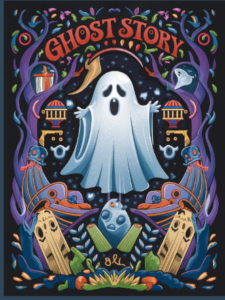 1. Who is the Ghost? Why has the Ghost arisen? Why is the Person not Resting in Peace? What is the Ghost's purpose for appearing? This is the backstory that will be dropped like breadcrumbs throughout the storyline. (Ghost-Story.png)
2. How can the Ghost first appear that will raise the question that maybe the viewer is just crazy? Or maybe the viewer is just paranoid? Give them a reason for this paranoia.
3. How will the Ghost appear and what clues will the ghost drop in order to trigger more of the mystery behind the Ghost's restlessness to play out?
4. Choose how the story will end and if the Ghost will achieve its goal and whether the ghost will now rest in peace or will the Ghost be back for another book in the series?
LAYER 1 IN A SCARY-HOUSE STORY:
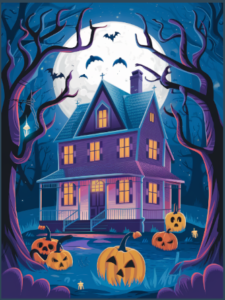 1. What is it about the house that's creepy?
2. What is the House hiding? Is there a secret room? Is there a hidden person?
3. What happened in the house to make the house haunted or unsettled?
4. How will the mystery of the house play out? What is the chronology of the clues about the history of the house and why it is haunted? These are the breadcrumbs in this kind of a storyline.
5. Choose how the story will end and if the house is destroyed or if the house destroys someone, etc.
FORMAT OF LAYER 1:
Layer one can be done in a list format or with a mind-mapping software, or even with a pencil drawing your own game board or storyboard on the back of a large piece of wrapping paper. Choose whatever format helps you the most. If you're new, try each one. Finding the right tools for the right job is very helpful.
If your Level 1 looks like any of these, you get A+ Layer 1.
LAYER 2 - Break up the Story into a four-part structure or 3-act structure.
Open up a fresh manuscript document and split the clues and events into a four-part novel structure or a 3-act-story structure, whichever one you prefer. So this layer is easy and takes about five minutes.
LAYER 3 - Writing the Scene Outlines (Scaffolding & Storyboarding)
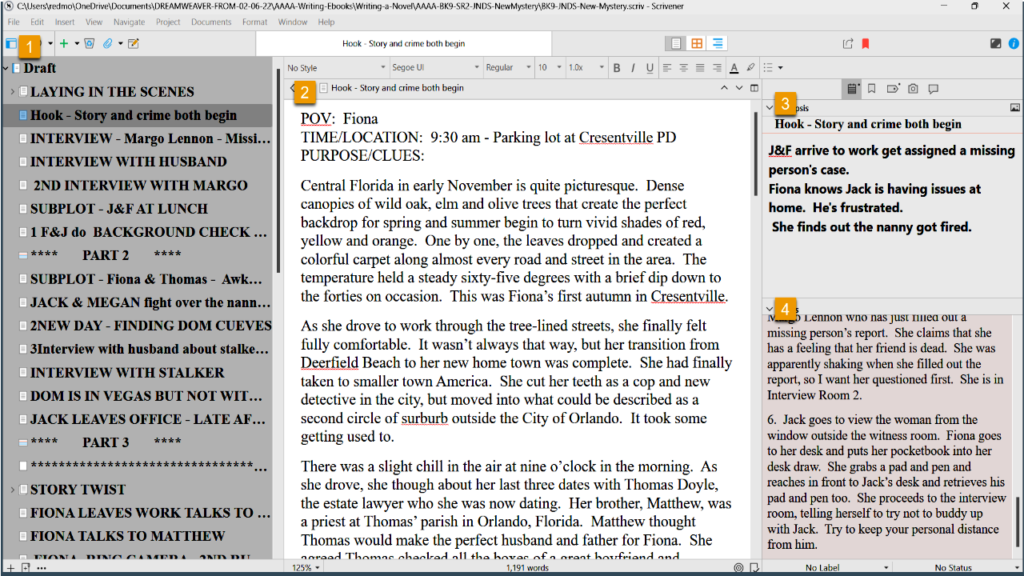
In Layer 3, you will refer to the Skeleton of the crime outline you already created. Following the chronology of the crime and the clue drops, write an outline of each scene. This is nothing more than another list of what needs to happen in each scene. You are not the writer yet. You are still the story engineer or the storyboard creator. This is the second phase of scaffolding that is setting the story up for when the writer comes in. The list should be concise, more like a list than big paragraph chunks.
Below is a Scene Template I use. I don't worry about the Point of View in this layer because you can wait to choose it. I wait to see who "steals the scene" when I'm actually writing. But I include it in a Scene Template.
POV:
TIME/LOCATION:
PURPOSE/CLUES:
CHOOSE A TIME AND LOCATION:
Choose a time and location, but don't describe any locations or characters yet. Purpose and Clues is a reminder that everything written has to have a purpose and every scene in a mystery should have some clues or a crime.
In the video on this subject matter below, I go into a few extra tips on using the scene template to help you in other ways.
LAYER 4: DOWN-AND-DIRTY FIRST DRAFT - NOW YOU'RE THE WRITER!
In Layer 4, you are finally the writer. The scaffolding is in place and now it's time to start writing the story. The first draft is the hardest layer of writing.
 It may help to think of yourself as more of a Town Crier.
Your job in this layer is to blurt out the entire story. Just get it down in paper. Don't worry about spelling, grammar, descriptions of people. Like the cops say -- Just the facts. Write out the story and don't look back. Don't re-read anything. Don't get lost in verb tenses. Write and don't look back. Only look at your scene outline to make sure you have covered everything. That's the only concern.
THINGS TO WORRY ABOUT IN THE FIRST DRAFT:
Choose a location for the scene and a time. (Nothing is written in cement)
Make sure all of the clues and anything else from your scene outline gets into the scenes.
THINGS THAT DON'T MATTER IN THE FIRST DRAFT:
Spelling, grammar, sentence structure, too many adverbs, scene or character descriptions, foreshadowing, cliffhangers, quote marks, etc.
Just write what happens in each scene with whatever dialogue comes to you.
In the video below, I go into some detail about why this is important and how it can save you time in the end.
Layer 7 - The Hardcore Proofread
Below is a list of things I do in Layer 7:
1. List Troublesome words - Just, like, adverbs. Compile a list of your favorites. I have compiled a long list of words that trip me up and I go over them in this layer.
2. Check your chapters in Grammerly for grammar verb tense.
3. Then I compile from Scrivener to a Word .docs file and paste it into an eBook template and save it as a Manuscript. I file it in a folder called Pre-Publication. Then I open it in Word and run Word's spell check and grammar check on it again.
4. Then I read it as a final proofread (even though it's not the final proofread!)
5. Check all Chapter Names are in Heading 1's for the Table of Contents
6. Fill in the Other pages: Title Page, Other Books By Page, Title and Author Page, Copyright, Table of Contents, Note to Reader, Acknowledgements, About the Author, Other Books By Page)
6. Find and check all quotes to make sure your quotes are in sets.
LEVEL 8: - FINAL PROOFREAD AND NARRATION
 1. Using the read aloud feature in Microsoft Word, I read the book aloud as I read along with it. This gives you an idea of how the book will sound in the reader's mind.
2. I make any final corrections in this last proofread.
3. From here the manuscript goes to an Editor.
4. Then I forward it to myself as an ePub and while it's being edited, I read it again on my Kindle to see how it looks and feels from the reader's perspective.
VIDEO ON WRITING IN 8 LAYERS IS BELOW:


 here are many great sets where the action takes place in this movie. A good writing exercise would be to choose one of them and describe it in one paragraph. See how much information you can get into that amount of space.
 Most of these mistakes were ones that were not even on my radar at the time they were made.
 When I first got the idea of writing a novel, I did research for about a year. I read several how to books on every subject under the title of writing a novel and self-publishing. (Cat on book shelf)
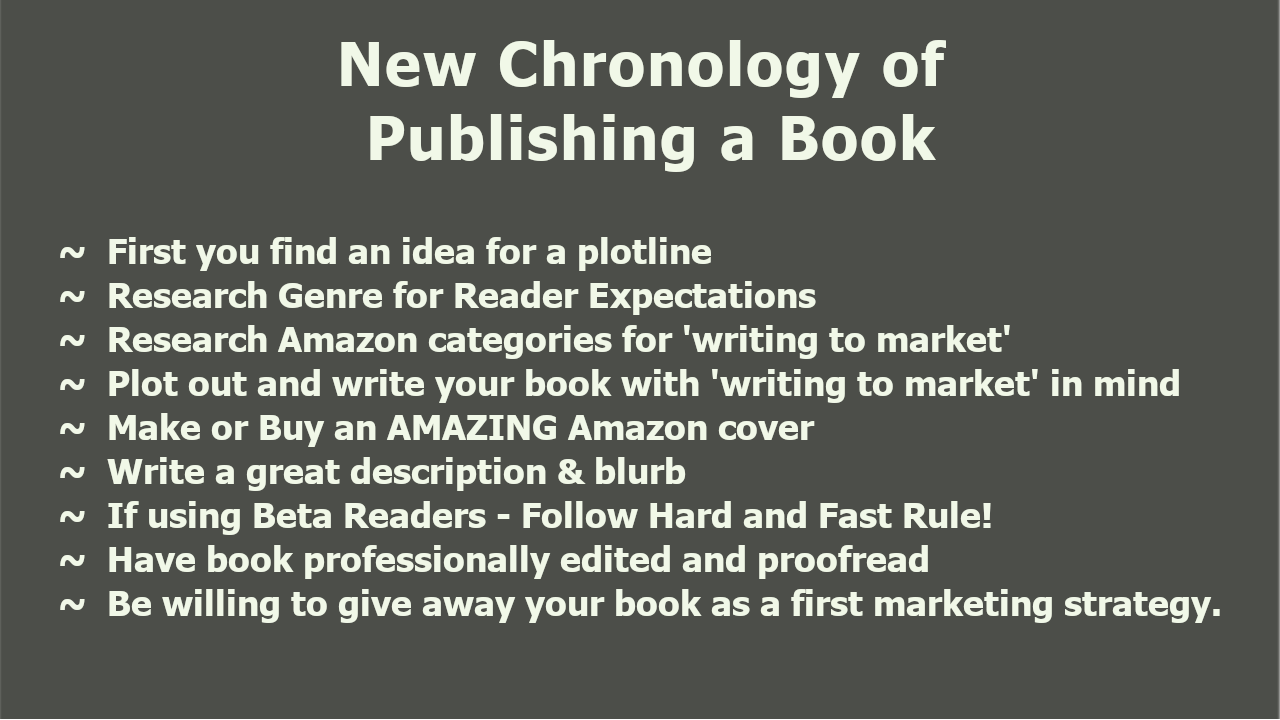
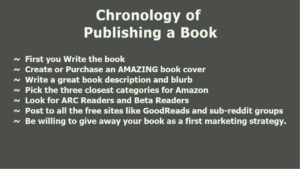 So above is a list of the chronology I pieced together as being the proper chronological list of how to write and publish a book:
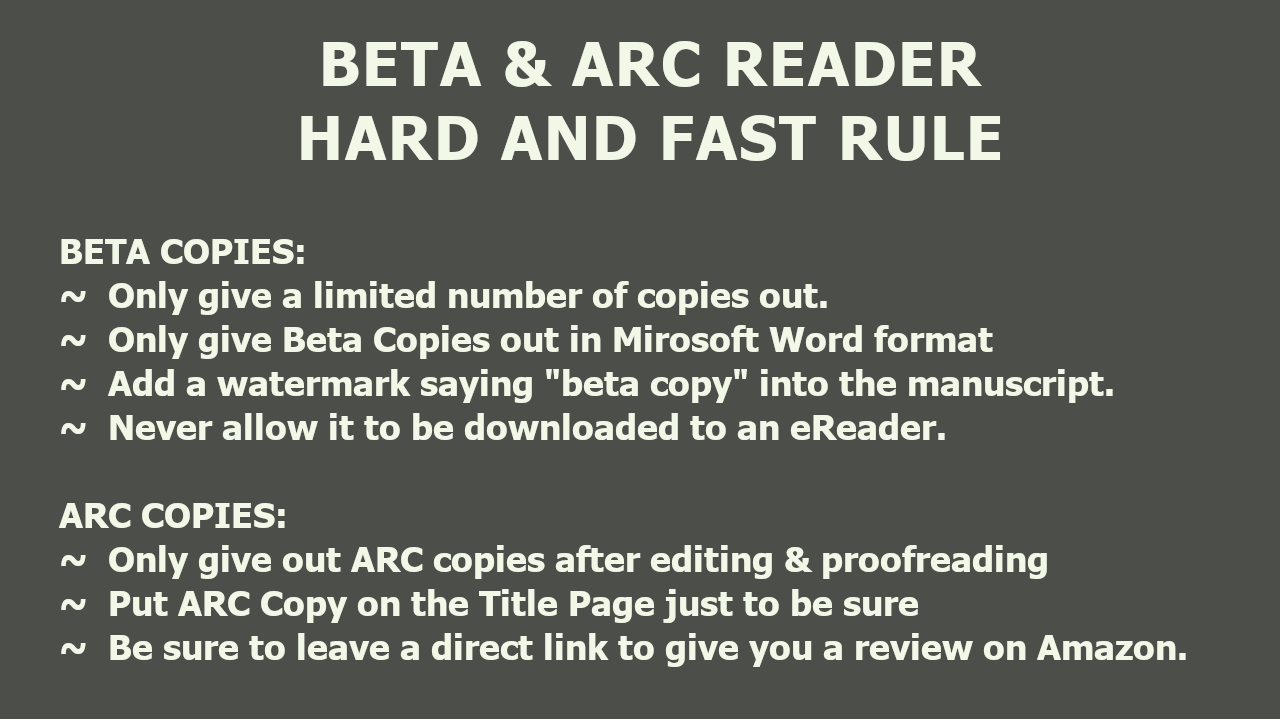
 Beta Readers often times read books very early in the process -- before the book is even finished to give early feedback. This is a great idea if you're not sure about your characters or if the plot is good enough, etc. Let's face it, in the beginning it's hard to think you're book is a masterpiece when it's your first one -- at least it was for me. There is a definite high-level purpose in having Beta Readers. They are worth their weight in gold.
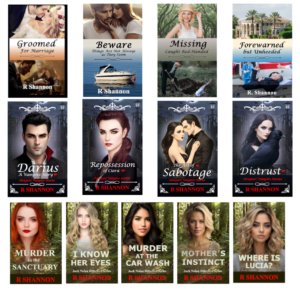
 However, here is where I made the terrible mistake and found out the hard way about this particular landmine: I offered my Vampire book Darius - A Vampire Story as a beta book but it had not been finalized, professionally edited or proofread. Now, in the ad copy for the link to download, I clearly posted it as a beta copy that had not been edited, etc. However, once a book is downloaded to an eReader, no one will remember this book is only a beta copy. And the second mistake I made here was that I didn't put anything in the book itself.
 The first time this happened, I just thought the reader was a bit crazy. But after this happened several times, it was only then that I realized that I had released hundreds of beta copies that now lived on people's eReaders. And for some reason, there are a lot of readers who take typos or grammar errors personally. It seems to trigger them and their reviews are more like rants.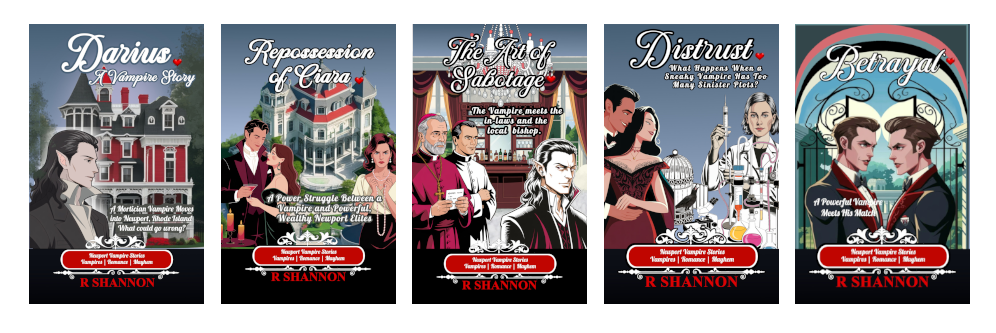
 GoodReads is probably the largest single pool of avid readers and book lovers out there. But goodreads can be a tough crowd for new writers. This is where Darius's bullying started. If I had to do things over again, I would not have focused on Goodreads as a first place to release my books -- even after they were fully edited and proofread. Unfortunately, many of the videos I watched during that first year, talked about how great goodreads was helpful to find beta readers and arc readers and launch a book.
 I didn't realize that the categories on Amazon have a hierarchy to them. It may have been because we were originally allowed to put each book into 10 categories. I had watched a video by
  So the time to think about the categories is before you even plot out or write the book. Once you have a plot idea, that's the time to look at the categories and think about where the book would fit, and what you can tweak about the storyline to fit into a sub category or a less competitive category? Can you make the story happen in the west to be a Western Romance? Can you put the story into olden times to make it a historical novel, ore even better, put it in a specific time period? The time to think about categories is right after you have know you have a workable plotline.
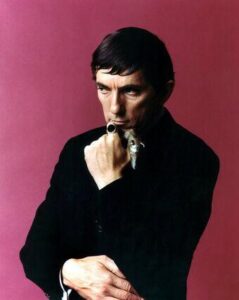 Mistake Number five requires a little explanation. My inspiration for my vampire series was the old Dark Shadows Soap Opera from the late '60s and early '70s. I never watched it as a kid but everyone I knew did. I didn't watch it because I had to walk too far to get home from school in time. This vampire series, like most soap operas at that time, was melodramatic and being a gothic and supernatural story, the storylines were completely crazy. But I loved the show anyway.
 So, with limited knowledge of the whole vampire genre, I went on to write a vampire book series. My vampire owns and operates a funeral home and keeps a bevy of 3 women to supply the blood he needs. He normally picks up runaways from the train and bus stations, but he winds up falling in love with the daughter of a wealthy, influential family in Newport Rhode Island. There is also a monastery of monks that live on the opposite side of the cemetery that Darius also owns.
 So how does all this fit into mistake number 5? Well, there's no category for tongue-in-cheek vampire stories. Also, fifty years have passed since this show ended and a lot has happened to the vampire genre in that time. First there was Anne Rice and her books and subsequent movies which are all dead serious and there's no tongue in cheek humor of any kind. I only read the first book and it was steeped in darkness and despair. Because I read for enjoyment, the level of despair was too much for me so I never read the other books.
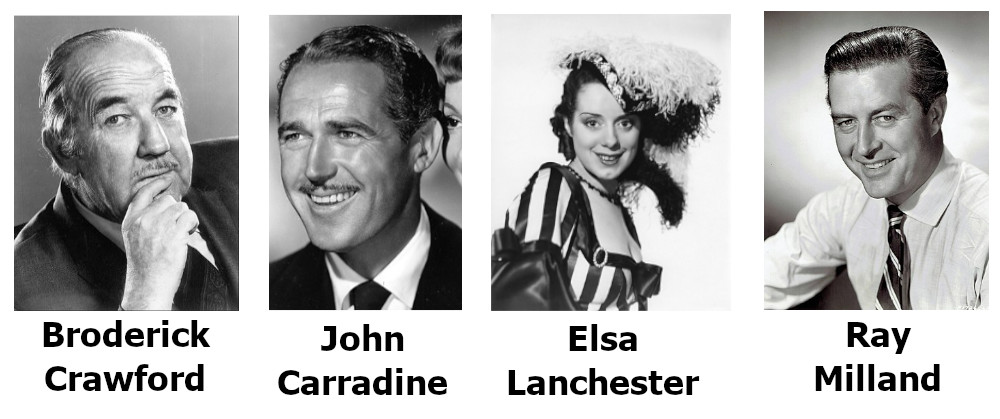
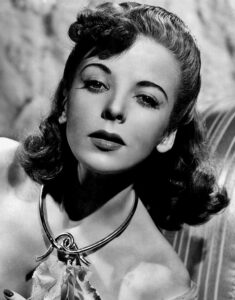 The movie starred Ida Lupino, who played the starring role as Ellen Creed. She was an English actress born in 1918 but made most of her movies in the United States. As a point of interest, she came from two generations of theater people, but she did start her own production company in the midst of the Hollywood Studio system. That was pretty daring in those years for a woman if you ask me.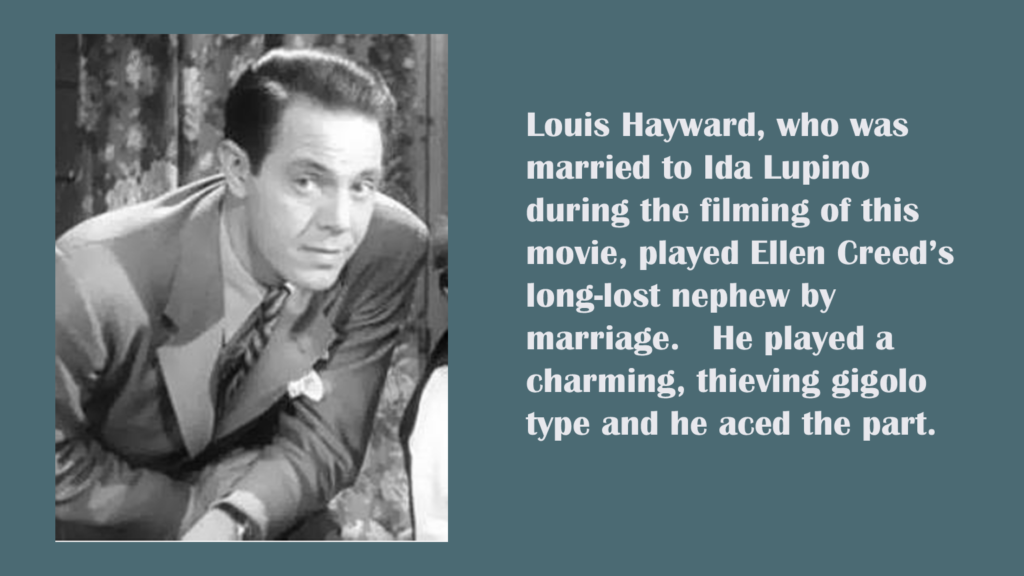
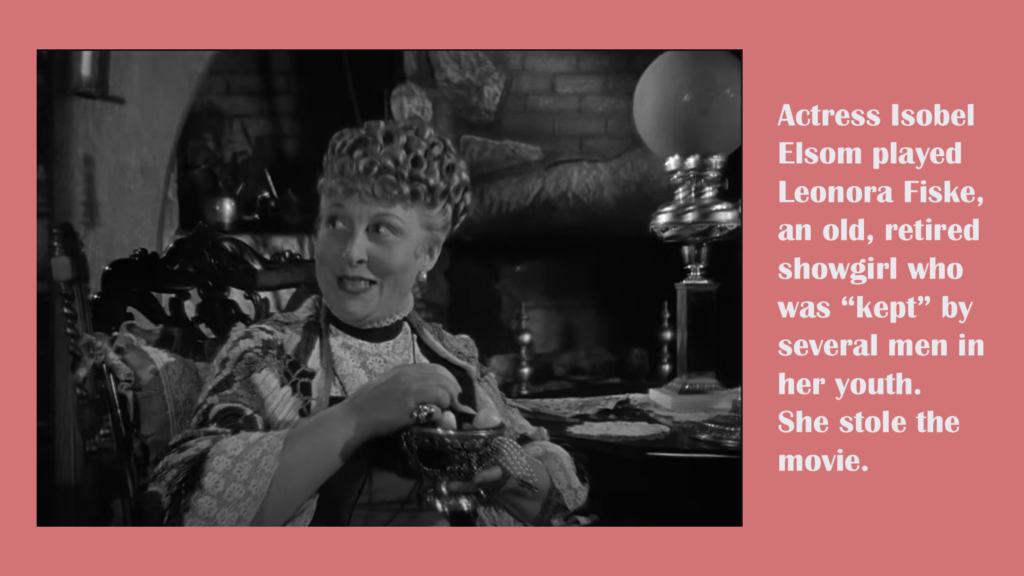
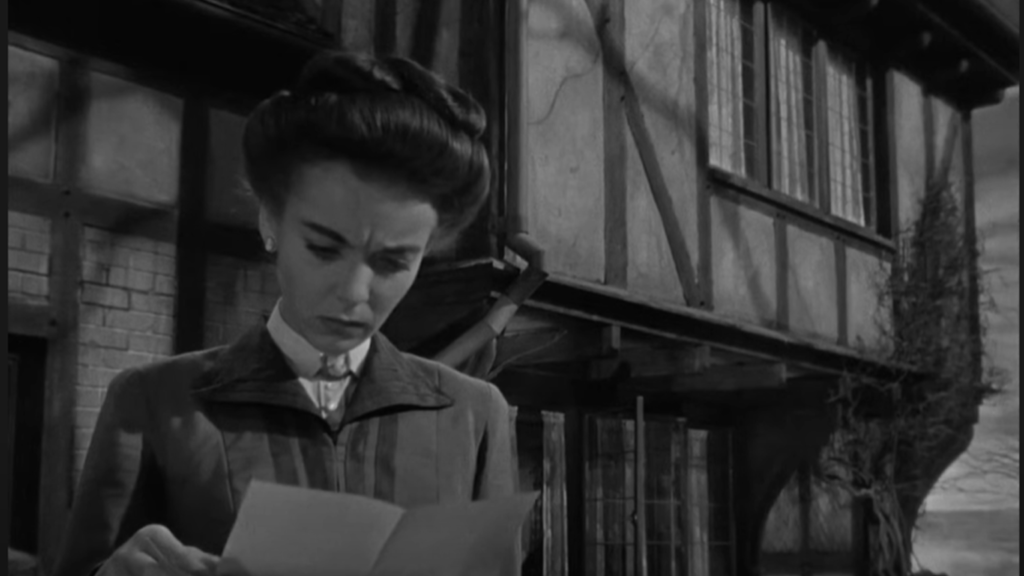 As the story opens, we learn that Ellen Creeds' family falls on hard times and she winds up being a handmaiden of sorts to this ex-chorus girl Leonora Fiske who now owns their family home. Ellen has been reduced to a common servant. (Regina on screen)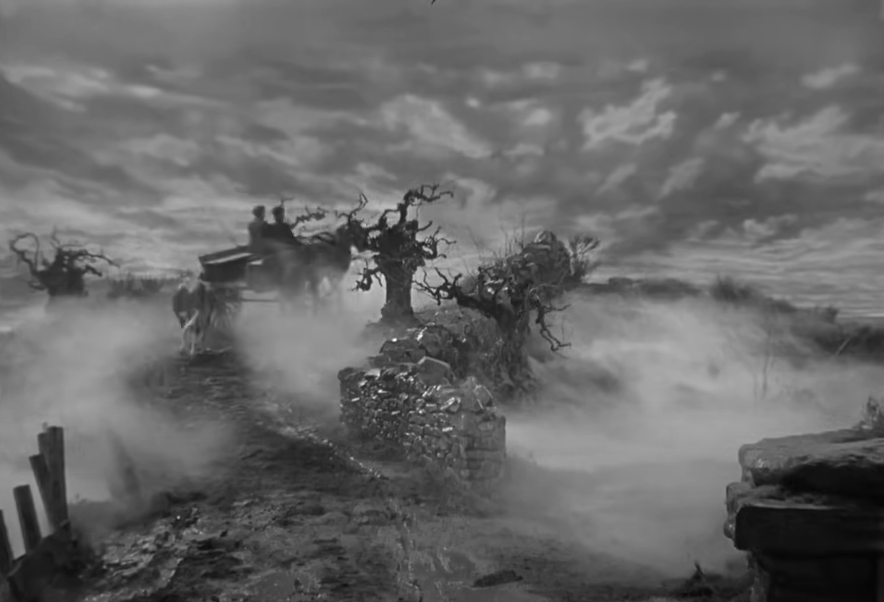
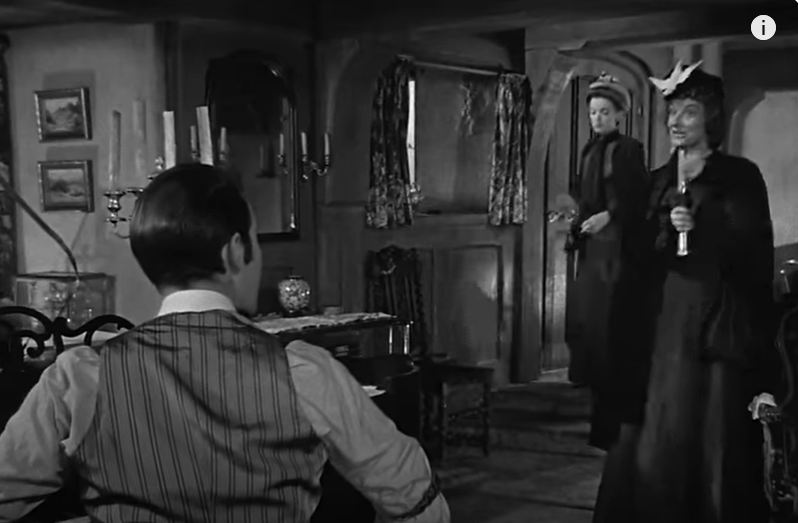


 This movie is a good study in the difference between scriptwriting and novel writing. For example: The singer in the movie doesn't really move the mystery along at all. She is there for sheer entertainment which every movie needs. She plays off of the businessman and there is a tiny subplot about how Karkov the creature fancies her and protects her in one scene. But her entire appearance in the movie could be handled with two lines of background information in a novel.
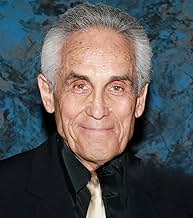 The actor who played Karkov was amazing. His character was a mute but he acted with grunts and used his whole body for his portrayal of the wax museum creature. He did an amazing job.
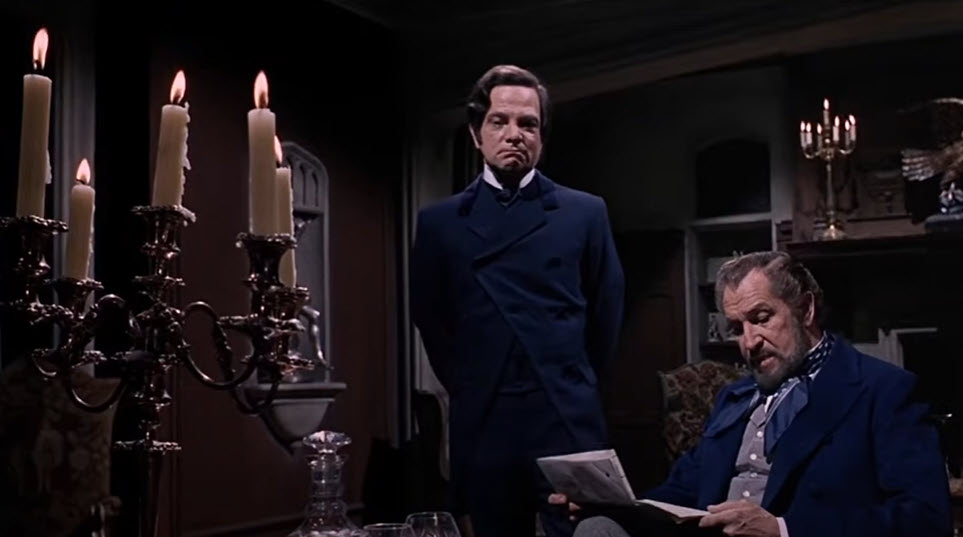
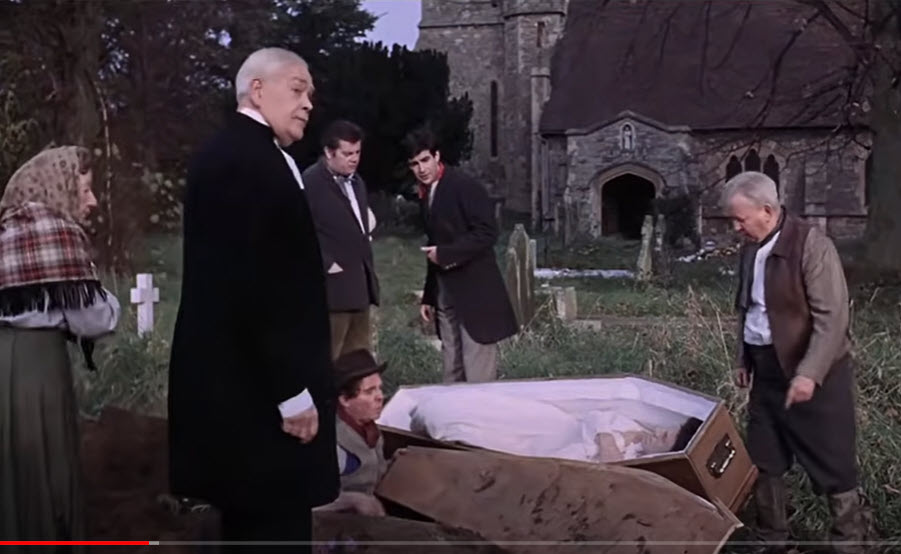
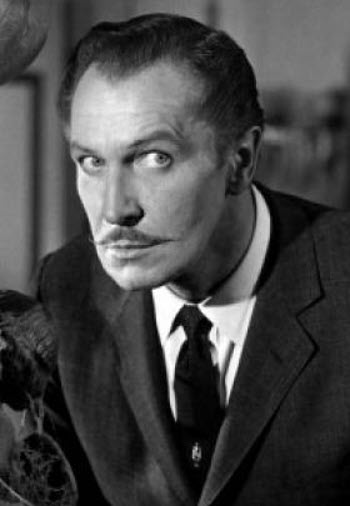 The movie was produced and directed in 1959 by British director Gordono Hessler. This movie stars Vincent Price and Christopher Lee. It is the first movie that stared both actors.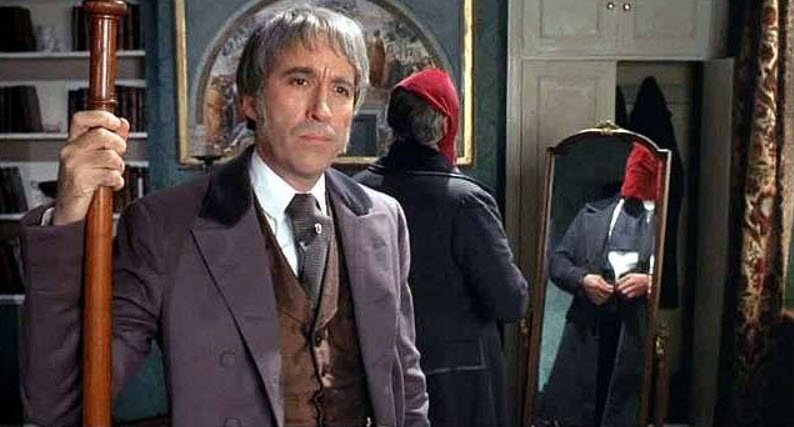
 THE ATMOSPHERE: The movie is anchored in the late 1800s and brief atmospheric scenes support his. This is a good way for authors to learn about anchoring the story in England, in the historical time period and giving it the 'gothic vibe' which I'll be referring to throughout this review.