
KNOW WHERE YOU ARE STARTING FROM:
 I am a new writer myself and by no means do I hold myself out to be any type of an expert. But I am still very close to the "very beginner status" and still understand some of the obstacles only a brand new writer is faced with.
The experts can't remember having "two left hands" anymore, but I sure can. My purpose is to blog as I move through the learning process, so I can share my experience and research and save other newbies research time as there is so much to learn!
Some new authors will already have studied writing or may be young enough to decide to study writing in a college or a formal learning environment. Hopefully, the institute or teacher you have will have circularized the information you need to know and you will be taking it all in in some organized way.
Others may be writing as a hobby or a second career, or like myself, preparing for a busy retirement. Either way, it’s important to know where you are beginning and what you even know about writing. Having gone to parochial schools, I had English classes until I was just about drown in them. So that is one of my strong points. However, I never took a creative writing lesson in my life and so writing a novel, specifically, I had no clue when I started out.
I worked as a court reporter and legal assistant for many years and although I am not a lawyer, I sat in more trials than many real lawyers, know what the court office of a Judge looks and feels like, what a busy lawyers office looks and feels like, and many more “mini-careers” like this. So I bring a broad spectrum of experience and a bit of legal understanding to my writing. I consider that a strong point too.
KNOW WHAT TYPE OF BOOKS YOU WANT TO WRITE:
I have always loved shows that use the church or the Vatican or some other religious theme as a background. Unfortunately, hollywood and the publishing world in general are very disrespectful to religious symbols and this always took away from the enjoyment of the stories. I knew I wanted to use a church backdrop of some kind, but leave out all the blasphemy and spittle.
I also knew that I loved to read mystery, suspense and they usually have at least a splash of romance in them. So this too would be where I would concentrate.
KNOW WHERE YOU WANT TO GO:
So the first task was to figure out how to go from wanting to write a mystery romance with a church/Christian backdrop to actually writing a novel of this kind. My legal skills or grammar skills were not going to get me there, so what is a person to do? I went to YouTube an began watching videos, and there are thousands of them, written by successful authors as well as young college-educated editors. I got a mix of people sharing about creative writing, story beats, plots points, etc., to successful authors who, like me, started with one book and self-published their books on their own.
KNOW WHAT SKILLS YOU HAVE AND WHAT SKILLS YOU NEED:
I needed to learn what a mystery romance novel needed, story structure, how to break up the story, how to pace the story, plot points, story beats, pretty much everything. So for about a year and a half, I dedicated myself to simply learning about writing to see if it was something I could do, as I did learn very early on that one simple phrase of “I want to write a book” encompasses so many skills that must be acquired or paid for, that it can be an overwhelming process.
My first area of focus was structuring a story. How to organize the story seemed to be the first over-whelming obstacle for me so I began reading books on structuring a story.
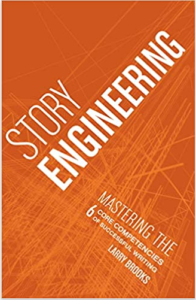 Story Engineering by Larry Brooks was my favorite as he was, I believe, an engineer by trade before becoming an author and he has a very organized mind and he laid out planning a novel with an overview that I found most helpful as a newbie. I have an associates link below to the book.
I would recommend this book because I needed an overview of the process, like a birds-eye view, in order to even have the files to hold the information I was taking in watching various YouTube videos. You can learn anything on YouTube, but you need to learn to circularize your own course. You need to figure out how to take in the information so it all makes sense.
 I speak from experience. Thinking ahead to my retirement in another three years, I began thinking about spending my time writing Christian and Catholic-friendly novels as I love to read books by other authors in his genre. I had some idea of what writing a novel would take, but never having studied writing in any detailed way, my first obstacle was where to begin. I was stuck at this spot for awhile and stayed there until I found a writing program called Scrivener.
 Scrivener is a simple but brilliant program that is designed for writers. It allows you a birds-eye view at all times. You keep your chapters or dates on the left hand side, you write in the middle, and you can outline, add keywords, research notes, reminders, and anything else you find helps you on the right hand side.
 When I began to hear terms like “panters and/or plotter” I didn’t even know what they were talking about. A pantser, if you don’t know if someone who just sits down and begins to write “by the seat of their pants” without any organization and without any plot line. They approach the writing from a completely creative process. I imagine that “natural writers” would take this approach. Maybe people who like chaos would take this route. But I would wind up staring at a blank page all day if I didn’t have at least an outline.
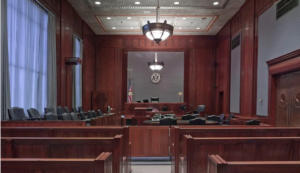 It is best as a beginner to choose a location and setting that you are familiar with. It will cut down on the research you need to do, as you will need to do at least some forensic and police procedure research. For example: I used to be a court reporter for 11 years and I have experience working on criminal cases, how prisoners are moved around the courthouse, how sheriff’s officers and prison guards are different from cops, what goes on in a Judge’s chambers on breaks and after the jury goes home. So this is a good setting for me to write about.
 One of the biggest mistakes I made in the beginning was focusing too much on the main character. With a mystery, you need to have a unique crime that hasn’t been done before. Because there are millions of mystery books, your specific crime may have been done, but you want to make sure you don’t pick on that has been “done to death”.