WHY SCRIVENER AND NOT JUST MICROSOFT WORD?
I have published a couple of craft books through the years as publishing on Amazon KDP is pretty easy. Craft books are mostly pictures with instructions and you really don't "need" Scrivener to write a craft book.
The only organizing you need to do in a craft book is to make sure you cover all of the instructions in chronological order, have a list of supplies and take high resolution pictures and file them where you can find them during the writing of the book.
I wrote three of these books in Microsoft Word and it worked very well. But what about fiction?
Fiction is a whole different animal. There is no chronology in fiction. Even in true crime, you have to decide how you will lay out the chronology of the crime attempting to create the most mystery and suspense as you can. So this requires a high level of organization.
SCRIVENER FEATURES THAT HELP NEWBIE WRITERS:
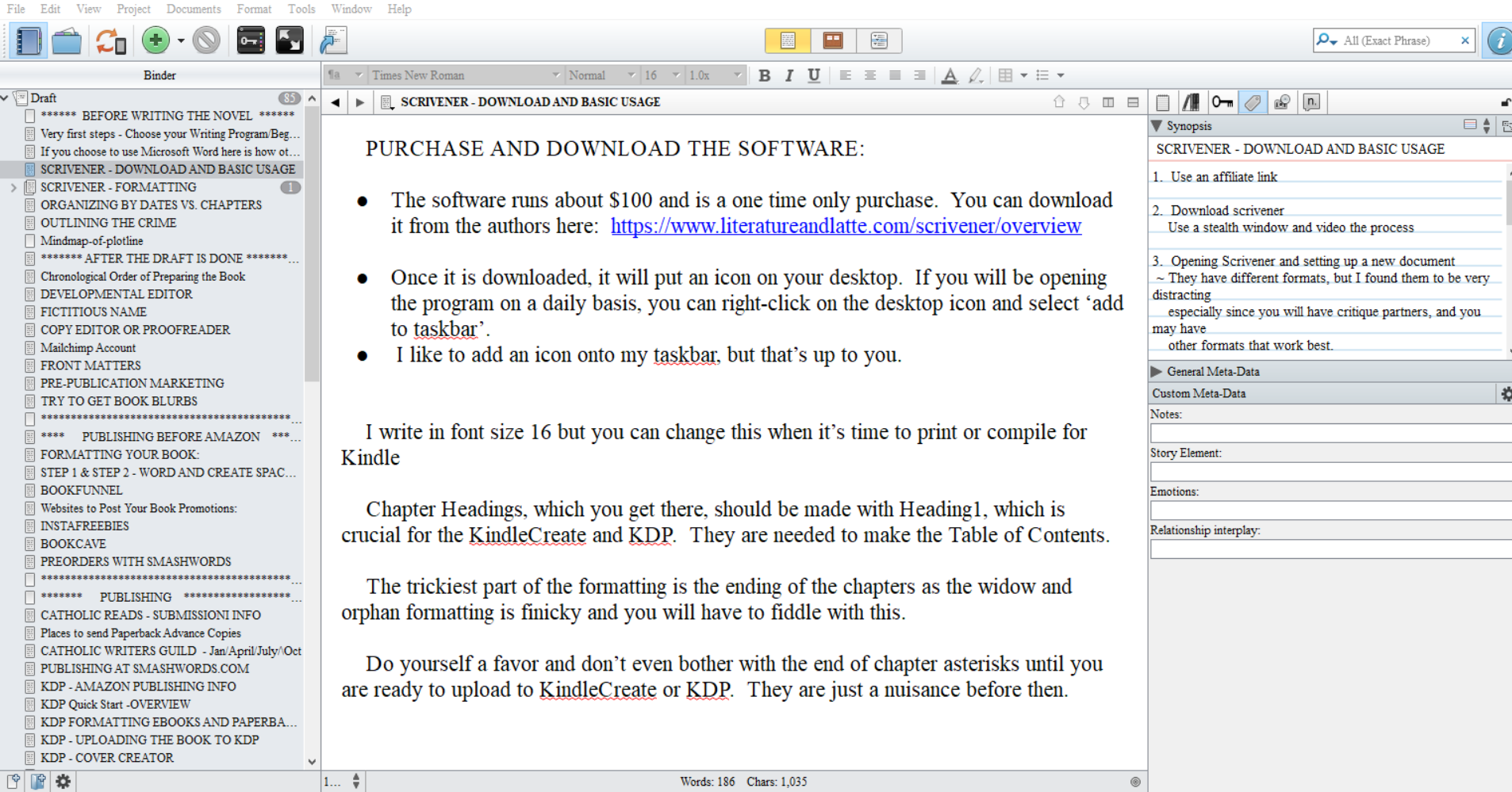
After seeing my first YouTube video on the software called Scrivener, I knew this was what I needed in order to even think about writing fiction. Looking at the layout above, on the left side, you can name your scenes first and this gives you a birds-eye view of the chronology of your story, where the story beats are, where you are in Act 1, Act 2 and Act 3.
The center pane is where you write the actual manuscript draft.
The upper section of the right-hand side is where I put my Scene Summaries using this format:
Scene 1 - POV - Character Name
TIME/LOCATION: 9am - In Character's Office/Home, etc.
PURPOSE/CLUES DROPPED:
1. List clues dropped
2. List what happens in the particular scene
3. Write down the purpose of the scene.
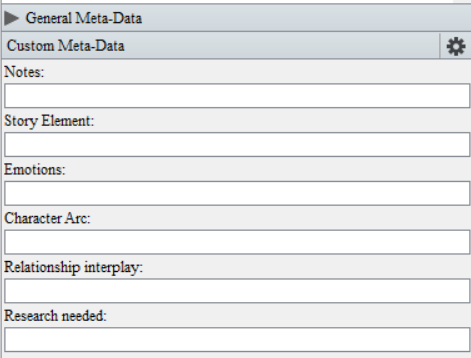 Custom Meta Data - Scrivener allows you to set your own Custom Meta Data entries and I use the following:
~ Notes: This one is automatic in Scrivener so I use this area for any notes I need to write to myself.
~ Story Element: is where I put things like opening hook, or inciting incident, or first pinch point, or any other dramatic or mystery notation that is crucial to follow the story.
~ Emotions: I added this one so that after the manuscript gets large enough, you can lose track of where the reader is emotionally, so I like to put things like mystery, or main clue, any words that will let me know that this is a sort of marker in the story.
~ Character arc: Before beginning, I usually know where the characters will be going in their emotional or personal growth and I keep track of this arc throughout the scenes by referencing it in this section.
~ Relationship interplay: This section I use to add the names of the characters an who is relating to who. This way, towards the end of the first draft, I can look at the entire novel in outline format and see how often each of the characters are in the story. This prevents you from overdoing it on some characters and making sure you don't leave anyone out. It gives a great birds-eye-view of the story when you are finishing the first draft.
~ Research needed: This section is where I make notes to myself about research I need to do in order to check facts or find out the legalities of something, anything I need to check. Again, I can see everything I need to do or look up by putting the story in outline format.
 If you are writing novels with a Catholic or Christian theme or backdrop, you may want to consider submitting the book to CatholicReads.com for review. They have a list of over 600 people who are signed up as already interested in Catholic books and Christian books. This is a niche market and one that may be a good fit for your novel.
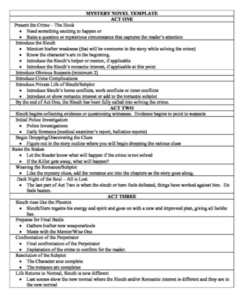 I spent a lot of time in researching novel templates and wound up getting more confused than organized. I may have a mental block on this, or if you are a beginner, you may find the same difficulties in getting your plot or story line to fit exactly over a template outline.
 The one area on YouTube that I never found any ‘work flow’ videos on was the method of reverse engineering story in order to learn the craft. I reread two or three of my favorite novels and reversed engineered them myself. I wanted to see what this method would teach me in terms of how these favorite stories fell into these novel format templates I was finding.
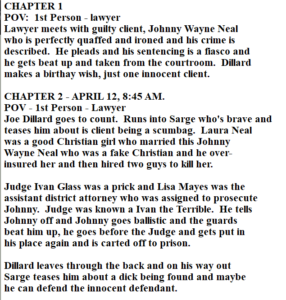 I re-read the book, and during and after each chapter, I wrote down what happened and where I thought this fit in the template. I also tried to identify the conflicts and obstacles, and anything else I thought was relevant to the story.
 I am a new writer myself and by no means do I hold myself out to be any type of an expert. But I am still very close to the "very beginner status" and still understand some of the obstacles only a brand new writer is faced with.
 I speak from experience. Thinking ahead to my retirement in another three years, I began thinking about spending my time writing Christian and Catholic-friendly novels as I love to read books by other authors in his genre. I had some idea of what writing a novel would take, but never having studied writing in any detailed way, my first obstacle was where to begin. I was stuck at this spot for awhile and stayed there until I found a writing program called Scrivener.
 Scrivener is a simple but brilliant program that is designed for writers. It allows you a birds-eye view at all times. You keep your chapters or dates on the left hand side, you write in the middle, and you can outline, add keywords, research notes, reminders, and anything else you find helps you on the right hand side.
 When I began to hear terms like “panters and/or plotter” I didn’t even know what they were talking about. A pantser, if you don’t know if someone who just sits down and begins to write “by the seat of their pants” without any organization and without any plot line. They approach the writing from a completely creative process. I imagine that “natural writers” would take this approach. Maybe people who like chaos would take this route. But I would wind up staring at a blank page all day if I didn’t have at least an outline.
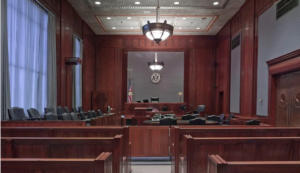 It is best as a beginner to choose a location and setting that you are familiar with. It will cut down on the research you need to do, as you will need to do at least some forensic and police procedure research. For example: I used to be a court reporter for 11 years and I have experience working on criminal cases, how prisoners are moved around the courthouse, how sheriff’s officers and prison guards are different from cops, what goes on in a Judge’s chambers on breaks and after the jury goes home. So this is a good setting for me to write about.
 One of the biggest mistakes I made in the beginning was focusing too much on the main character. With a mystery, you need to have a unique crime that hasn’t been done before. Because there are millions of mystery books, your specific crime may have been done, but you want to make sure you don’t pick on that has been “done to death”.