
BLOG – Page 24 – Read First Chapter.com

BLOG

Writers Diary – Planning your Mystery Template

just keep writingIn my humble opinion, writing mysteries requires a bit more planning than a novel about other subjects.  You have to manage character arcs, crime arcs, clue dropping, red herrings, passage of time, as well as add pressure and suspense into the mix.  This is a lot for a new writer.

I found this overwhelming as I began writing back in 2018.  The two biggest tips I can pass on at this point are (1) write in Scrivener as you get a bird's eye view of your project all all times and (2) you need a template or an outline of some kind  to work from.

WHAT I WISH I HAD WHEN I WAS NEW:

The main reason I've started this Writer's Diary is because I had searched and searched for writer's diaries online and never found anyone who was sharing their whole novel experience.  That's why I am doing this.  This is another one of the things I wish I had when I was new.  I still consider myself new, by the way.

MY OUTLINES WERE TOO FLEXIBLE:

In my first few novels, I would start off with a loosely-planned outline in order to give the characters space to organically develop. I had noticed within the first novel that the characters did develop their own voice and personalities.  I thought this open template would give me the leeway to let the novel sort of write itself.  It didn't.

In hindsight, I was too open-ended about how the story would end.  The characters would take on their own voice at some point in the story but because I had this loose outline, somewhere in Part 2 or Part 3, the story would start to veer off course.  As I got to Part 3, I would notice I was too far away from the ending of the story that I had planned originally.  But I wouldn't have any great ideas for a better ending either.  I would even forget what the original concept for an ending was.  Or I would look back and realize the story had veered too far away from a logical ending of the story or solving of the crime/mystery and I would need to go back and start rewriting.

I NEED A WRITING DESTINATION:

What I found by about the sixth novel was that I can leave the beginning and middle of the outline very loose, but I need to know where I am ending the story.  I need to know how the crime will be solved, who the bad guy is, and how the clues will be dropped in order to manage the suspects, the red herrings and the suspense.

So I still keep my outline loose in the beginning sections but I make sure I know where I am heading, what corner I need to lead the bad guy into in order to wrap up the story.  This gives me more security while I'm writing.  It also helps me stay on course.

REMAIN OPEN-MINDED BUT CHANGE THE OUTLINE:

checkline and outlineThere have been times when a better story did strike me during the writing process.  I can go with the new direction, but I must alter my outline so that the new ending is the new destination.  I rewrite my outline of how it will end so I will have the self-confidence that I still know where I'm going.

This is a much more workable way to remain flexible but still have the boundaries and guard rails I need to write tight scenes and know where I am in the story.

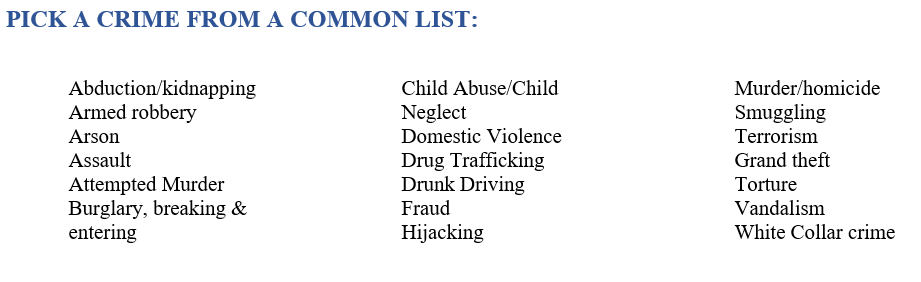
START BY PICKING A PROTAGONIST OR A CRIME:

I start by picking a crime.  My inspiration can be from a novel I'm reading, or a news article, an episode of Forensic Files, or sometimes they can be a combination of all of these.   I am beginning to think more like an author and am starting to envision crimes happening in strange places or interesting environments.
PICK YOUR PROTAGONIST/HERO:

The most popular choices for heros/mystery solvers are police officers/detectives, private investigators, and amateur sleuths.  I chose a private investigator as my first protagonist as PIs are easier to write about because police procedure is very complicated these days and that would have been too much to take on as a new writer.

I pick a Protagonist/Hero based on a personality type I think I can write convincingly about.  If you are planning a series, you will want to give your Hero at least a few people that are anchors in his life.  This will also give you leeway if you need to come up with a second novel as the stories can come through people in his/her life as well as from working.

I will reveal my Template - Planning Your Mystery in our next writers diary installment and how I start organizing my mystery elements.
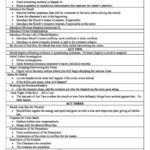
 

Make Things Easy on Yourself!

Download a Copy of the Mystery Template

Writers Diary – Pantser vs. Plotter

CHOOSE A PATHWAY:

I was lucky when I started as I knew, without a doubt, that I was a plotter.  I don't write a letter without a short list of points I want to cover.  But this can be a choice that can help you not get lost in the overwhelming number of things you need to keep in mind for any novel.

I won't go into too much detail as there are hundreds of youtube videos about being a pantser and being a plotter by more experienced people than me.  But in one sentence, a pantser is someone who sits down and begins writing 'by the seat of their pants' without an outline or a template of any kind.  Steven Kind is a pantser.  Being a plotter means that you start with a template, and then an outline, and then begin writing the novel itself.

There are natural-born pantsers like Steven King, and if you are one of those, that should be your pathway.  However, my suggestion to a newbie writer, especially if you don't know if you are a pantser or plotter, is to  try to at least have a template and at least three-act play structure to keep you on track.

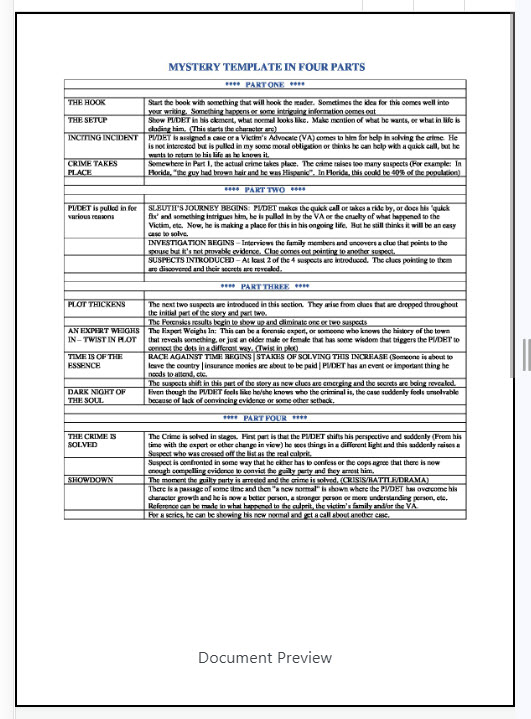
#WRITERS TOOL - MYSTERY TEMPLATE

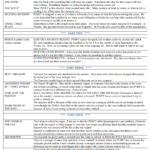
mystery-novel-templateThere are probably hundreds of templates out there for you to choose from.  If you search "writing template" at images.google.com, you will find hundreds of them.  I incorporated several of them into my  own custom Mystery Template.   You can click here to download the template to have a look at it or use it.
This is the template I wound up using after at least a year of struggling with the other confusing templates.  In time, I began to use a template that was divided into four acts, so to speak, but I'll talk about that one next.


Writers Diary – Can’t Makes Sense of the Hero’s Journey

ONE WRITER'S OBSTACLE:

As a new writer, I watched hundreds of new writer videos and read any number of how-to articles.  Everyone referenced the Hero's Journey.  All the experts claimed that all stories fit within this template and this would keep a newbie on track.
For whatever reason -- maybe I'm thick or a simpleton -- I was not able to wrap my head around making a mystery romance story fit into a hero's journey template.  And believe me, I tried looking at it from ten different angles.  This was the first obstacle I came upon.  My first novel, which turned into a series, was about a private investigator who investigated mysteries but also had a character arc that had nothing to do with a quest or battling anyone.  To this day, I must confess, I still don't get the Hero's Journey.

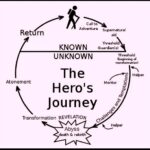
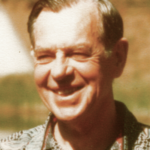
Years ago before I even thought of writing, I watched a video series given by a writer and professor named Joseph Campbell whothe heros journey graphic first popularized this 'hero's journey'.  If I remember the series of talks correctly, his specialty or his great love was that of mythology.  Now, mythology, if I remember from my one course in school, was all based on quests and heroics of some sort.  So I do see how mythology fits into the hero's journey.  I just can't get how it pertains to crime mysteries, mystery romance or psychological mysteries.
Believe me, I tried so many times to reinterpret my stories into "The Hero's Journey" and I was never able to make it work.  I also tried to envision the hero's journey when I read other writer's fiction, and I didn't see a hero's journey in their works either.  At some point I did just give up with the hero's journey acknowledging that I must have a mental block about it.


WRITING MY OWN MYSTERY INSTRUCTIONAL:

During this same struggle, I also searched the internet high and low for a mystery writing template that didn't use the hero's journey, and although I found a few, they were still too esoteric in nature.  They all appeared to be built on the hero's journey in one way or another.  None of them mentioned the crime, clue dropping  or anything you commonly find in any mystery, mystery suspense, psychological mystery, or even cozy mysteries.
Now, eight novels later, I have made my own Writing a Mystery Novel Instructional as well as a Mystery Novel Template.  This is not being offered as any superior template, or even a workable template as I still consider myself too new of an author.  But I do offer these to others who find themselves trying to put square stories into the round holes of the Hero's Journey.  Maybe this can save you the frustration and hours of searching I wound up doing.  That is my purpose for this offer.

I don't have a nice graphic with a slueth's circle, but this Mystery Novel Template helps me get my thoughts organized.  I offer it as a #writerstool for newbies.  This is another "I wish I had it when I started" tool.

Click here to open and save the Mystery Suspense Template.


Writers Diary – First Day – Whys and Wherefores

groomed for marriage ebookMy pen name is R Shannon and I started writing in late 2019.  I self-published my first novel on KDP on 10/01/2020.  The name of it is Groomed for Marriage.
I am set to retire from many careers in February 2023 at which time I hope to devote myself more to giving back to the DIY Writing Community.  I learned everything I know today from the generous people who have shared their ideas, skills, and knowhow with the #writingcommunity on YouTube, their books, and their personal websites.

I have published 7 novels and am about to release my 8th book around August of 2022.  The purpose of this blog is to help other people who are just beginning too.  I have done HOURS AND HOURS of research and my hope is to save you some hours of research.

Most of what I'm sharing comes from other authors.  My contribution is to try in some way to organize the information in some curriculum so that a newbie can learn what they need for the process of writing to publication to self-marketing.

I started writing in Word, but the tool that launched me as a writer was Scrivener.  This is a reasonably-priced software that allows you to always have a bird's eye view of all that is happening.  It can also be used to do initial plotting, outlining, writing the book, and even marketing.  When I purchased it, it was $99 and it made all the difference in the world.

WRITING TIP:

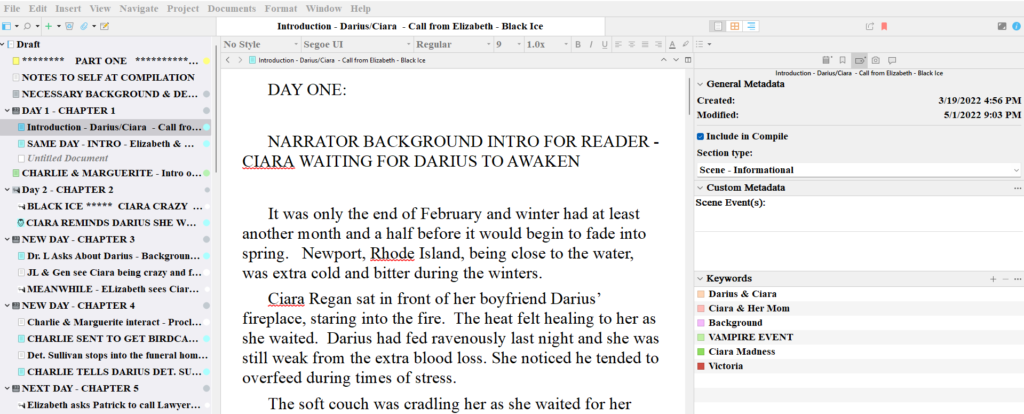
This is a screen shot from Scrivener during the initial of writing.  As you can see, I can keep track of new days, and chapters on the left-hand side, the writing itself is in the middle, and on the right hand side are various other tools, but this shot is showing the keywords. #writingtip

HOW I USE SCRIVENER KEYWORDS:

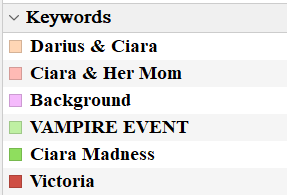
scrivener-keywordsFor this novel series, I use the keywords to allow me to name every relationship in the chapter.  Then at the end, I can select only one keyword and track the character arc and/or the action in that plot or subplot.  I didn't use keywords as a brand new writer, but I wish I knew this was a tool I could use.  It is so very helpful. #writingstrategies



Scrivener Tips for Beginner Authors

PLOTTING IN EXCEL:

novel-plotting-sheet

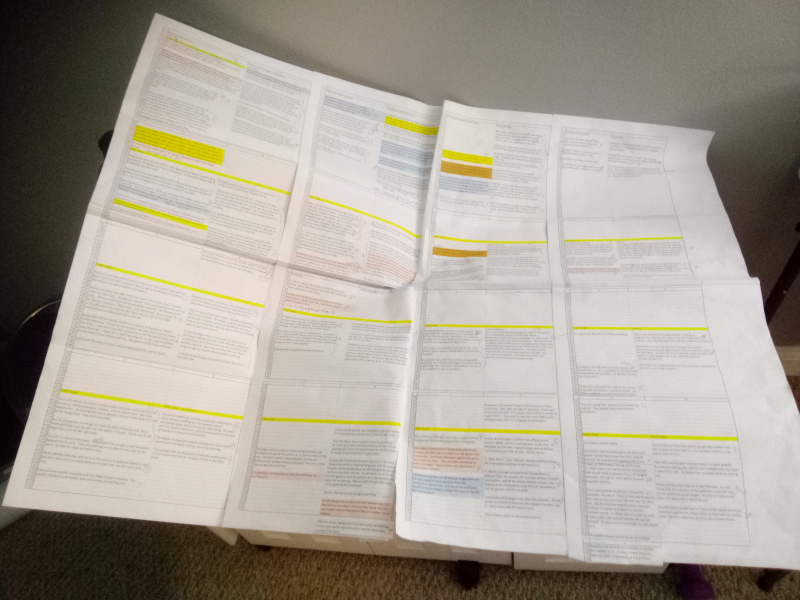
My plotting is done in Excel and then highlighted and taped together so I can see a bird's-eye-view of the entire story.   After I have a working plot, I then go to Scrivener to begin writing the story.

FROM PLOTTING TO FIRST DRAFT

The video below is one that gives a new novelist, a true beginner, some tips that can help you with organizing your writing and keeping track of clues, background drops, character relationships and more.  This system can be customized to whatever you as a new author needs in terms of tracking.   For example, in my first novel, Groomed for Marriage, I dropped most background at least twice, and sometimes three times!  That's how I came up with a way to be able to keep track of it in it's own section in Scrivener.

I hope you enjoy the video.  If you have any suggestions for future videos about scrivener or anything else about "new authors", leave it below and I'll check it out.


Adding a Contact form with Recaptcha

Sick woman at work with headache

I started to get some spam through my website and it was all similar.  They were filling out the form for an advanced copy of one of my books, and then it had a weird message in another language.  It was most likely a bot, so the time has arrived for me to attach a recaptcha to my forms.

I had done this several years ago, but as usual, everything "updated" and my old instructions were useless.  So it took me about four hours to figure out how to add a recapture to a Contract 7 form and this blog post is an instructional on how to do it.

FIRST THINGS FIRST:  WHAT YOU WILL NEED:

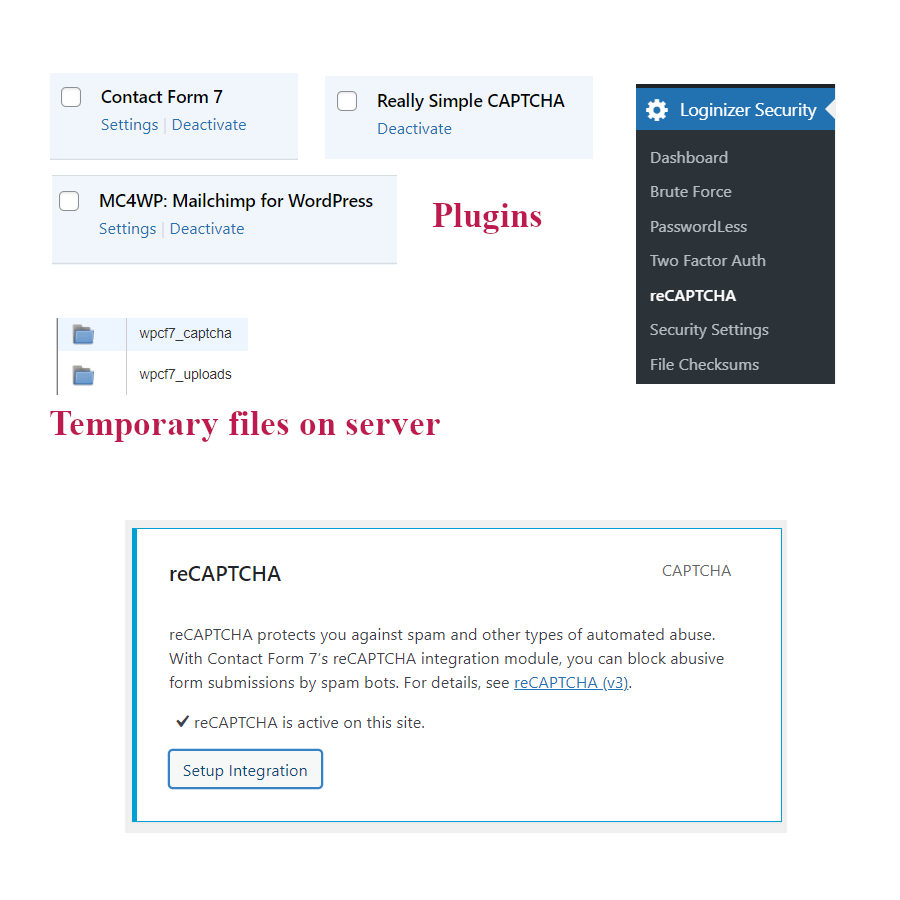
recaptcha-picture-board
Recaptcha Picture Board
  1.  You need to add two plugins to your wordpress website.  Contact form 7 and Really Simple Capture.    As part of the Really Simple Capture, this should upload a temporary folder to your server entitled wpcf7_captcha and another one called wpcf7_uploads.  Photos of all of these are on the picture board above.
  2.  You will need to register your website with google to use a recaptcha, so go to www.google.com/recaptcha and fill out the form to register your website.  More on this below in the actual instructions.  As part of this process you will get a Site Key and a Secret Key.  You will need to copy and paste these somewhere safe so you can retrieve them later.  You will also get a google recaptcha admin page link and you may want to record this too in case you want to watch and see what kind of bots it blocked from your site.  But that isn't crucial to get it to work.
  3. Now, somewhere along the line, I wound up being redirected to a website called Softaculous.com for and had to pay to 'join' to use the captcha, but I am not sure if that is absolutely necessary.  It cost $24.00 for the year and I decided that I send enough emails and get enough traffic that a $24 service fee was more than reasonable, so I purchased it.  This may have happened to me because I was engulfed in a lot of confusion going from plugin to plugin and back to google captcha, so all I can say is good luck!.


HOW TO INSTALL THE RECAPTURE AND LINK IT ALL TOGETHER:

  1. First, inside the back end of your wordpress website, click on the Loginizer Security and you will get a drop down list.  On the Dashboard page, you will need to enter the Loginizer License number and click 'update'.
  2. Then click on the Loginizer reCAPTCHA settings.  This is where you will add your Google keys, both of them.
  3. Then click on Contact on the left hand wordpress menu and you will get a pop out menu.  Choose integration.  When it opens, click on the second box that says reCAPTCHA and this will add your google keys automatically and that will hook up the Really Simple Captcha to the Contact form 7.

HOW TO USE THE CONTACT FORM 7 WITH THE reCAPTCHA:

Here is where it got tricky and where I wound up going in circles for awhile.  The instructions are written for web developers and they assume you know a lot of things about hooking things up, which I don't know and you probably don't either.

So here are the instructions for fifth graders:

Once you have all the plugs ins installed, all your user keys inserted and integrated the form under Contact, then it should work without a hitch as long as you put the right short codes in.

The short code is this: [captchac captcha-170] [captchar captcha-170 4/4] This code will work without a problem.

FOR FURTHER INFORMATION:

If you want to read more about how it works, I had to visit all of these pages as I pieced together how it worked.

Contact Form 7 Recaptcha:
https://contactform7.com/captcha/
https://www.google.com/recaptcha/about/
https://www.google.com/recaptcha/admin/site/464233367
https://developers.google.com/recaptcha/docs/versions
https://loginizer.com/docs/getting-started/upgrading-from-the-free-version-to-pro/

The following 'different' codes seem to change the css or other things, so if you want to experiment with them, here they are:

[captchac captcha-170]
[captchar captcha-170 4/4]
[captchac captcha-778 size:s fg:#ffffff bg:#000000]
[captchar captcha-778 4/4]
[captchac captcha-118 size:l fg:#00ff00 bg:#ffffff]
[captchar captcha-118 4/4]


Review – The Patron Saint of Liars by Ann Patchett

The Patron Saint of LiarsThe Patron Saint of Liars by Ann Patchett
My rating: 5 of 5 stars

This was a great book. It was fiction, but it had elements of psychological intrigue and pulls the reader through the story as you can't tell where the story is going -- but in a good way.

The characters were very real and the main character was not easily understood. I love stories that have the church or Catholicism as a backdrop and this one was not necessarily a Catholic story, but for anyone who grew up around nuns, it was one that had a nostalgia to it that was endearing.

The characters were not only real, but they had a bit of tragedy to them and this had a haunting effect throughout the read. It is a book that I won't forget.

Highly recommend.

View all my reviews


Review & Recommendation – The Templar Detective by J. Robert Kennedy

The Templar Detective (The Templar Detective Thrillers #1)The Templar Detective by J. Robert Kennedy
My rating: 5 of 5 stars

I loved Mr. Kennedy’s writing style and the time period this takes place in. I love books that have the church or Christianity as a backdrop, so this was right up my alley. It was a well-worked plot but yet it was very easy reading which is a delicate mix.

Highly recommend.

View all my reviews

What You Need to Set Up a PPC Campaign on Amazon

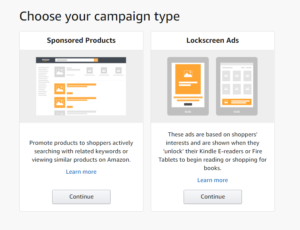
amazon-ppc-choose-campaign-typeLog into your KDP account at Amazon and click on the tab for Marketing.  Your first choice will be to choose between a sponsored ad or a lock screen ad.
Today we are going with a Sponsored Ad Campaign.  This is the one where you can use similar products and/or keywords.

Create Your First PPC Campaign:

Once you choose the Sponsored Product Campaign, the following screen (or one similar to it, depending upon when you are reading this):

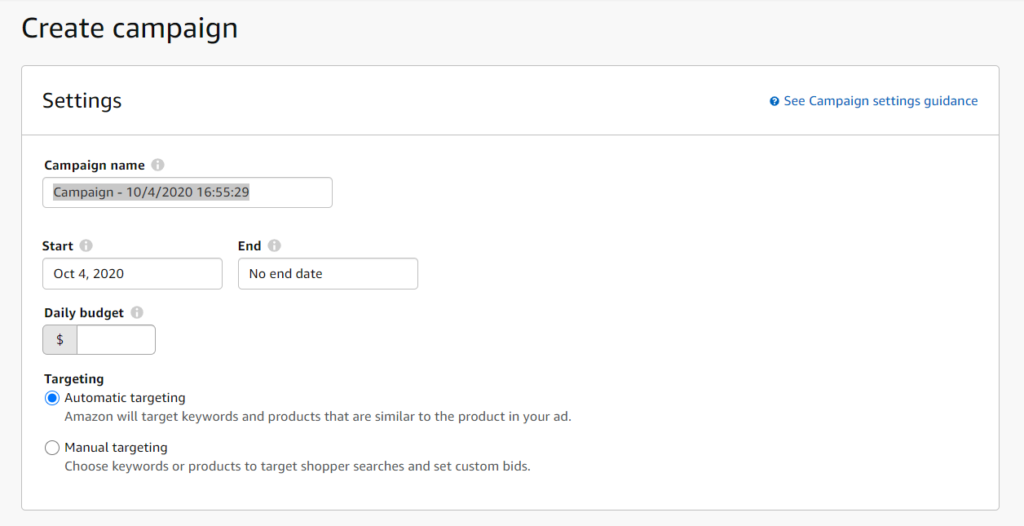
amazon-ppc-create-a-campaign-naming

The campaign name will only be seen by you, so make it a name that you can identify.  I chose to name mine "Groomed - Sponsored Product - First Week" so that I will remember this is my first one.  I also chose automatic targeting so that I can see what Amazon and it's huge database of keywords will throw up for me.  This was recommended by NomadMillionaire on YouTube who is a pro at PPC, so I am following his lead.

You will need to determine how much you are willing to pay for this campaign.  I chose $15 dollars a day to start.  This will give me a chance to see what kind of action $100 a week can bring.

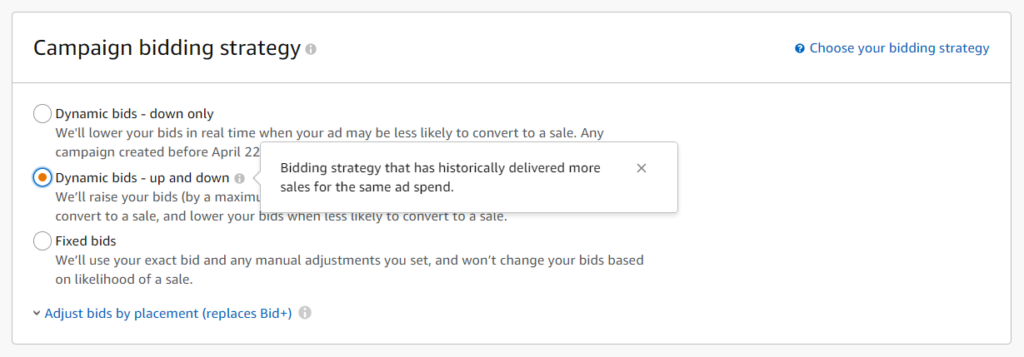
amazon-ppc-bidding-stragegy


CAMPAIGN-BUILDING STRATEGY

Since the second choice, Dynamic bids, up and down delivers more sales, I chose to go with this one.  This one week will give me an idea of how far up and down Amazon feels comfortable to go.  The other two choices can be manipulated by PPC pros, which I'm not right now!

Choose an Amazon PPC Format:

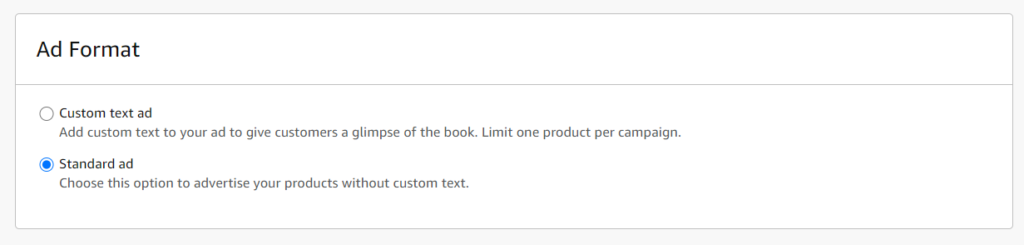
amazon-ppc-ad-format

I decided to go with the standard ad because I haven't researched custom text ads, so I will see what Amazon does using just a standard ad.

Name an Ad Group and Choose a Book/Product:

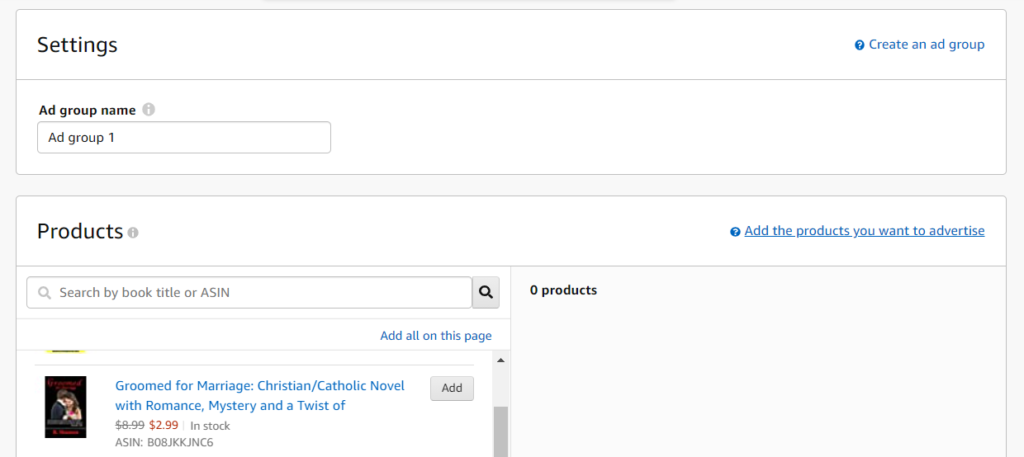
amazon-ppc-ad-group-and-products

In NomadMilliionaries's video that I referenced in our last blog post, he left the Ad Group Name to the default of Ad Group 1, so I did the same.  I didn't come across any tips regarding this in the other videos I watched, so I'm just going to see what it looks like after I have a few ads going and see if naming this in some other way will work better in the future.

You will be logged into your KDP account, so it will throw up all of your own products for you to choose, which I am doing with my new book Groomed for Marriage by R. Shannon but you can also choose a product by an ASIN number.  Most people who have found their way to this blog post will be fellow book marketers, so I won't go into ASIN numbers.

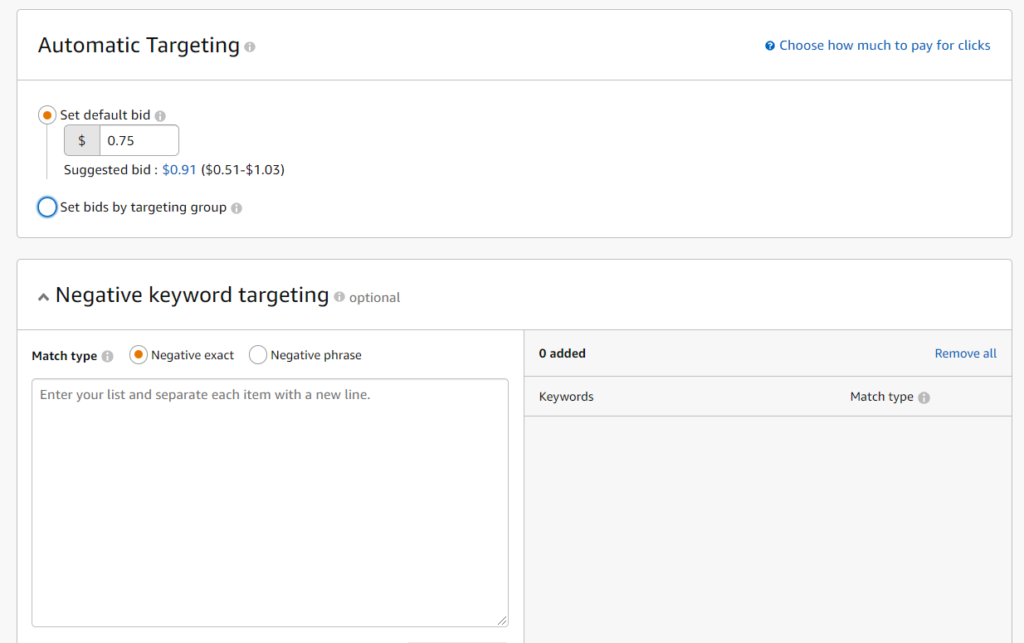
Automatic Targeting & Negative Keyword Targeting

amazon-ppc-auto-targeting-negative-words

A default bid comes up with this box too and although I think .75 is too high for one bid, I am accepting it as I am also testing Amazon's algorithms to see what comes out.  This will only be for a week, so I have control over the overall spending.

I will want to find out how to use negative keywords in order to prevent my book from coming up with people who are searching for the actual crime known as grooming but this first week will give me an idea if that will even be a problem or if Amazon's artificial intelligence can already recognize fiction from non-fiction searches which it probably can.


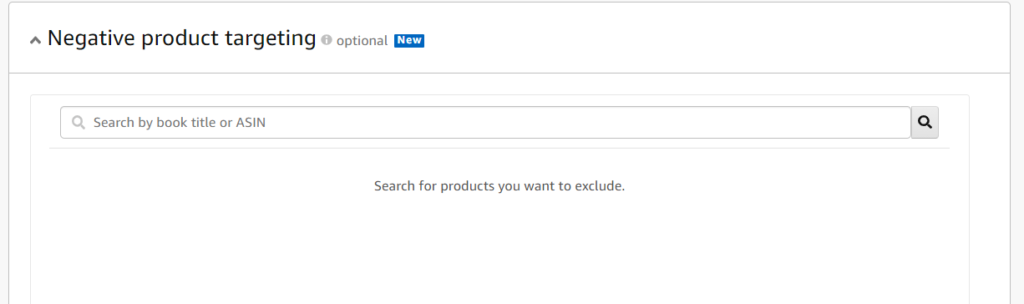
Negative Product Targeting:

amazon-ppc-negative-product-targeting

This is the last box that comes up and I am going to let Amazon run the first campaign.  During this upcoming week that I am waiting, I will research negative keywords and negative product strategies so that when I am doing an exact campaign, I can use these strategies if they are worth it.

Once you click Launch Campaign at the end, that's it.  You're advertising on Amazon.  I hope this helps save everyone a lot of research time!


Should You Advertise Your New Book on Amazon

What I Learned in my First Week of Publication:

sherlock-holmes-graphicOnce I finished my first Novel, Groomed for Marriage, I launched it on BookFunell to give it away in order to build a reader list.  My expectations were low; I would have been happy to have given away 50 copies.  Well, to my astonishment, I wound up giving away over 600 copies of the book.  These are people who chose to sign up to down the full book for free.

So when I published Groomed for Marriage for $2.99, I thought it was so cheap that maybe I would have at least a few sales.  Crickets!

So my first lesson was:  BookFunnel is great for giveaways and building a list of readers, but FREE it's own animal.

Switching to Plan B:

So then my plan was to let the two weeks of my paid book promotion on BookFunnel run its course, which would have given me the cleanest feedback.  I would have known how many copies I was able to sell from BookFunnel at $2.99 with no PPC marketing at Amazon.  But even if I waited, let's say I sold 5, that wouldn't have been enough for me to stick with BookFunnel for a paid book as I already learned about Free being it's own animal.

So I decided that as a new author, I wanted to explore Pay Per Click advertisements to see what was entailed.  I did the research and the purpose of these next few posts will be to share my findings and save you the research time.

Pay Per Click as an Investment:

I watched lots of videos on YouTube regarding Amazon ads.  Many people have been doing it for a long time and had great tips.  Although all of these experts stressed the importance of profit vs. return on investment, which of course is crucial in any business, I am choosing to see my first two months of advertising as an investment.


An Overview of your PPC Goals:

The best video I saw, geared for beginners, was the one below by Nomad Millionaire.  It is from 2018, but Nomad explains PPC from a bird's eye view  and this is important for beginnings to understand the strategy right from the beginning.

So you will need a credit card, your book information, a computer, and you will need to be logged into your kdp.amazon.com account.  You will be ready to launch your first broad campaign.

Crash Course in NomadMillionaire's video:

Pay Per Click is an advertising program offered by Amazon that allows users to bid for ad placements.  Amazon searches are all based on keywords and other secret algorithms.  By choosing to start with a broad campaign, you get to ferret out all of the keywords that Amazon already knows about your product.

Once you have 7 days of running this broad campaign, you can begin to look at the broad campaign and figure out what keywords and initiating click throughs and which ones are leading to actual purchases.  Those keywords you then will add to a manual campaign. 

Nomad goes a little bit into his 'pricing strategies' that you may want to listen to, but it will all come down to how much you are willing to spend.

Next post we'll pick up with actually starting my first broad campaign and see where it takes up in the 7 day watch period.