
WHAT IS THE PURPOSE OF A SCENE TEMPLATE?

I learned most of what I know about writing and self-publishing from several authors who graciously shared their knowledge on YouTube and on their blogs. I'm not an expert in writing novels by any means. I'm beginning my 11th novel, so I can say I managed to write 10 novels and get their published on KDP!
I consider myself a plotter, but I have a system that allows for a lot of creative stretching even within a pretty rigid system. I consider my writing template to be only guardrails. The main purpose of these guardrails is to stay on point, stay on the story, and prevent me from wandering off into some dead end or corner that I can't write my way out of. This system does help me stay focused.

THE TEMPLATE IS SIMPLE:
POV:
TIME/LOCATION:
PURPOSE/CLUES:
Each scene starts with these three lines. I have a sample of a starting scene template from one of my vampire books, Darius, A Vampire Story. It's permafree on Amazon and Kobo.
In the example above, I default to using numbers, but in all honesty, I wind up adding things and swapping positions on thing, so you may want to use bullet points instead.
Below I have a made-up version of a scene using bullet points.
-
- The main characters, John and Mary, meet & begin a conversation about work or a shared interest.
- They hear a loud gunshot. Mary is startled and John reaches out to comfort her.
- I continue on listing in a bit of detail everything that needs to happen in the scene. I don't get into any conversation, or any detail. Just a plot point, so to speak. This list is more of a to do list that I can keep in my mind when I'm writing, and it then becomes a checklist to make sure I put everything in the scene that I need to.
- All things must have a purpose in the scene. (More on this below)
- In the beginning, you may also choose to highlight the dropping of any and all clues.
POINT OF VIEW:

When I begin to write the scene, I don't know whose point of view the scene will be in. I don't pick a point of view. I allow myself to write within the framework of the guardrails listed above until the scene comes to life. During this time, one character claims the scene. This allows me great creative freedom even within the framework of these guardrails.
Once I determine whose seen it is, then I can make sure that the scene is all in that person's point of view. This is easy enough to do in the second level of writing.
DAY | TIME | TIMING:
 In writing mystery romances and police procedurals, it's important to keep track of time for a few reasons. One reason is that it's too easy to get lost in the writing and forget the time line. It may be morning in one scene and in the next scene you're referring to something happening at 4PM. Problems like these are very tedious to clean up after you're done writing. It's easier easier to track the timing while you create the scene, while you write.
Another reason to track time is to make sure that a reasonable amount of action takes place in a day. Very often, the subplot action takes place at night or afterhours, so knowing when a workday begins and ends and when personal time or evening begins is important.
Another reason is in police procedurals, they need judges to sign warrants and that's an issue of timing. The witnesses work jobs and police tend to do things during the day. They also tend to work long shifts and have case loads, etc. I use the timing to keep things real, I guess you could say.
LOCATION:
I add the location of each scene to make sure that this is also taken into account. If they are one hour away from home or two hours away from the police department, then I have to remember that -- because if I don't, some sharp reader will!
I also log the location so that when I come back to my second and third layers -- I write in layers -- I can add details about the location into the scene.
PURPOSE:
I talked about this above, how important it is to only write into the scene things that move the drama, character arcs or the story itself forward. This is the most important guardrail. I take this instruction or advice literally and I make sure that everything in the scene has a purpose and/or reason to be there.
Very often the purpose is to drop clues, throw in a red herring, or move the subplots along. But every scene has at least one specific purpose.
Clues:

In writing mysteries, these are your breadcrumbs that will be dropped one by one during the story. By keeping track of the clues and where they are dropped, you can also look later on and make sure that you are disbursing them along the way at a nice pace. You don't want to dump four clues in one scene and then follow it with two boring chapters with nothing going on.
LAYERS:
 I mentioned writing in layers above. This is a secondary technique that I will blog about as I move along in my present book. I'll also give you a sneak peek behind the novel to see what levels I write in.
I'll just say that writing the initial scenes is the first level of writing. I write the outlines and then begin to write the scene. I NEVER LOOK BACK! That means I don't correct verb tense. I don't worry about typos. I don't worry about polishing anything. It's all raw and it's supposed to be raw. Just get the story out on paper.
I don't exert one ounce of energy proofreading or polishing until I know I have an actual manuscript. At the end of this first layer, I won't have a manuscript. I'll have a good, strong skeleton of a story, but it won't be a manuscript -- or anything close to one. But having a good strong skeleton is important.
I hope this helps someone new!
 There are two levels of proofreading. The first level is proofreading for plot context to make sure the novel is complete. Before I leave Scrivener, I go over the different chapters and scenes and mark the following beats and make sure that everything is included.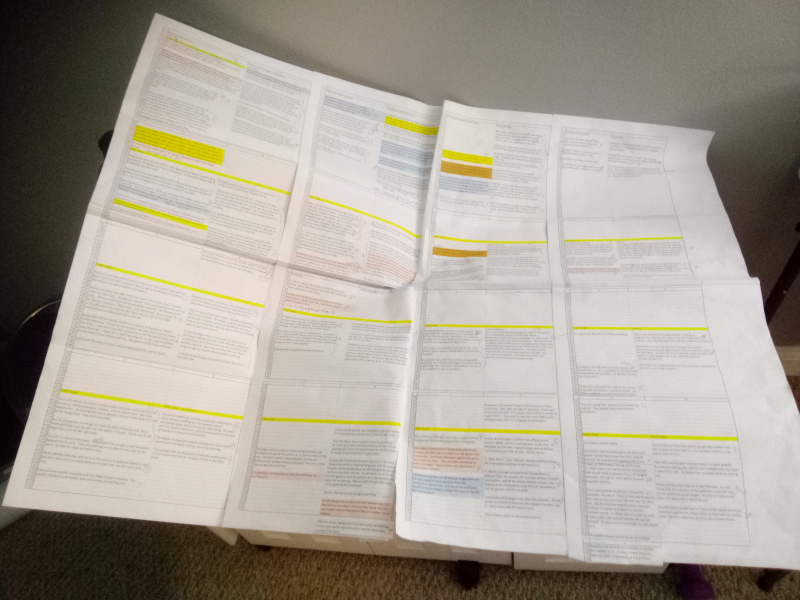
 If you are writing novels with a Catholic or Christian theme or backdrop, you may want to consider submitting the book to CatholicReads.com for review. They have a list of over 600 people who are signed up as already interested in Catholic books and Christian books. This is a niche market and one that may be a good fit for your novel.
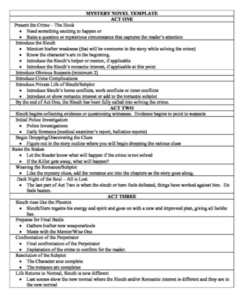 I spent a lot of time in researching novel templates and wound up getting more confused than organized. I may have a mental block on this, or if you are a beginner, you may find the same difficulties in getting your plot or story line to fit exactly over a template outline.
 The one area on YouTube that I never found any ‘work flow’ videos on was the method of reverse engineering story in order to learn the craft. I reread two or three of my favorite novels and reversed engineered them myself. I wanted to see what this method would teach me in terms of how these favorite stories fell into these novel format templates I was finding.
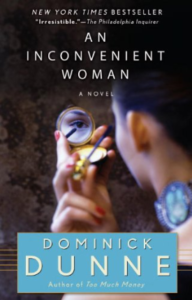
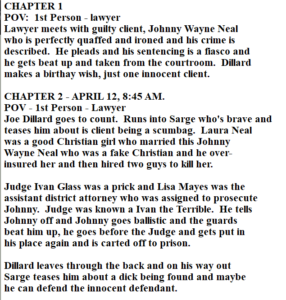 I re-read the book, and during and after each chapter, I wrote down what happened and where I thought this fit in the template. I also tried to identify the conflicts and obstacles, and anything else I thought was relevant to the story.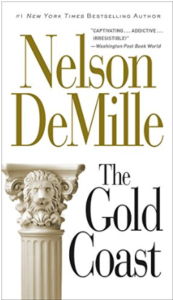
 I am a new writer myself and by no means do I hold myself out to be any type of an expert. But I am still very close to the "very beginner status" and still understand some of the obstacles only a brand new writer is faced with.
 When I began to hear terms like “panters and/or plotter” I didn’t even know what they were talking about. A pantser, if you don’t know if someone who just sits down and begins to write “by the seat of their pants” without any organization and without any plot line. They approach the writing from a completely creative process. I imagine that “natural writers” would take this approach. Maybe people who like chaos would take this route. But I would wind up staring at a blank page all day if I didn’t have at least an outline.
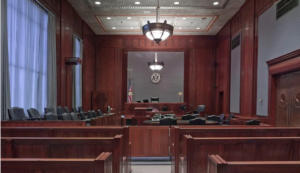 It is best as a beginner to choose a location and setting that you are familiar with. It will cut down on the research you need to do, as you will need to do at least some forensic and police procedure research. For example: I used to be a court reporter for 11 years and I have experience working on criminal cases, how prisoners are moved around the courthouse, how sheriff’s officers and prison guards are different from cops, what goes on in a Judge’s chambers on breaks and after the jury goes home. So this is a good setting for me to write about.
 One of the biggest mistakes I made in the beginning was focusing too much on the main character. With a mystery, you need to have a unique crime that hasn’t been done before. Because there are millions of mystery books, your specific crime may have been done, but you want to make sure you don’t pick on that has been “done to death”.