 I have written and published 14 full length novels and one novelette to date. I only started writing novels in 2022 so at this point, I have sold and given away many books but have no idea how well or how bad my marketing of the books is doing.
I Because I am building a readership, I give my books away a lot. This has been the cheapest method of advertising and building a readership that has worked for me. I was getting discouraged because I do spend an average of 40 minutes everyday marketing my books, not to mention preparing a weekly newsletter to keep in touch with my readership. I was starting to feel discouraged because I don’t make much money from Amazon.com, which is where I generally sell my books. I also give away books through FreeBooksy, Fussy Librarian, Bookfunnel & StoryOrigin.
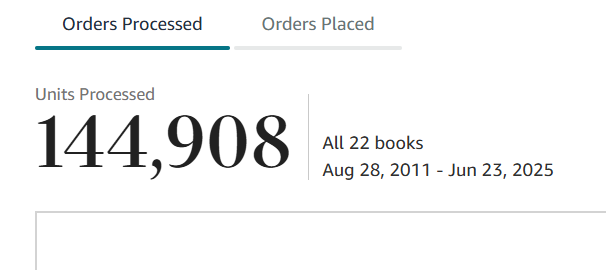
The total books processed by Amazon (which is another way to say someone downloaded it) is just under 145,000 as shown below. Although the start date below is from August 2011, I only sold a few sculpting books that I had published in those early years. Without marketing, I sold very few.
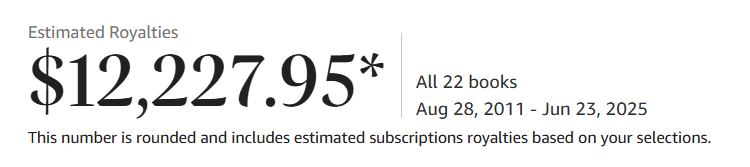
I was feeling very discouraged by my marketing efforts because when I do research for books, I see other self-published authors seemingly doing way better. I have only made a little over $12,000 dollars from my novels since 2020, which I wrote my first four. Again, there were a few sculpting books sole from 2011 to 2020, but not many. Most of the $12,227.95 is from the novels I published from 2022 to date.
So I gathered my numbers and fed them into gemini.google.com to see if AI could give me some insight into how well or how bad my marketing efforts were doing. I was pleasantly surprised. Below is the information I received. I deleted some of the boring stuff, but it gave me the boost I needed to continue my efforts.
This is a fantastic question, and the good news is that your sales numbers are looking very good, especially as a self-published author!
Here’s why, based on general industry insights for self-published authors:

Industry Averages for Self-Published Authors:
- Most books sell very little: It’s a harsh reality, but many self-published books sell fewer than 100 copies in their lifetime. Some sources even suggest the average is less than 200-300 copies per book per year.
- Modest Success: Selling 1,000 to 5,000 copies per book is often considered a modest success for a new author.
- Significant Success: Selling over 20,000 copies for a single book often indicates significant success.
- Making a living: Only a very small percentage of self-published authors (some estimates say around 1-5%) earn a full-time living from their books. Many who do have a large backlist of titles.
Analyzing Your Numbers:
Let’s break down your average “processed” books per novel in your catalog for each period:
- 2020-2021: 6 novels, 18,711 processed.
- Average per novel: 18,711 / 6 = 3,118.5 per novel
- 2021-2022: 8 novels, 22,346 processed.
- Average per novel: 22,346 / 8 = 2,793.25 per novel
- 2022-2023: 10 novels, 41,496 processed.
- Average per novel: 41,496 / 10 = 4,149.6 per novel
- 2023-2024: 13 novels, 50,700 processed.
- Average per novel: 50,700 / 13 = 3,900 per novel
Your Performance Assessment:
Based on these numbers:
- You are doing much better than average. Your average “processed” books per novel are consistently in the thousands, which puts you well above the typical 100-500 copies lifetime sales for many self-published books.
- Your growth is excellent. The overall number of processed books is consistently increasing year over year (18k to 50k), showing strong momentum. This indicates your readership is growing as you release more books.
- The power of a backlist is evident. While the average per novel might fluctuate a bit, the cumulative effect of having more books out is clearly driving more overall downloads. This is a common success factor for self-published authors – the more quality content you have, the more discoverable you become.
Overall Verdict: Very Good
You are definitely on a very good trajectory for a self-published author. Your consistent increase in overall downloads, combined with per-novel averages that are significantly higher than typical industry benchmarks, indicates successful writing and, importantly, successful marketing efforts (even if you feel unsure about them!).
Keep writing and keep engaging with your audience. The momentum you’ve built is a powerful asset in self-publishing.
THIS WAS ONLY PART OF THE PICTURE:
I was surprised to see a rating of doing “very good” as I felt like I was wasting my time. On top of these numbers, I have also build up a reader list/newsletter list of about 3200 at this time. Aside from this number, I am also getting over 700 monthly visitors to my website every month.
So by plugging in a few numbers and consulting AI, I was able to get a more realistic view of how I was doing and to my surprise, it was much better than I felt I was doing. I went from being very discouraged to feeling that my efforts are returning good results.
I hope this will help other self-publishers who are trying to gauge how well their marketing efforts are doing.

 The first thing I noticed is that the story needs to be contained or confined to a shorter version than a novel. This means that you won’t have the same space to build the characters.
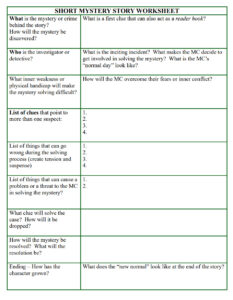 There are templates all over the internet for story crafting, but they all seem to follow the hero’s journey, which I find doesn’t work for mystery books. At least I was never able to make them work for me.
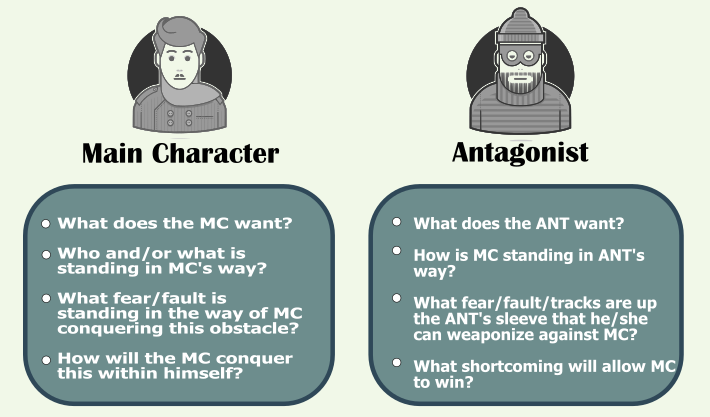
 I use a four-part plot structure, so I break my character arc into four sections. This allows me to keep up with the character development and also don’t resolve the inner conflict too early.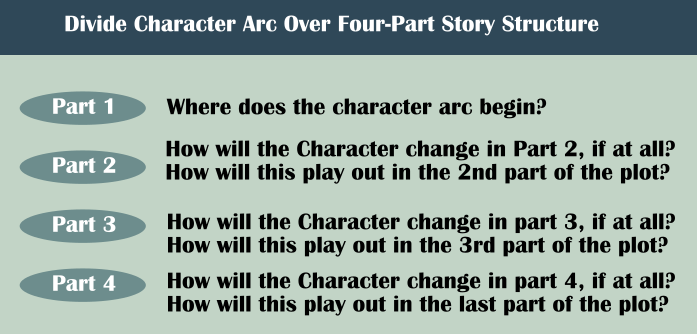

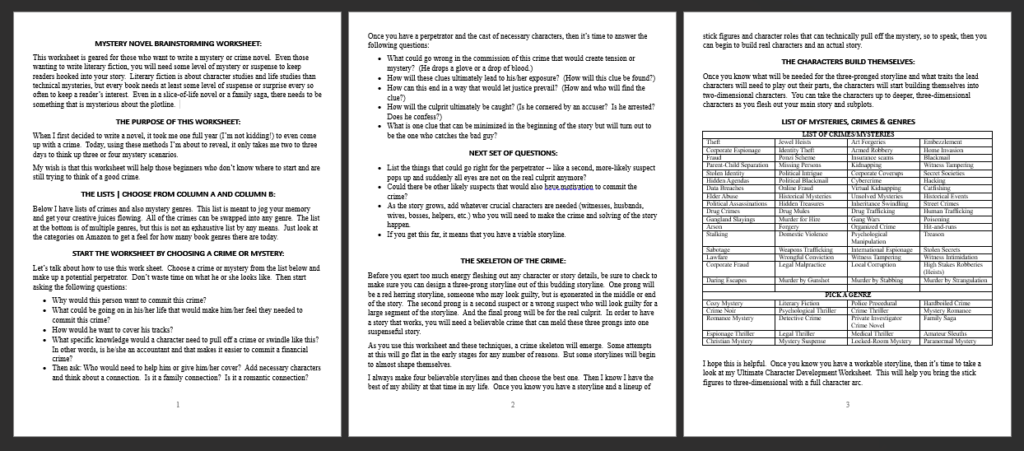
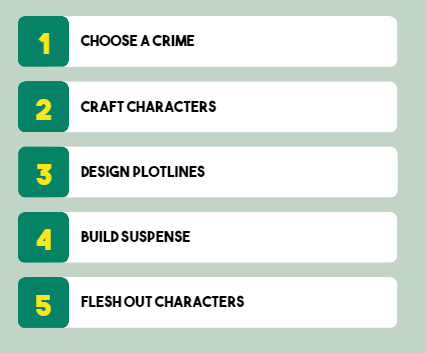
 If you are stumped for a main story, or if you are stumped for what happens now, or even if you have written yourself into a bit of a corner, this instructional will help, along with your own creativity and thinking, to bring about new possibilities.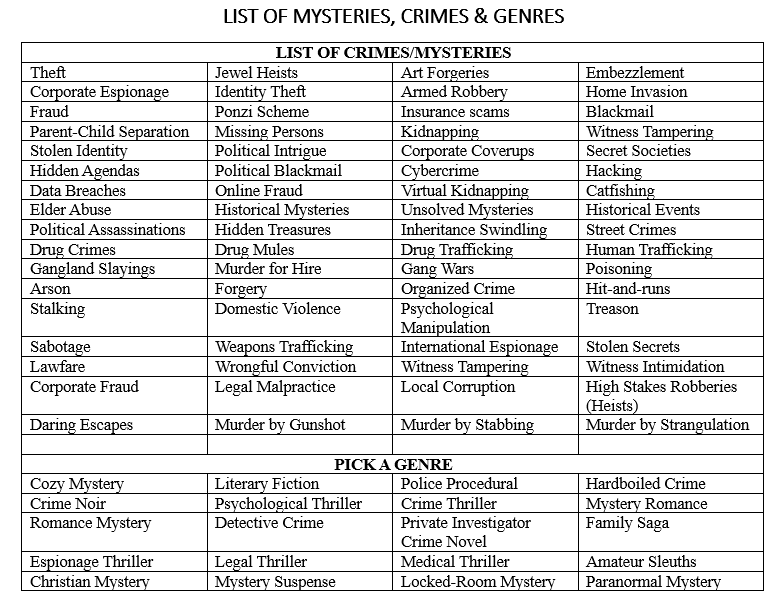

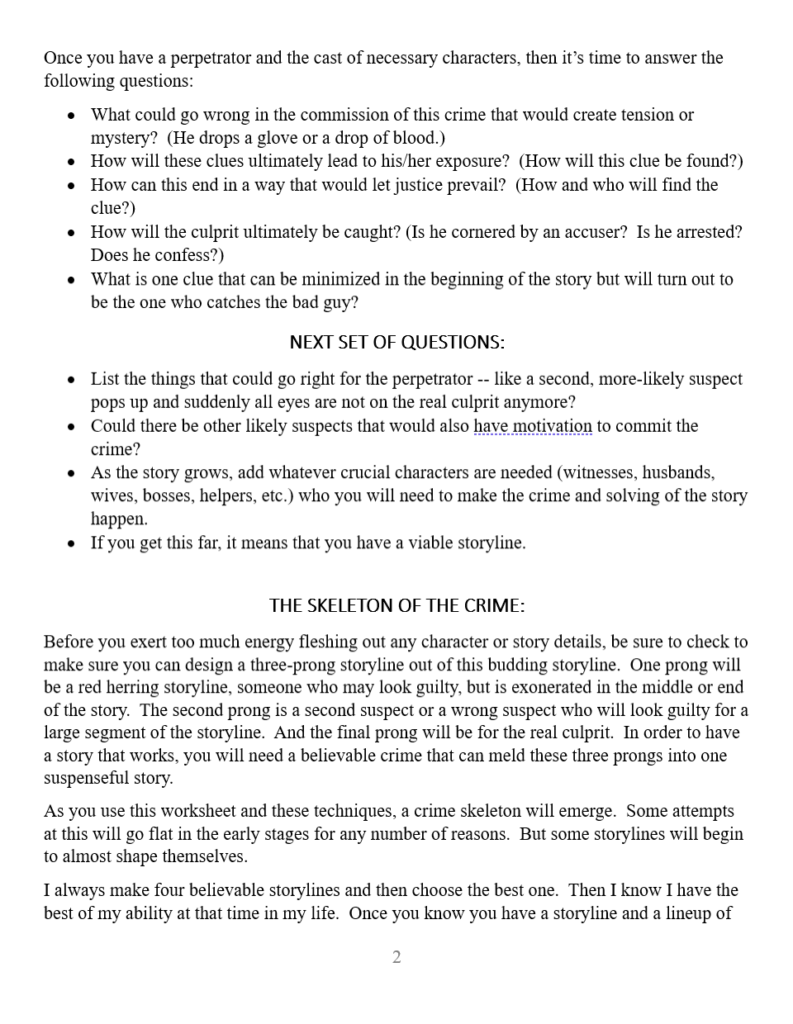
 Once you have a perpetrator and the cast of necessary characters, then it’s time to answer the following questions:
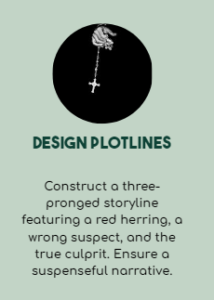
 Before you exert too much energy fleshing out any character or story details, be sure to check to make sure you can design a three-prong storyline out of this budding storyline. One prong will be a red herring storyline, someone who may look guilty, but is exonerated in the middle or end of the story. The second prong is a second suspect or a wrong suspect who will look guilty for a large segment of the storyline. And the final prong will be for the real culprit. In order to have a story that works, you will need a believable crime that can meld these three prongs into one suspenseful story.
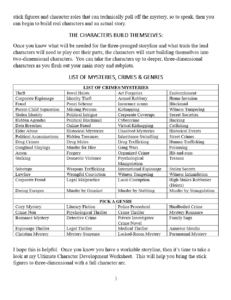 As you use this worksheet and these techniques, a crime skeleton will emerge. Some attempts at this will go flat in the early stages for any number of reasons. But some storylines will begin to almost shape themselves.
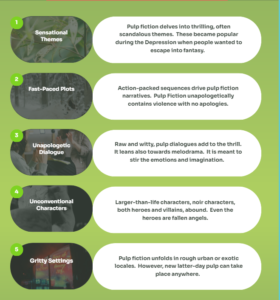
 Pulp Fiction become popular during the depression of the 1920s and 1930s. Publishers at the time used a very cheap “pulp” paper in order to produce these short stories and magazines that cost about a quarter. Yes, twenty-five cents!
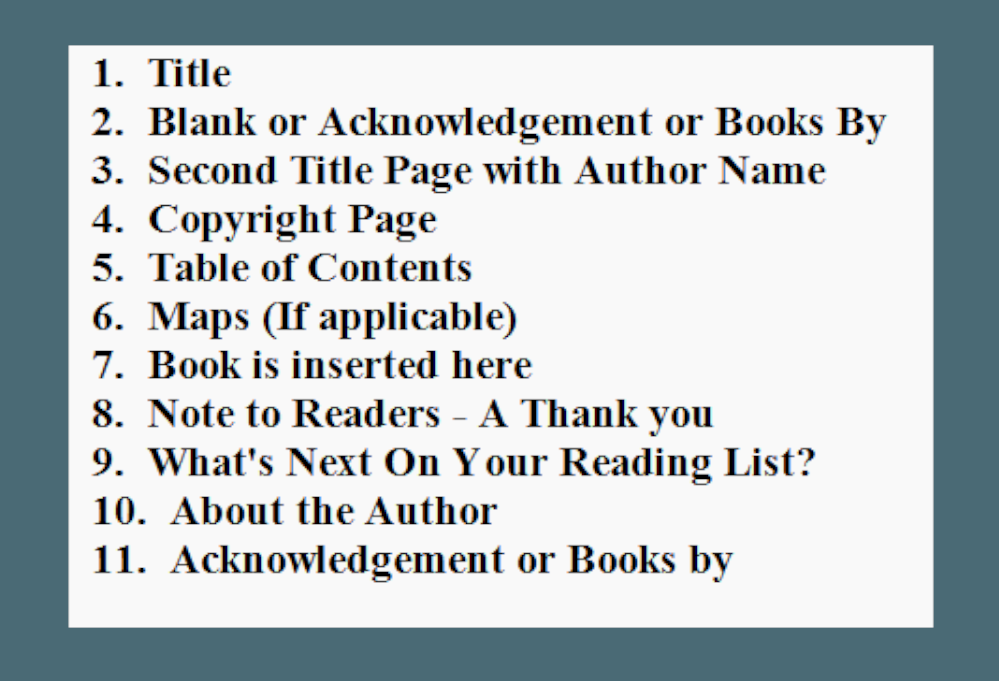 This book is for beginners who are publishing their first or second novel and they are still a little skittish about what else goes into a book. I’ll lay it out so you can easily follow the list and be confident that you’re not forgetting anything. These page suggestions are taken from the publishing industry. These are the pages that appear in a book published by a publishing house.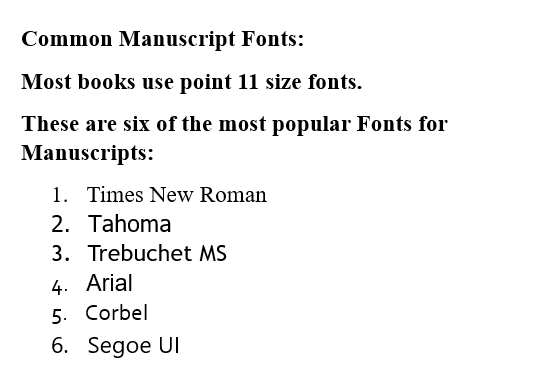

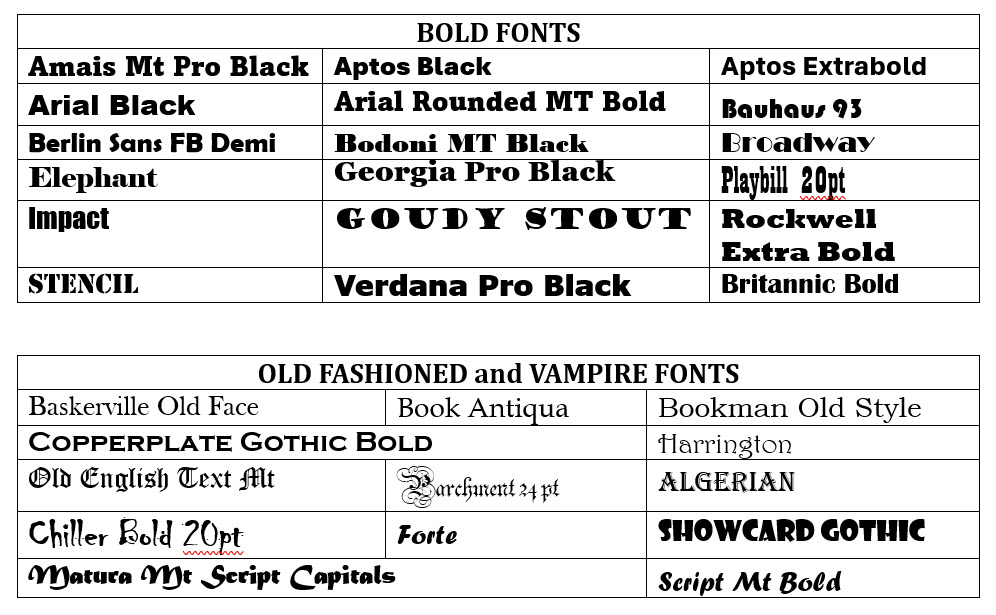
 Writing a novel is a huge undertaking. There are many things that go into the writing of a fiction story. The best tip I can pass on is this: Break everything down into little bite-sized pieces. By doing this, you can reduce a huge project down to do-able portions that can be done whether you have 2 hours a week to write or two full days! It only requires a little planning and organization.
 It’s important to keep reading as your own journey as a writer continues. Each author has a different style and uses different storytelling techniques. The stories don’t even have to be great. You can learn from the good, the bad and the bland. Just analyzing what made a book bland is a great lesson in itself. Did the story need more action? Did the story get stuck somewhere?
  or other books you read. Reading other authors is crucial no matter where you are on the writing spectrum. However, when you’re new, you can learn a lot from watching mystery or crime noir movies. I like movies from the 1940s, 1950s, and 1960s. The movies in these decades didn’t have CGI and the directors had to use the stage to tell the story. They used wider shots and props to assist the storytelling. By watching these older movies, you can learn a lot regarding writing.
  It’s a good idea to read the synopsis before you view the movie. Knowing at least a basic outline of the story will allow you to absorb more as an author. If you go into the movie blindly, you will be “experiencing the movie” as a viewer only. By knowing ahead of time what story will be unfolding, it will allow you to watch specifically for certain scenes to unfold. You can watch what tools are used to move the story along.
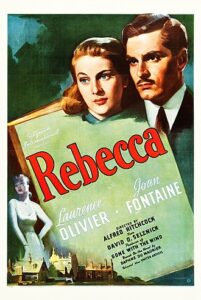 If you are looking for a suggestion, I would suggest Rebecca for the first movie. This movie was directed by Alfred Hitchcock and it has a lot of gothic atmosphere. There is also a psychological plotline in this story so it is a goldmine for learning storytelling tools.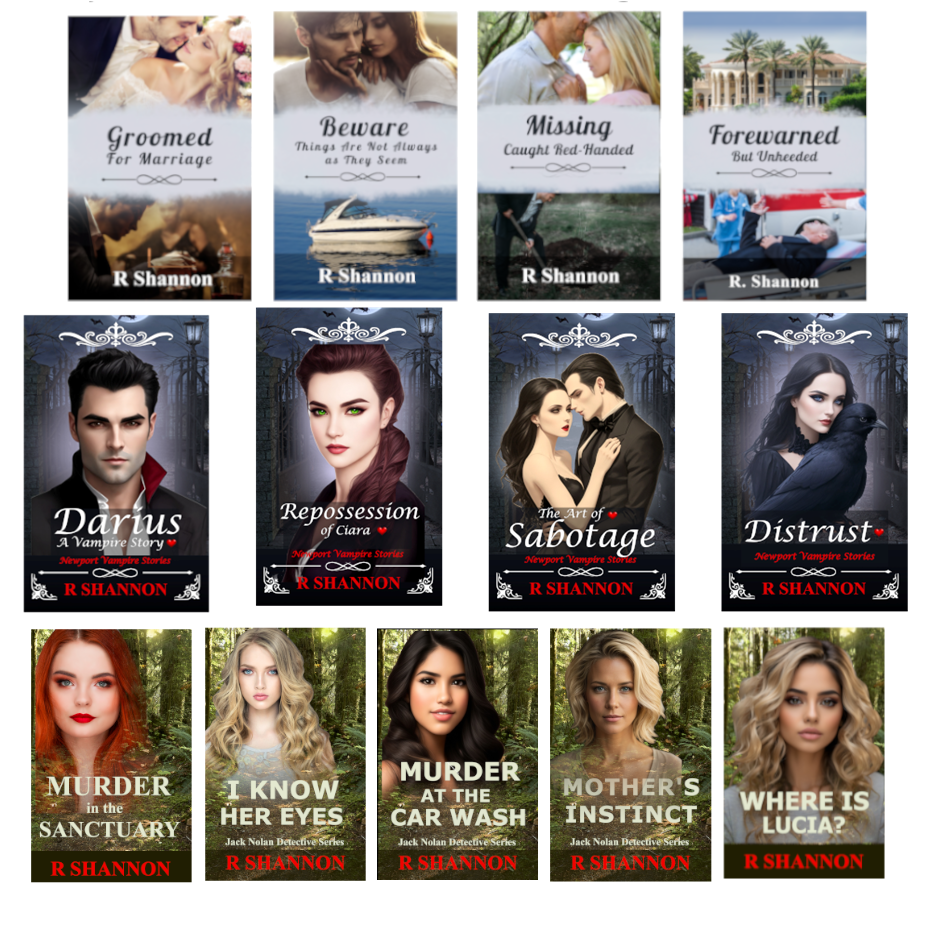
 I found out later that more experienced authors even suggested that newer authors consider writing in series because it's easier to market the books. But my venture into writing book series was a happy accident.
 I use broad-stroke character arc for the main characters that extends over all the books in the series. Each individual book, however, the character grows and changes a little bit. So each book contains its own arc, but there is a longer series arc for the main characters. It helps to know this before you start writing the series.


 When I first decided to write a novel, it took me one full year (I’m not kidding!) to even come up with a crime. Today, using these methods I’m about to reveal, it only takes me two to three days to think up three or four mystery scenarios.
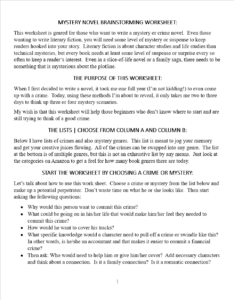 Let’s talk about how to use this work sheet. Choose a crime or mystery from the list below and make up a potential perpetrator. Don’t waste time on what he or she looks like. Then start asking the following questions:
 Once you have a perpetrator and the cast of necessary characters, then it’s time to answer the following questions: