From Engineer to Author: The Many Hats of a First Draft
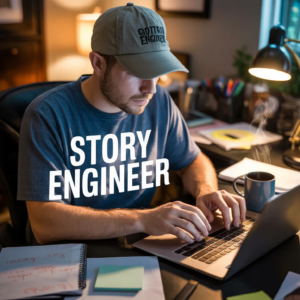 The biggest hurdle for new writers isn't a lack of ideas; it’s the pressure to be an "Author" too soon. If you sit down at a blank page expecting to produce polished, rhythmic prose on your first try, you’ll likely stall before Chapter Two.
The secret to finishing a novel is realizing that "Author" is actually the very last hat you’ll wear. To get to the finish line, you need to cycle through a whole wardrobe of different roles first.
1. The Story Engineer (Brainstorming)
 Before the first sentence is written, you are an Engineer. You aren't worried about the beauty of the bridge; you’re worried about whether it can hold weight. During brainstorming, your job is to stress-test your concept. Does the plot have enough tension? Is the protagonist’s motivation strong enough to power 300 pages? You are building the foundation.
2. The Location Scout (Setting the Scene)
Next, you become the Location Scout. Writers often forget that a setting is more than just a backdrop—it’s a silent character. You must decide where your scenes take place and how those environments "speak." A tense conversation feels different in a crowded elevator than it does in a vast, empty cathedral. Scout your locations and make sure they are working for your story.
3. The Investigator (The Crime Skeleton)
 If you are writing a mystery or a thriller, it’s time to put on your Investigator’s hat. You are working backward, looking at the "crime" and deconstructing it. You need to know exactly how the deed was done before you can hide the truth from your readers.
It's important to pick clues that wll point to no one or everyone in the beginning. It's important to know what will give rise to each suspect. This is all part of the spine of the story.
Often, this stage will look like a maze, with each suspect dead-ending at a different point, until only the True Culprit is revealed.
4. The Producer & Director (Plotting & Pacing)
Once you have the skeleton, you become the Producer. This is where you organize the elements. Where will the clues drop? Who will they point to? As the Director, you decide the "camera angles" of each scene—whose perspective we follow and how the information is revealed to the audience.
5. The Town Crier (The Rough Draft)
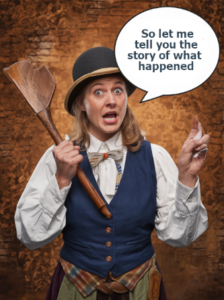 This is the most critical phase. Now, you put on your Town Crier hat. Your only job is to blurt out the story as fast as you can.
-
Ignore the Grammar: The Town Crier doesn't care about commas.
-
Forget the Spelling: If you know what the word meant, move on.
-
Don't Look Back: If you realize you changed a character's name in Chapter 4, don't go back to Chapter 1 to fix it. Just keep going.
You are simply shouting the story onto the paper. It will be messy, it might be loud, and it will definitely be "rough," but it will be done.
The Final Reveal: The Author
 It is only when the draft is finished—when the "The End" is typed and you finally sit back to review the context of the entire journey—that you finally put on your Author hat.
Now, you can worry about the cadence of the sentences, the perfect metaphors, and the correct verb tenses. You can’t "author" a vacuum. You can only author a story that actually exists.
The goal of a first draft isn't to be good; it's to be finished. Keep writing, stay in character, and don't let the Author in the room until the Town Crier has finished his job.







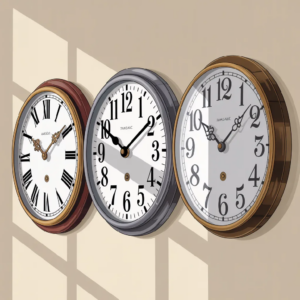 Writing a mystery is like building a clock. While the reader only sees the hands moving steadily forward, the internal gears—the secrets, the motives, and the hidden history—must mesh perfectly for the story to "tell time" accurately.
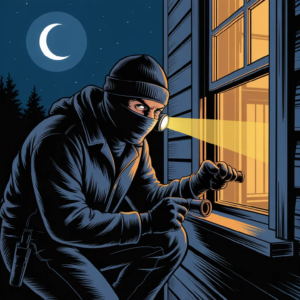 This is the "Backstory" or "True History" of the event. It begins long before the first chapter and usually ends the moment the detective arrives on the scene.
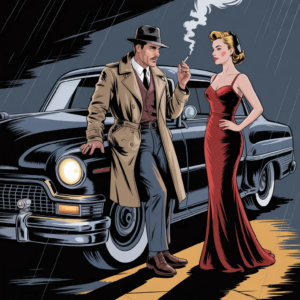 A mystery novel isn't just a logic puzzle; it’s a story about people. This timeline tracks everything that isn’t the murder—romance, personal growth, professional conflict, or side-mysteries.
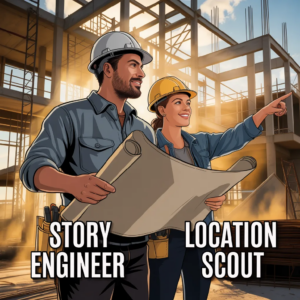 Writing the first draft is about getting the story down and not much else. So this timeline tracking doesn't start until you have finished the first draft. The first draft is merely blurting out the story. You don't even have your writer's hat on yet. You are only the story engineer and location scout at this point.