WHERE WE ARE BEGINNING IN THIS BLOG POST:
I left off writing about how I divide the crime skeleton, after adding in the subplots, into the Four-Part Structure. I am now entering the third layer of writing. This blog post and video below are about sketching in the plot outlines.
WHERE WE ARE GOING:
 Most new writers want to get to the writing already. But in this layer of writing, all plot holes or inconsistencies will show up. Any clues that won't work when adding more suspects and motivations will show up in this layer.
So this layer is like an insurance policy that you won't be writing for the trash can.
USING THE SHORT TEMPLATE:
 My template is short but it keeps me on track. I'll break it down below. This small template I use keeps my writing on point and tight. It prevents me from meandering, dawdling, going off on an irrelevant tangent or writing myself into a corner.
POINT OF VIEW
 n order to prevent head-hopping, which is very common among new writers, you need to be constantly reminded that each scene is in one perspective. Some writers write in first person and that's easy.
However, I write in third person - one persons perspective. This prevents the reader hopping from head to head. It's too confusing for a reader to do that.
However, I don't choose my point of view this early on in the process. I wait until I am actually writing the scene before I choose. In my experience, as you write the scene, the first draft, one character will sort of 'claim the scene as their own'. That's when I choose the point of view and then make sure the entire scene is in that persons perspective.
Now, I must confess, since I write in third person narrator style, I do allow myself one tiny head-hop at the end of a scene if I think it serves the plot well. I think any reader can handle one tiny head hop.
I'm a self-published author at this time, and one of the benefits of self-publishing is you can do what you want. The professional publishers may be horrified by allowing one head hop at the end of a scene, but as a self-publisher, I can do what I want. (Hee hee)
KEEPING TRACK OF TIME
 I don't know whether I am an author who is obsessed with time, or whether I use time as an element to put pressure to solve on my characters, but I have always tracked time. I find this helps me balance the story and make the story more realistic.
What I mean by that is often times there is so much that is happening in a book on one particular day, that it becomes unrealistic that all of this could happen in one day. Maybe it's just me.
Keeping track of time allows me to also know when the workday is over and the subplots can enter the scene as most subplots happen at least in part in a character's off time.
CHOOSING A SCENE LOCATION:
 Location is important for two reasons. One reason is casts the scene in cement. You have chosen a stage for the scene to take place. I don't write any scene or location descriptions in this layer of writing. But I can write the action of the scene in context of a location.
Secondly, adding the location in this layer allow me to go off and find photographs that I can use in the layers down the road where I will add descriptions into the story.
PURPOSE - MOVING THE STORY ALONG
Every experienced author who I listened to when I was first writing fiction said the same thing: Everything in the manuscript is there to move the story along. If it doesn't move the story, it doesn't belong there. So this Purpose in my template helps me keep my writing tight and on point.
CLUES - KEEP TRACK OF CLUES

This one is self-evident. A crime novel, murder mystery or police procedural is about solving a crime or mystery. So uncovering clues, following them to the next clue is the vehicle for the story. So it's important to keep track of clues.
In the first stage of writing, it's easy to remember if you put clues into the story. In the first draft, it's easy to rely on your memory. But after you've read through the story a bit and begin to add more to it, you won't be able to remember whether you saw that clue in the last chapter or the last time you read through the entire layer.
So it's important to keep track of clues.
DIVIDING AND CONQUERING THE MANUSCRIPT:
By dividing the story into four parts, and then writing scene outlines, you can divide a huge manuscript down into bite-size pieces. It is less overwhelming and easier to organize, write and keep track of.
HOW SCENE OUTLINING WORKS IN SCRIVENER:

You can watch the video below for a full explanation, but each scene begins with the template. I leave the POV blank for now. I choose the time and location. And then under Purpose/Clues, I add everything I want to happen in this scene. I am thinking about the main plot, the dripping of background info, the dripping of clues, and the subplots.
I use numbers but using bullet points would probably be best as I have to change the numbers a lot. Although when I show you the rest of my technique, you will see that the number themselves don't matter.
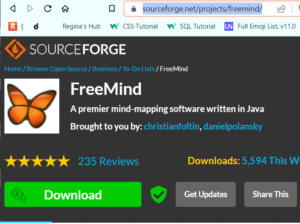 This is the second step in writing a new fiction novel. In the first step, I start out with writing four potential storylines in FreeMind, which is a mind mapping software.
  Most new writers want to start writing scenes and dialogue. They want to just get on with it. But the dark side of working this way is that when you find out your clues won't work when you need to add a new suspect, you will have written two chapters already. My process will save you from writing for the trashcan.


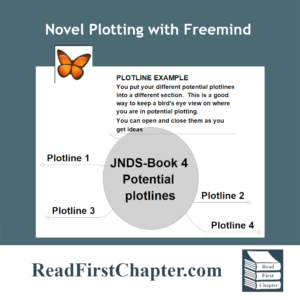 In the first installment of the Peek Behind the Novel Series, I wrote about working four different plotlines before choosing one. By working on four of them, it helps me 'improve' on some storylines and when I have four to choose from, I am able to go into the project knowing that I have chosen the best one. It's a technique that I use to build my author confidence.
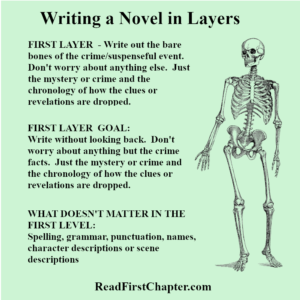 In the first layer of writing, I focus only on the crime or mystery. I make a list of the chronology of the crime. How it happens, who it happens to, how the detectives are assigned to the case. I focus only on the crime. I don't think of subplots, or dialogue or even the outcome. Only on the crime itself, almost like a Forensic Files show.




 I mentioned writing in layers above. This is a secondary technique that I will blog about as I move along in my present book. I'll also give you a sneak peek behind the novel to see what levels I write in.
 There are two levels of proofreading. The first level is proofreading for plot context to make sure the novel is complete. Before I leave Scrivener, I go over the different chapters and scenes and mark the following beats and make sure that everything is included.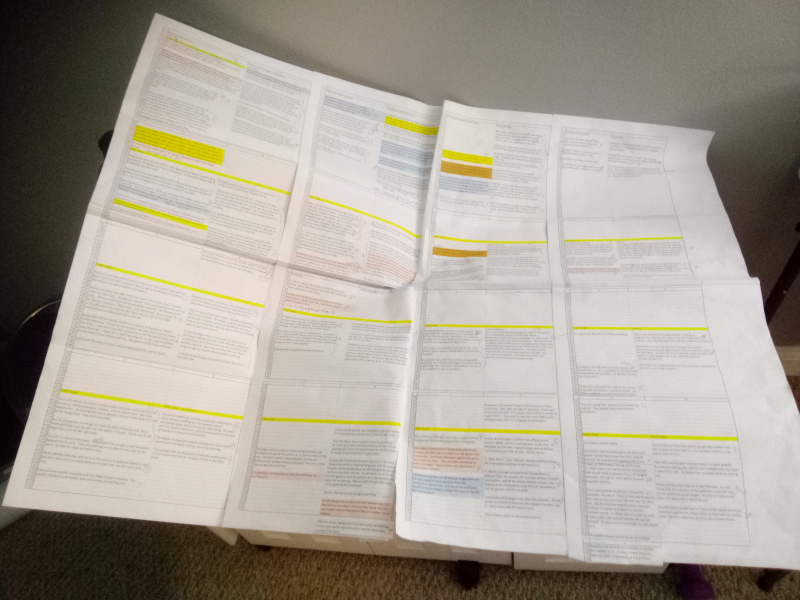
 If you are writing novels with a Catholic or Christian theme or backdrop, you may want to consider submitting the book to CatholicReads.com for review. They have a list of over 600 people who are signed up as already interested in Catholic books and Christian books. This is a niche market and one that may be a good fit for your novel.
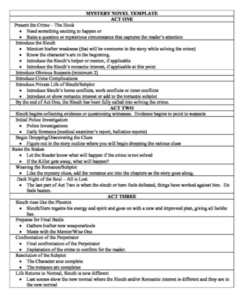 I spent a lot of time in researching novel templates and wound up getting more confused than organized. I may have a mental block on this, or if you are a beginner, you may find the same difficulties in getting your plot or story line to fit exactly over a template outline.
 The one area on YouTube that I never found any ‘work flow’ videos on was the method of reverse engineering story in order to learn the craft. I reread two or three of my favorite novels and reversed engineered them myself. I wanted to see what this method would teach me in terms of how these favorite stories fell into these novel format templates I was finding.
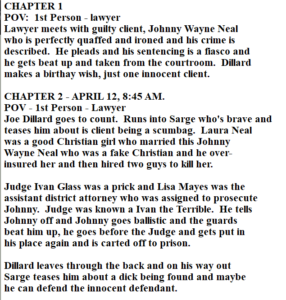 I re-read the book, and during and after each chapter, I wrote down what happened and where I thought this fit in the template. I also tried to identify the conflicts and obstacles, and anything else I thought was relevant to the story.
 I am a new writer myself and by no means do I hold myself out to be any type of an expert. But I am still very close to the "very beginner status" and still understand some of the obstacles only a brand new writer is faced with.