THE DOCTOR'S FIRST PARTY - THE ANNIVERSARY:
 Dr. Moore has a party to celebrate her hospital being open for a year. Barnaby brings his wife and Toby comes with Barnaby's daughter, I think her name is Cilly. This is where the young resident says he would do anything for the doctor and the two daughters are standing next to him. They roll their eyes at him and the younger one giggles at him. They think he's a fool.
Troy still doesn't like the closeness between his boss and Dr. Moore. He decides to leave with Cilly and he wants to go to the obstacle course at the hospital and climb the elaborate rope climbing.
Cilly sees movement in the bushes, but she dismisses it because it was only a second. The viewers know there's someone in the bushes. Troy tries to climb but he's a little tipsy from drinking and he falls down onto the ground and laughs. Cilly says, I'll show you how it's done. She climbs up with no trouble and as she comes to the top, she looks up and the young resident is dead and hanging from a hangman's rope. Cilly tells her father the next day at lunch about seeing the bushes move and thinking someone else was there but she can't be sure.
The medical examiner says that this victim was drowned in the creek behind the climbing equipment and dead first before he was strung up. They also found Tetrine in his pocket, the same pills that Martin Roth had taken. It's starting to look like maybe it was the resident who was the murderer.
THE DRUM MAJORETTE OUTFIT HAS ARRIVED:
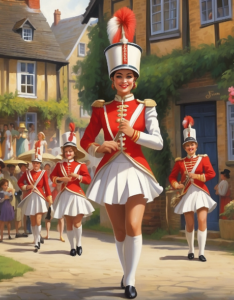 Now, in the next scene, the chemist is on the phone and he's whispering to someone that a little something has come in the mail and maybe you'd like to come and see me sometime. You hear his baby in the background which makes him seem even more sleezy.
DR. MOORE STICKS UP FOR HER RESIDENT:
The two cops are in the hospital looking through a bunch of stuff. Troy tells the doctor that the resident had Tetrine pills in his pocket and she replied that he probably had them to give to the patients. Troy asked here, why did he bring them to the party. You can tell there's a little tension between the doctor and Troy.
Then the older cop shows the doctor that there's a letter he found. He's holding a letter about Dean Honeysette, stating that in light of his recent behavior, he recommends that all of his privileges are suspended. Being a gardener off premises is a big privilege. It was signed by the resident. This makes the viewer believe that this would be a reason for Dean to kill the resident, to protect his privileges.
THE COPS TALK TO DEAN AT THE HOSPITAL:
 The cops find Dean in the hospital and he's very guarded and uncooperative -- also still pretty weird too. And they asked him where he was last night when the resident was killed and he claims he has an alibi. He was in the wing of the hospital and there are 4 people who saw him. It was lights out at 9:30 and he claims he was in bed.
They ask him about his criminal record and it comes out that he was a car thief but he did resort to strangling someone then.
Dean tells the cops that he didn't kill the first guy and he said he didn't kill the second guy (the resident), but he thinks the second guy who died was weak. He said this place needs strong people like him and Dr. Moore. He claims that people look up to him and feel that he has been through everything and is still okay.
Dean also tells them that he told the doctor not to put the obstacle/exercise course along the river creek in the back, but the rope guy insisted that's where it should go. He knew it was going to be trouble.
THE COPS GO SEE THE ROPE GUY:
As the cops pull up to see the Rope guy, he is acting weird and says that he loves rope, the feel of it. He asks the cop to smell the rope and reveals it's the best rope in the world. It's from the middle east somewhere.
He goes on to tell them that his family before him were Rope Guys. He had a distant relative who was a hangman. He says this with pride. He comes off like a nutball and he could easily be the culprit. It also comes out that Martin Roth also owed him money. They were supposed to go into business together. He shows the cops a stand that has a few handmade toys or some kind on it. That was the money Roth never gave him.
THE CLOTHESLINES BEGIN TO DISAPPEAR:
 Then in the next scene, with no explanation to the viewer, you see a woman taking clothing off of a clothesline, an innocent domestic scene. She has her children in the yard with her. After she leaves, someone off camera comes up and cuts the clothesline at both ends and takes the rope away. No explanation.
MEET THE BABYSITTER:
The cops both go to talk to Gordon the chemist and Sarah his wife but they are out. The Doctor's daughter, Hannah, is babysitting. She gives him a cup of tea and they make pleasant conversation. She tells him she's nervous about what's happening all around them in the village. He tells her not to worry, they are on the case. She tells him she wishes they could all move away from there and go someplace where they could all take care of their mother. She asks Barnaby if he will be going to her mother's second event -- the second party. I can't remember what the occasion is, but it's the second party the doctor has at her place. Barnaby says, oh yes. Barnaby asks Hannah if she likes the marching band music. She says, oh, no, it's so silly with those outfits they wear. She rolls her eyes. She has no interest in it.
DR. MOORE'S SECOND PARTY:
 They go tot he party but this one is set up like a little town bizarre or carnival. Gordon and his band are all dressed up in their uniforms and they are playing music at the affair.
In the background, the rope guy is present and acting generally weird, but nothing relevant, just weirdo stuff, looking mean and dastardly as he was playing one of the carnival games.
Dean is also there and he is wearing his Nazi look and demeanor. He's eating something and just pushing it into his mouth like a complete nut ball.
Mary Mays husband is a referee and he is organizing them into a tug of war. On one side is Dean the weirdo and his bunch of other guys. On the other side is The Rope Guy and his bunch of other guys. As Mary's husband counts down, the guys begin to pull before he says go and they all wind up falling down. The ref begins to scold them and Dean comes up and starts strangling him. The cops come and wrestle them apart.
Just at that moment, Mary Mays shows up and says what's going on here? And she reports on a terrible crime that just occurred at her house. They go and her clothesline has been put down. Hers and her neighbors. She left the crime scene alone, in other words, the clothing was still on the ground. Troy is about ready to roll his eyes when she refers to it as a crime scene.
Troy also tells Barnaby that he should arrest Dean because he's dangerous and he had the motive and means to be the killer of all of of them. Barnaby doesn't want to act yet. Troy thinks he is allowing his feeling for the doctor to get in the way.
THE CHEMIST GOES ON HIS SECRET RONDEVOUS:
The camera shows Gordon put son a new uniform he bought, adjusts his hat, opens the door and says, "I'm glad you were able to come". Viewer can't see who is at the door. Scene ends.
ANOTHER ROPE CUTTING:
Mary May's husband throws the garbage out from his business on Main Street. He looks across the street and someone has cut the rope that was holding his English flag up and it's now laying on the ground. He's outraged and like his wife, he considers this a serious crime and call the cops.
As Troy is dealing with Mary's husband, he looks over and sees Sarah with her baby in a carriage knocking on the pharmacy door calling out her husband's name. Troy goes over and finds out Gordon never came home last night.
Two musicians show up to the music room for practice and knock, but no one answers. They think it's odd, but wait. Then they go in and see Gordon has been hung from the back of the door in the music room. He's dead.
When Barnaby and Troy show up, they see scuffle marks and they believe that he too was killed first, and then strung up. It's all about the rope. His wallet and valuables were still present. It wasn't a robbery. They notice a package wrapping that is left on a couch. They trace it and find out it was for a majorette's outfit.
MORE CLOTHESLINES:
There is another inexplicable scene where you see a farmer riding on his tractor. Off to the side he sees something. The camera shows rows and rows of clotheslines that are holding some kind of brownish muslim sacks. There's no explanation. In the midst of these sack is a the new Major music jacket Gordon bought for himself. The scene ends without any real explanation.
DR. MOORE IS AGAIN HORRIFIED:
The cops go and tell Dr. Moore and she says it's horrible. She comments that he was harmless. She can't fathom why anyone would kill him. She tells them she has to show them something. She brings them into the back of the hospital and all the ropes have been removed from the obstacle/exercise course.
THE COPS VISIT THE ROPE GUY AGAIN:
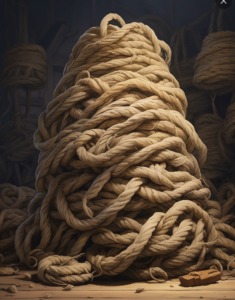 The two cops go to visit the rope guy and when they arrive, he is walking out of his business. He tells them he was about to come and see them. He shows them that he has been cleaned out. Every rope he owned is gone. All of it. He only left to get something to eat, he couldn't have been gone fore more than an hour or so.
BARNABY MEETS WITH SARAH:
Troy still thinks the killer is Dean. Barnaby is still investigating. He goes to see Sarah Roth, the Chemists grieving girlfriend. She is upset about losing Gordon. Barnaby asks her if she ever noticed the trophy missing. She said, no, she didn't. He asks if her husband every told her it was missing. She said no. Barnaby asks if maybe Hannah the babysitter could have taken it. Sarah scoffs and says, no, she would never do anything like that.
Barnaby asks her if she knows anything about her husband getting a drum majorette's outfit. She said, no, he didn't mention it, but she knew he wanted to get majorettes for his band, but she told him she thought the village was too conservative for that. She wasn't alarmed at all by his behavior. Sarah tells Barnaby that Gordon thought her ex-husband took the trophy and that could be because he was always hanging around, watching them, and starting trouble.
BARNABY CHECKS OUT THE FARM WITH ALL THE CLOTHESLINES:
Next scene is Barnaby going to talk to the farmer and there is a cricket game or some other English sport going on with the doctor's step son. The two girls, Hannah and her younger sister are sitting on a blanket with food and tea. They give Barnaby a tea.
The younger sister gets weird and asks Barnaby if he's ever been on a picnic with their mom. He says no, and she says, I bet you would like to. Her sister tells her to be quiet. Barnaby takes it all in. He takes the musician's coat that was hanging on the clothes line and he goes into his car. He puts his head back and closes his eyes like he wanted to take a nap.
When he wakes up, it's dark outside. He looks around and he sees some kind of movement over by the clotheslines. He gets out and goes over to see what is going on. Someone throws a rope around his neck and begins to strangle him.
Just in the nick of time, Troy pulls up and beeps his horn. Whoever was strangling Barnaby is thrown to the ground. He is taken to Dr. Moore's house and given some whiskey or something to settle him down. Her kids are all there with her. Barnaby is nursed back into shape by Dr. Moore and her kids.
THE COPS GO LOOKING FOR DEAN:
After this, the two cops go looking for Dean. He hasn't returned to the hospital. They find all kinds of rope in his closet. Then they go back on the grounds to another area that he used to work in. They open up a shed and there's more rope inside there too.
Dean shows up and tells them that he saw Troy and his girlfriend in the yard that night. He was ready to cut the doctor down, but they showed up. (This resolves who was in the bushes when Cilly saw them moving).
He then says that he had to remove all the ropes so the killing would stop. It was the only thing that would stop the killing. Barnaby asks him how many are we talking about? He doesn't answer. He then refuses to talk.
BARNABY FIGURES IT OUT ON HIS OWN:
 In the next scene, a white van pulls up and the school kids get off. Dr. Moore's kids are on the bus. They are then taken into custody and separated for questioning. Barnaby starts with the older sister.
She is snotty and scoffing and basically unresponsive for awhile until she figures out they have evidence on her. She finally comes clean and admits that they killed everyone and she ends by saying "no one will ever take our mother from us."
THEN THE REAL PSYCHO ENTERS THE SCENE:
 The next scene is when the younger girl comes in for questioning. She asks where her mother is. There is a guardian there for her but not her mother. At first she just looks nervous.
Barnaby asks her a few preliminary questions and she is a little more cooperative than the sister. He asks her if she loved her dad and she said yes but goes on to admit she loves her mother more. Barnaby asks her if her brother and sister witnessed their father's death. She giggles and whispers to him that he didn't fall from the cliff, her brother and sister pushed him. She giggles and giggles. She's weirder than all three previous weirdos in the show. The actress playing the sister had spaces between her teeth and this made her seem crazier and more psycho when she giggled.
THE LAST SCENE - BARNABY IS REALLY A GOOD HUSBAND:
In the last scene, the older cops wife pulls up in her car and she seems like she doesn't know what's going on. She asks him why have you asked me to come here? He tells her I may need you for this. They stand together as a couple as Dr. Moore meets them.
The show ends by Barnaby putting his arm around Dr. Moore's shoulder and walking with her and his wife into her hospital. He is telling her that her kids are all psychos and they were the ones who killed all the people.
The only thing that was left out of this narration, to the best of my knowledge, is that when Hannah and Barnaby were talking, it showed Hannah pulling the fish wire to fire the gun. It also showed all three kids holding the Resident underwater to drown him. They also showed the brother strangling Gordon while the two girls taunted him by mimicking drum majorettes.
WHAT I LEARNED AS AN AUTHOR:
I found it surprising that they had about three scenes where nothing happens except characters act mean and crazy. Like other viewers, I didn't think twice about it as I watched the show the first time. I just thought these guys looked guilty or crazy and could be a suspect.
Secondly I learned that there was very little if any foreshadowing about the sisters during the entire show. Aside from their connection to the head of the hospital, there was no real connection to them until almost the end when it was time to wrap up the 1.5 hour murder show. I didn't think anything of this when I watched the first time which means the author got away with it!
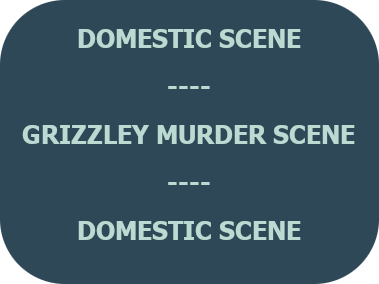
Thirdly, I learned that bookending grewsome scenes in between two sweet domestic scenes makes the horror worse somehow. This is an important takeaway.
Fourthly, I learned that you don't always have to offer a reason right away for a character acting weirdly. It's okay to have some scenes where something strange happens with no explanation until later on.
Next I learned that there was no mention of the absurdity of having this serial killer on the loose in a small village in England and there's no press around and people seem to just take it in their stride. In the same way that a person agrees to suspend belief in a horror or science fiction movie, they will also suspend belief about the level of murder for the sake of a good murder mystery.
I also noted that the two sisters were not weird at all during the entire show, but in the last scene, for the sake of a little horror, the writer made the girls quite ruthless and horrible. To me, this also relies on the reader/viewer agreeing to suspend belief for the sake of a good mystery.
WHAT DO YOU THINK?
If you would like to discuss this show, email me at rshannon at readfirstchapter dot com.
 All book authors want readers! Many readers are curious -- either before reading your book or after -- about who wrote the book. Many of them only want to see what you look like or where you live.
 You will need a bio with a picture. The picture will be reduced to an icon or avatar size, so be sure to have one that is crisp and clear and mainly of your face and shoulders. Otherwise, it won't look professional.
 If you only have one or two books and aren't ready to build a full website, think of the Amazon Central Author page as a website. Besides adding your avatar picture, Amazon will pull in all of your books onto the one page. Each viewer is given an opportunity to click on the FOLLOW button. So if they really like your work, they can sign up to follow you and then will get notice of any new books released by you. So there is this little bit of marketing built into the Author Central page.

 Turning the viewing of a movie into a writing exercise will change the way in which you watch the movie. For your spouse, it won't change anything. Most people love to go into the story not knowing anything. There are some who any hint of a spoiler will ruin the movie for them. You may be one of them now!
 Find a summary of the movie on Wikipedia. Most movies have a page about them and it gives all the technical information about who wrote the original story, the producer, director, stars, etc. But there is a section entitled PLOT. This is where the plot is laid out for you.
 To be honest, most plots are too long to even remember or put together with one reading. I can usually follow the plotline for about the first four paragraphs. After that, I can't remember who is who but it doesn't matter. As long as you have a gist of an idea of what will take place, it allows you to watch for it.
 WRITING EXERCISE: Next time you are sitting down to write, pull up the picture and create a scene in your head -- not from the movie, but from your own imagination. Using this setting as inspiration, think of something that is about to happen in the room or what just happened in the room. Be sure to include a description of the room and/or the main elements in the room. This exercise alone will improve your descriptive writing and could even lead to a short story! You never know.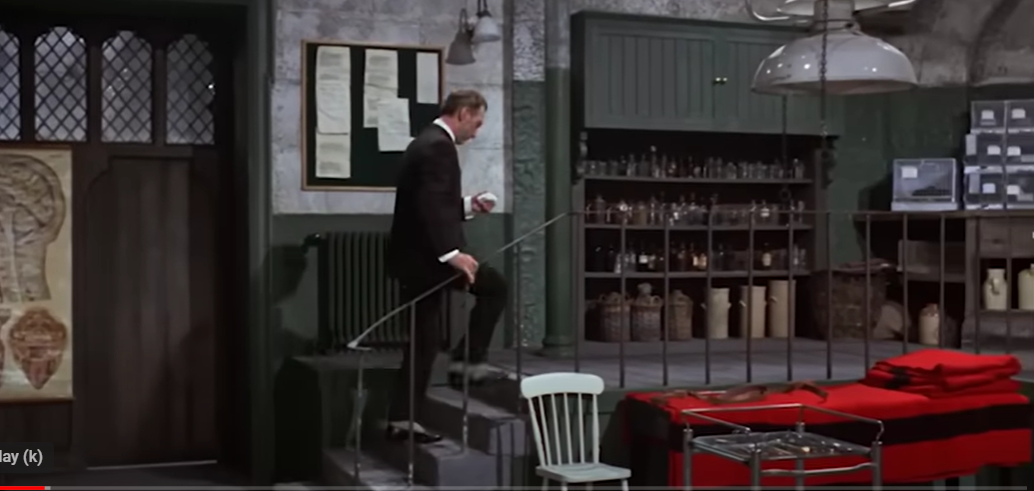
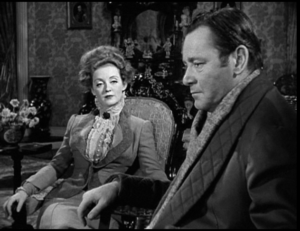 THIRD: Classic films relied more on dialogue, staging and backdrops to tell the story. This is the richness that I find most helpful to see and learn from as an author. Modern storytelling is worried about the 3-second attention span. Older movies assumed the audience was grown up and could sit still and pay attention for a few minutes without intense stimulation.
 FIFTH: Newer movies have upgraded post production technology and CGI, so they are now focused on movie effects, jump scares and gore shocks. Although many of you may enjoy this type of thing, it really doesn't have much to teach a new author.
 Everyone has to find their own subgenres whether it be old gothic movies or old mystery movies. But a good place to start is at Wikipedia. Below are two links to the 1960s and 1970s in film. Movies made in these years would fall into the categories I mentioned above.
 If you are watching the movie on a computer, take a screen shot of a scene and then set up an imaginary happenstance that occurs in this setting. Describe the setting in words, attempting to capture the essence of what you saw on film. Doing this a few times will help you get better and better in describing backgrounds and scene settings.

 In this blog post and video, which I will post below, I'm going to go over all the steps you should take in preparing to contact an artist at Fiverr to purchase an eBook cover. These tips will be helpful to both those who have money to publish but no time and also those on a shoestring budget.
 I'll use my own book entitled
 Another tip I can pass on is that if you choose a classic as a guiding light book, or a popular book that has been professionally published, by analyzing those books and seeing where they are positioned, in a way you are getting the advantage of the marketing department that is behind this bestseller. The publishing companies have a marketing department and they work all day positioning books. By watching those bestsellers, you can profit, so to speak, from all of their education and know-how.

 Try to put all the pictures of the books on one page. You can do this in Word. If this seems like too much work, you can save the inspirational covers and keep them all in a folder so you can upload them to your fiverr Request.



 Magical Realism is a newer subgenre too. Magical realism are low fantasy stories as they are rooted in our own world with only one or two fantastical elements -- usually at least one form of magic. They take place in an often-recognizable place and the contemporary world.


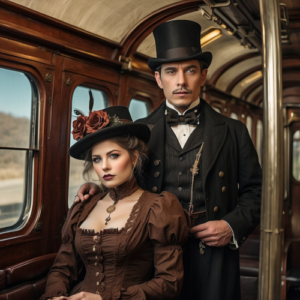
 A new subgenre for those who like the steampunk aesthetic and/or urban fantasy, Hope Punk Fantasy contains these elements but without all the hopelessness or grim outlook. The story is more hope and/or happiness based.

 In our last installment, we covered the top three book genres:
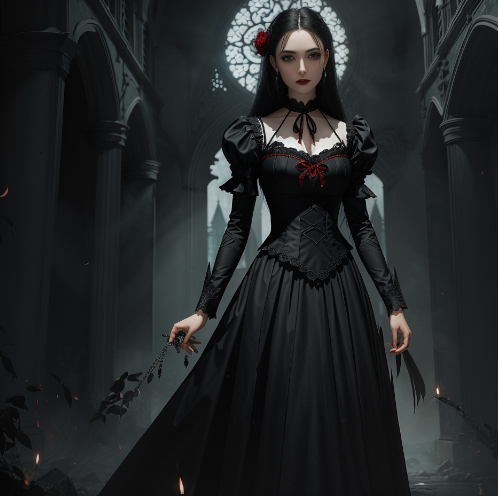
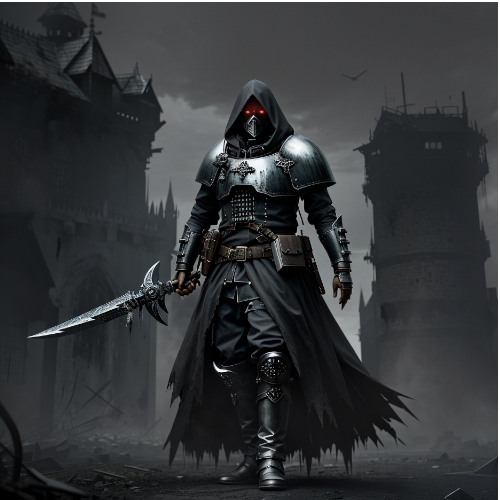
 Before Amazon.com became a behemoth online bookseller, there may have been 20 genres in all of Bookdom. It was all based ono the space available, book cases available and how large he bookstore or library was. All fantasy books were in one section of the store. From there, you needed to come through the author names alphabetically or ask a store clerk if they remembered seeing the book. KDP Publishing and the Website whiz kids at Amazon put an end to that over the last decade or two.Now there are multiple genres of Fantasy and each one can be differentiated by a slight difference. Let's take a look at them starting with the three largest categories: High Fantasy, Epic Fantasy and Low Fantasy.
 This genre is made up of stories that open up a whole new world, with its own geography, culture and even people -- there could be creatures of any and all kinds. These stories are alive with lots of magic, mythology, legends and folklore. High fantasy usually deals with large-scale problems and conflicts. There are life and death stakes and the main characters are heroes, heroines and most are destined for greatness. Their journey is about fulfilling their destiny and/or saving their world from disaster. High fantasy can be more personal than Epic fantasy. High fantasy can be about personal drama, relationships while Epic Fantasy is usually bigger and more about saving the Kingdoms or a whole group of people.
 Epic fantasy is very similar to High Fantasy in that it introduces the reader to a whole world conjured up by the author, with a unique geography, weather, history and creatures. Epic fantasy also has lots of magic and other worldly powers, all of which have rules and boundaries that are followed. Epic fantasy can have folklore, but there is more of an emphasis on myths and legends that are weaved in and out of the story.
 When I first heard of this genre and found out that many vampire books fit into this category, I wasn't happy. It sounds awful -- 'low fantasy'. What kind of a name is that? However, the low fantasy refers to the level of magic and world-building that takes place in a low fantasy book.

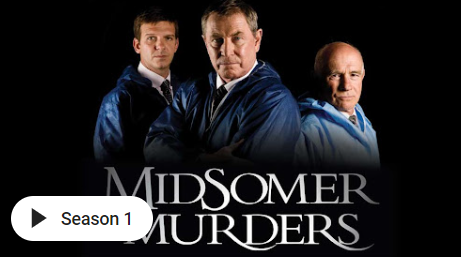 I've started watching several British Midsomer Murder Mysteries during the last two weeks while I proofread my latest novel, Where is Lucia. I love the British mysteries as they are famous for having several suspects in the story, all of whom seem guilty. And the real murderer is always a shocking surprise.
 I chose a murder mystery that I had already seen. I knew how it ended and I was then able to focus only my author mind on watching for clues, subtext and foreshadowing while I watched the show.
 This show opened with the camera walking through a common middle-income family home. A radio was playing a call in show. The woman speaking was referring to her kids being downstairs and probably laughing at her for calling the show. The announcer had the usual fake enthusiastic voice talking with her.
 The next scene shows Det. Barnaby and Sgt. Troy show up and discuss what they see. Troy draws a conclusion that it has to be suicide. Det. Barnaby is not so sure. He wonders why the guy didn't just go outside and shoot himself; why the elaborate fish-wire setup.
 Next we find out that Martin Roth was receiving psychological treatment at a local psych hospital that was run by his old pal, Dr. Jane Moore. Jane runs the institution and is widowed now. Her husband died on a climbing expedition a few months earlier. She is now taking care of her three step children, two of whom witnessed their father's death, but they all appear to be a happy family.