I ACCIDENTALLY WROTE MY FIRST BOOK SERIES:
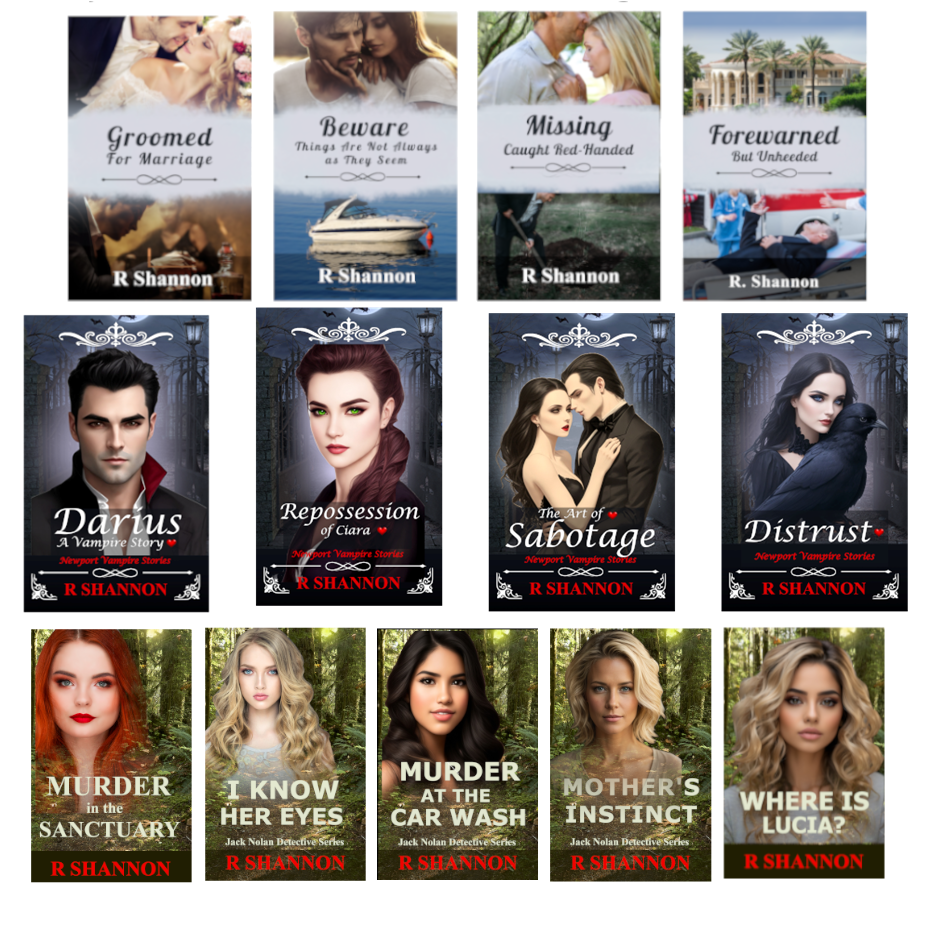 I didn’t set off to write a book series. How did it happen? My first novel turned out to be way too long and there was way too much going on. So I broke it down and wrote two separate stories.
Once I finished the first two novels, I realized that because my main character was a private investigator, it was possible to continue to solve crimes in new books, so that's what I did. The series is now four books, but I could easily add more in the future.
During the process of writing my first, second and third series, I learned a lot of tips to make it easier. There were so many things I didn't know I didn't know in the beginning. My purpose in this blog post is to pass on my best tips in writing a book series.
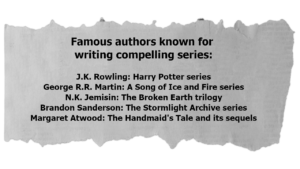 I found out later that more experienced authors even suggested that newer authors consider writing in series because it's easier to market the books. But my venture into writing book series was a happy accident.
TIP NUMBER 1: KEEP A LONG RUNNING INFORMATION LIST
Keep a long running names list. I call mine an Information Sheet. I put down every character I ever name. I learned the hard way to only trust my memory. It doesn't work!
By having a long list of every character, street names, crime locations, neighbor names, job titles, etc., you will have all of this information at your fingertips.
Example Number 1: In my first novel in the Jack Nolan Detective Series, I needed an immediate boss' name. So I chose Lieutenant Duane White. But then when I needed to refer to him in Book 3 but I forgot what I named him! I had to hunt him down in the manuscript of the first book. This can take hours, especially if you don't have any clue what you may have called him.
Now I keep the all proper names and other information that I may need again on a long list that travels with me through each book. No matter how insignificant the character seems, I write it down on my information list.

Example Number 2: I referred to Jack Nolan's wife, one of the characters, as having left him eight month's previous to the start of the series. By having this information recorded, I was able to track how many months passed and how this time increased over the time of the series.
Example Number 3: Town names, Plaza names, Mall names, etc. All of these seem insignificant when you are pulling the names out of the air during the drafting of the book. But with cops working in the same town, you may need to reference that same mall again.
Special Note to Fantasy Writers: They use what they sometimes call a World Bible, and this is a more extended information list. It's important to keep track of everything I've just mentioned, as well as the world rules and the rules regarding whatever supernatural power you may write about.
TIP NUMBER 2: KEEP A SHARED MARKETING LIST FOR THE ENTIRE SERIES:
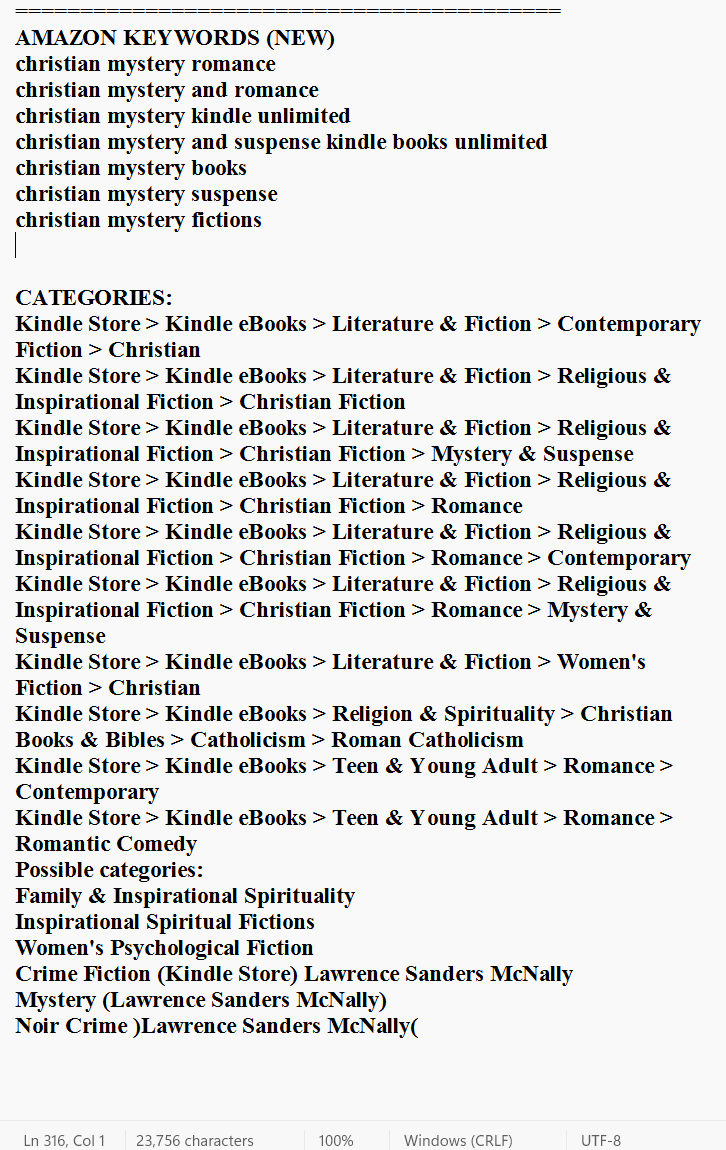
Keep all of information about the books on one shared marketing sheet. I keep the names, publication dates, book links, categories, and keywords for the books all on one page.
Once you begin to market the books, you will need to use this information over and over again.
You may also want to keep a few short blurbs because when uploading to advertise on Bookfunnel, Bookbub, FussyLibrarian, or Freebooksy, you will need all of this information handy.
At the time of the writing of this blog post, Amazon only allow an author to put their book in 3 genres. If you have 4 books in a series, you can put the last three books in different genres thereby extending your marketing reach.
It goes without saying that you should have a link in the back of each eBook so the reader can click on the link and go to purchase the next book inthe series.
Amazon only allows seven keywords for each book. Use the best keywords for the first book or two. Then use longer-tail keywords and different keywords to broaden your reach for new readers. By having them handy, especially if you do keyword research, it will make all of this much easier.
Let me give you an example: In my Jack Nolan Detective Series, I put the first book into Police Procedurals, Mystery Romance, and Mystery Suspense. But Books 2 to 5, I can add into general mystery categories and women's fiction, literature and fiction, etc. You can imagine how much broader your reach for new readers will be.
TIP NUMBER 3: USE A BROAD STROKE CHARACTER ARC OVER THE ENTIRE SERIES:
 I use broad-stroke character arc for the main characters that extends over all the books in the series. Each individual book, however, the character grows and changes a little bit. So each book contains its own arc, but there is a longer series arc for the main characters. It helps to know this before you start writing the series.
Each book has a crime or mystery that plays out and is solved. The characters grow during the subplot of each book. Once the mystery is solved, a new normal is shown with the characters embracing their new-found growth. In the next book, the same template will be followed. The mystery or crime will play out or be solved, and characters will grow, and there will be a new normal that reflects that growth.
TIP NUMBER 4: I WRITE THE BOOKS AS STAND-ALONE BOOKS
This tip is about writing the books in the series as 'stand-alone books'. This allows me to market the books as a series, but also as stand-alone books. As stated above, each book has a full plot that completes but I put in enough background information in order to fill in stand-alone readers on what is going on with the characters in case they haven't read the initial books.
I write in Scrivener and I set up a meta tag so I can keep track of what background information I need to drop into the story for those stand-alone readers. This makes marketing the books much easier.
Like to Read and Listen?
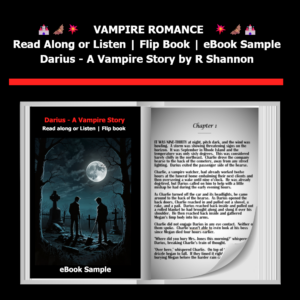
Short on time? How about a Novelette?

John Walsh is a successful funeral director with a loving family but he has a weakness for other women. The modern world thinks cheating is a victimless crime, but is it?



 This could be a person who works full time, lives alone, or has a few kids and there is just not enough extra money around to fund all the things necessary to do when self-publishing a book. Not to worry. There are a few choices for you.
 A Beta Reader is someone who reads the book to give you feedback as to whether people will even like the story. A beta reader knows they are reading a book that is not ready to be released. They are aware or should be made aware that they will be asked for feedback as part of the final crafting of the book process.
 I chose to use Bookfunnel or SiteOrigin to release my ARC copies so that I could get the readers' emails to be able to contact them with a gentle reminder to review the book when it was released. Sounds innocent enough, right?
 I decided to go to Fiverr.com and hire a beta reader for $80.00. Go to Fiverr.com and type in "Beta Reader" in the search box. Look specifically for those who have done it a few times and have a 4 to 5 star rating. It's that easy.
 I will continue to request ARC readers and I include a questionnaire in the back of the ARC copies. Several readers do take the time to fill them out for me. It's so valuable. Each one has a different take on things.
 After release, I only send one gentle-reminder email asking for a review after the book is released. Not everyone posts a review, but that's okay. If I get a few, again, I'm thankful. If they are members of my newsletter list, I usually put an announcement that the book has been released and this serves as a second gentle reminder.
 The take away is -- at least in my humble opinion -- you don't need a whole team of 10 or 20 people to release a book. If you have one beta reader, a professional editor that you trust, and get feedback questionnaires from a few readers, that's enough. After all, at the end of the day, some people will love your work and some may hate it. You're writing for your own readership -- not for those people who don't like your work.
 The most important lesson I ever learned about Beta Readers and ARC readers -- in releasing a book in general -- is that it takes time. I need at least eight weeks to do a full ARC campaign, and two weeks for a beta extra for the beta readers and editor. When I was new, I had no idea of needing to do so many things before release.
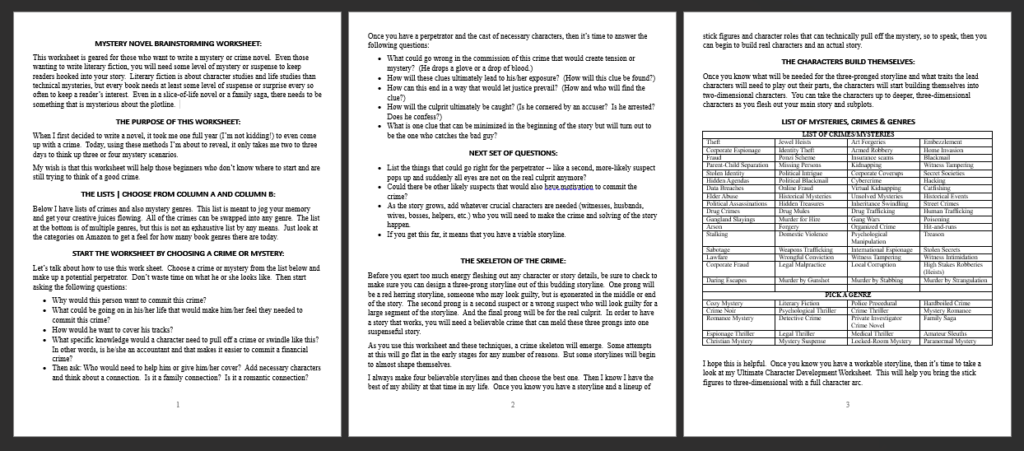
 When I first decided to write a novel, it took me one full year (I’m not kidding!) to even come up with a crime. Today, using these methods I’m about to reveal, it only takes me two to three days to think up three or four mystery scenarios.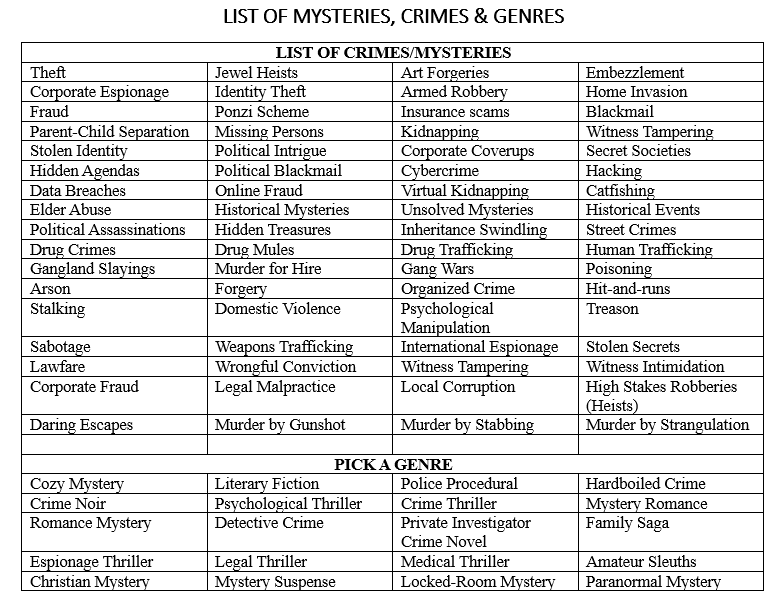
 Let’s talk about how to use this work sheet. Choose a crime or mystery from the list below and make up a potential perpetrator. Don’t waste time on what he or she looks like. Then start asking the following questions:
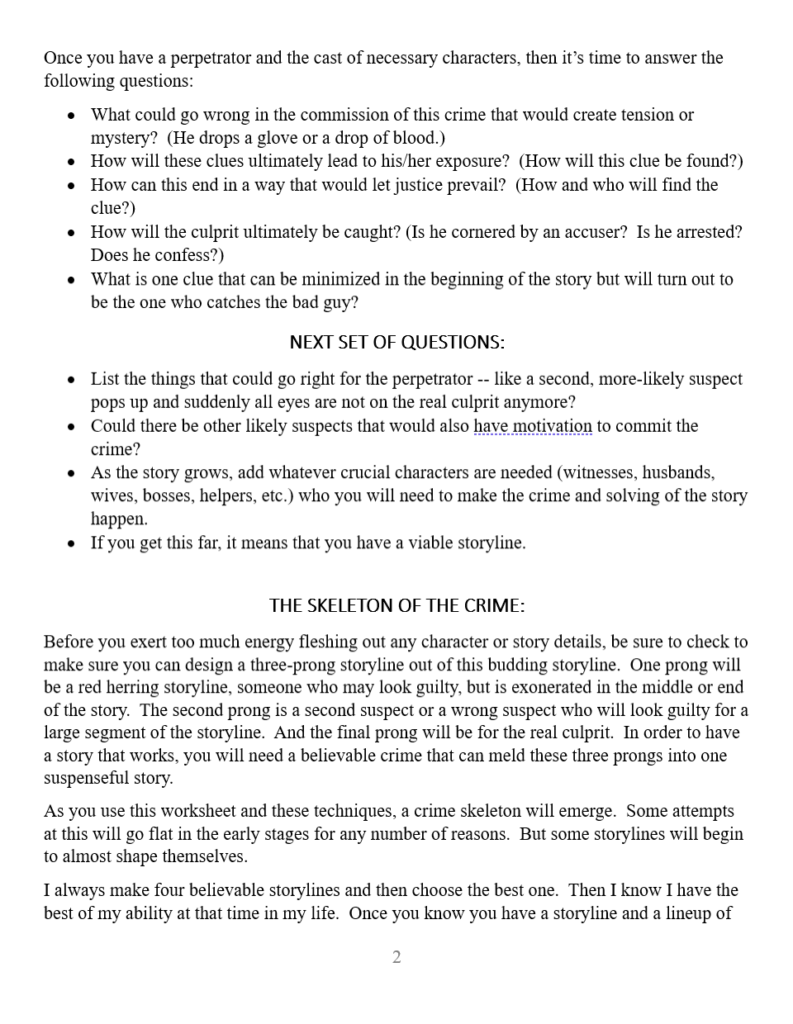 Once you have a perpetrator and the cast of necessary characters, then it’s time to answer the following questions:
 Before you exert too much energy fleshing out any character or story details, be sure to check to make sure you can design a three-prong storyline out of this budding storyline. One prong will be a red herring storyline, someone who may look guilty, but is exonerated in the middle or end of the story. The second prong is a second suspect or a wrong suspect who will look guilty for a large segment of the storyline. And the final prong will be for the real culprit. In order to have a story that works, you will need a believable crime that can meld these three prongs into one suspenseful story.
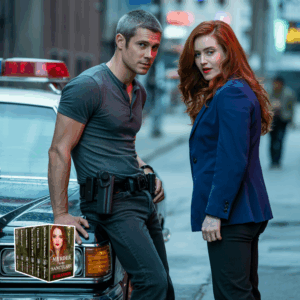
 Now that you have a generic marketing calendar, it's time to assemble your toolbox. These are the things you will want to have close by when it's time to dedicate an hour or two to marketing.
 First into the toolbox is a graphics program. I used to use Photoshop, but since I retired from work, I now use Gimp because it's free. I try to do everything as free as I can because I devote all monies spent on producing my books on an editor and paid book ads that work. I say 'ads that work' because many of them don't. More on that in the next few blog posts.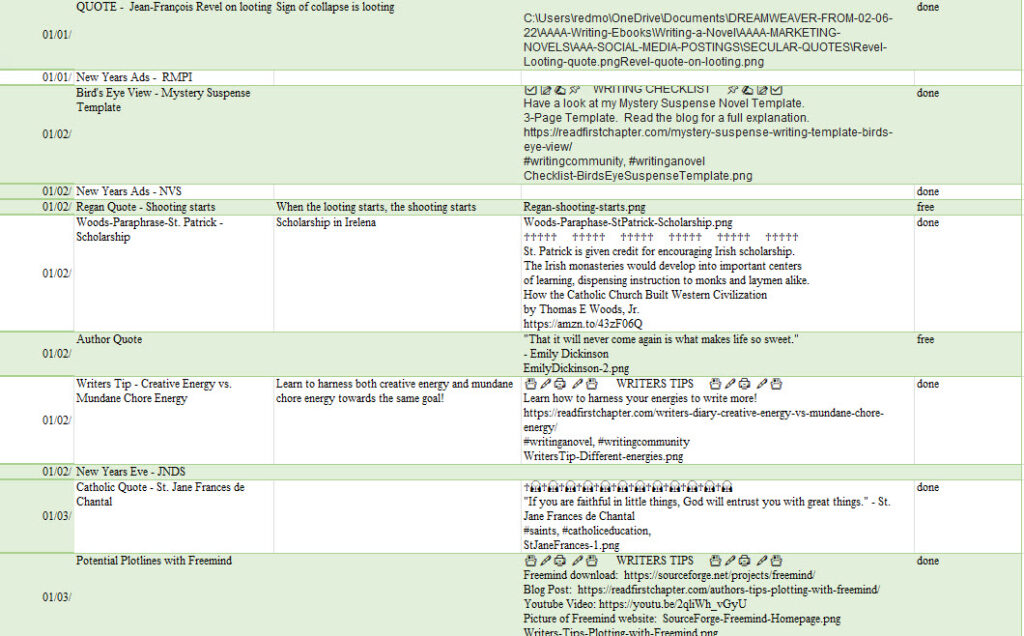
 Along with the 72 dpi book cover, you will need short blurbs about your book or books. Starting at about 150 words, keep whittling the blurb down until you have several blurbs with the last one being about one sentence (for Amazon ads).
 Copy and paste any and all purchase links for your book. Be sure to keep track of which merchant each link belongs to. Besides the purchase links, you may want to keep the paperback and hardcover links handy -- you never know!
 Most younger people know what hashtags are. If you're a boomer like me (hee hee), you may need to brush up on what hashtags are. Go to YouTube and search out videos explaining hashtags. Someone will explain them to you.

 Book Marketing is a huge undertaking, but it starts with baby steps. When I was brand new, the mere subject of book marketing was enough to make me feel completely overwhelmed. However, now looking back, I see that it started with baby steps and book marketing isn't something you do, it's something you build.
 This first installment is to set the framework of your marketing plan. The calendar list below is meant to be sort of a file box. Think of each holiday as a marketing opportunity. You will build your marketing plan by starting with this calendar.
 Earlier this year I started uploading YouTube videos targeting beginner writers and marketers who want to learn how to make their own book covers. Gimp is a free photo manipulation program -- completely free. Volunteer coders from around the world, unsung heroes, have worked on this computer program for the masses.
 This is a checklist I wish I had when I first started out as an author. With the internet and research being at our fingertips, anyone can figure out how to write a first draft. In the world I live in, a first draft is nothing more than blurting out the story onto paper so you have something to begin working on.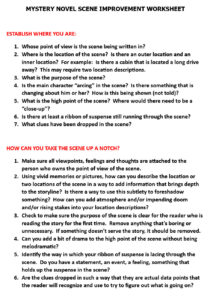
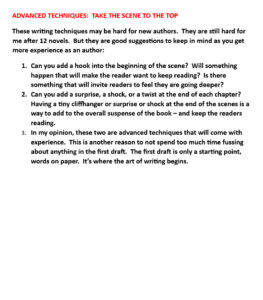 By focusing on each element individually with these questions in mind, it will allow a new author to focus on only one element at a time. It prevents new authors from becoming overwhelmed by a general suggestion to take the whole novel up a notch.